






















































Top Toys for Autistic Children

Children with autism can enjoy toys just as much as normal children can. However, determining which toys are beneficial for their condition is important for their development. Autistic children typically have problems with social interaction, communication, behavior and sensory and motor skills, according to the Centers for Disease Control. Since symptoms may vary among children, selecting appropriate toys that target specific problem areas may be beneficial to their growth and interactions with others.

Sensory Stimulation

Simple things such as a hug, the sound of doorbell or the feel of some clothing can be extremely unpleasant for autistic children. They may have explosive or exaggerated responses to things and be unable to filter sensory input the way normal children do, according to the American Occupational Therapy Association. Toys that stimulate the senses can provide a nonthreatening approach to learning how certain objects can feel. Toys that have fur or raised portions or that play music may be helpful.

Fine Motor Skills

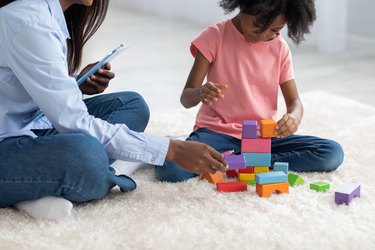
Coloring, cutting and writing are things children usually enjoy, but for children with autism these activities may be difficult. Fine motor delays are common among children with autism, according to the Autism Society of America. Some toys that help develop these motor skills include putty, stringing beads and magnetic drawing boards. Ring stacks or peg puzzles that flash lights, play music or provide sensory feedback upon completion are also good toys for autistic children. These toys will not only give them a sense of accomplishment but also will encourage them to engage in more activities requiring fine motor skills.

Social Skills

Autistic children tend to lack the social skills that normal developing children their age have. They have little or no eye contact when talking to others or lack interest in having peer relationships, according to the MayoClinic.com. A good way to enhance an autistic child's social development is to introduce a toy that stimulates teamwork and sharing. Playing catch or board games with siblings or other children may be helpful. Social skills may improve as they play games with others. They may learn to imitate responses such as taking turns and other activities that require them to wait for others.

Imagination

Autistic children tend to demand absolute consistency in their environment. Any deviation from a routine can be extremely stressful for them. Autistic children are often obsessed with having things in order and lack imagination and spontaneity, according to the Autism Society of America. Stacking or nesting toys, doll houses and puppets may also be helpful to promote imagination. Ride-on toys such as wagons, cars or trucks may also be beneficial. Children with autism need considerable support to move beyond repetitive play so they can explore imagination with themselves and with other children.

References

Article reviewed by Holland Hammond Last updated on: May 18, 2010

Must see: Photo Galleries