































































Gout is an episodic form of arthritis caused by the buildup of excess uric acid in the blood. It tends to attack a single joint at a time, causing extreme pain, swelling and tenderness. These acute attacks may last for only a few days if immediate treatment is sought, or they may last a few weeks. Some people have only a single attack and the disease never recurs, while others may experience recurring attacks. The time between the attacks can vary from a few weeks to more than a year. If you have a gout attack more than a couple times in a single year, your gout is considered to be chronic, according to the Mayo Clinic. Chronic gout may lead to joint damage or the development of tophi---called chronic tophaceous gout---or kidney stones. According to the Arthritis Foundation, "Gout is a controllable disease that, with proper treatment, need not lead to any long-term effects."
Joint Damage
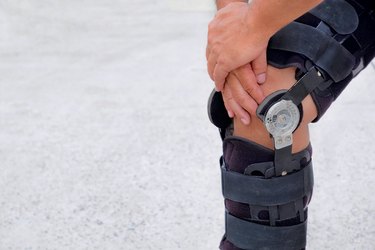
The uric acid that builds up in the blood develops into tiny, sharp crystals that settle in and around the joints. While the most common joint affected by gout is the big toe, many other joints may be affected, according to the National Institute of Arthritis and Musculoskeletal and Skin Diseases, including ankles, heels, knees, wrists, fingers and elbows. These uric acid crystals cause the joint to become inflamed. Persistent inflammation tends to damage joints, leading to deformities and limiting the range of motion.
Tophi
Tophi are another manifestation of uric acid deposits. These small chalky-appearing nodules may can be seen under the skin around any joint or on the rim of the ear. Although they aren't generally painful, they do tend to become swollen and tender during an acute gout attack, according to the Mayo Clinic.
Kidney Stones
Another serious long-term effect of gout is the development of kidney stones. This happens because urate crystals accumulate in the kidneys as they work to excrete the excess uric acid. Unless treated, these deposits can lead to impaired kidney function, according to the Arthritis Foundation. While keeping your weight down is helpful in dealing with any arthritic condition, including gout, the National Library of Medicine Medline Plus Encyclopedia notes that losing weight too quickly may cause uric acid to concentrate in the kidneys, again causing kidney stones.


