























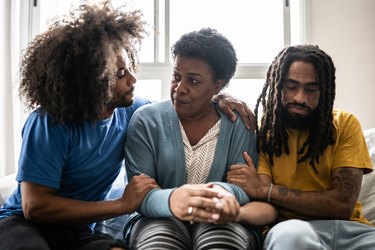































Robert Kavanaugh identified seven stages of grief in his 1972 book, "Facing Death." This grief model is similar to the five-stage grief cycle Dr. Elisabeth Kubler-Ross proposed in 1969. Kavanaugh's stages are logical but not necessarily linear. Length of time spent in any one stage varies significantly from person to person, and a person may revisit various stages. Although intended to describe grief as it relates to death, these stages of grief apply to various types of loss, including divorce, job loss, disability, infertility and other types of trauma.
Shock
Shock is the "emotional inability to accept the reality of death," according to the "Survivors' Handbook," by MaryAnn Paynter and Marilyn Sue Buck. Denial is common in this stage as are feelings of emotional numbness. The bereaved may need people around them to help them absorb the enormity of the loss.
Disorganization
As the reality of the loss begins to sink in, a person may begin to feel confused, disorganized and out of touch with reality. Routines have been disturbed and a person may not know how to get through the day. Given the gravity of the life change, a person may feel as if she does not know if she is coming or going. This stage may look like denial but really is it a manifestation of feeling disorganized and as if in a fog. Loved ones can provide concrete help, such as answering the phone and making meals, for a person during this stage.
Volatile Emotion
Volatile emotions can include anger, resentment, fear, hurt, frustration and helplessness. These emotions may manifest as significant behavior changes, and the strong and overwhelming feelings can lead a grieving person to make rash and hasty decisions. A person may also take out his feelings on those close to him, such as doctors, lawyers, family, friends and funeral directors. Rather than attempting to control the bereaved, it can be helpful to listen to and encourage him to express his emotions and retell his story.
Guilt
During this stage, a person may begin to look for ways in which she could have prevented the loss. She may engage in self-blame and attempt to atone. The thought associated with this stage is "if only ..."
Sense of Loss & Loneliness
As life inevitably continues, a person may feel left behind. The rest of the world continues, and as the grieving person attempts to engage socially, he may feel alone in his grief. Holidays, social engagements, listening to friends and family discuss relationships and important events heighten a sense of loss and loneliness. Although it can be difficult to tolerate, the bereaved often need someone who is able to listen and talk about the feelings of loss.
Relief
A person may eventually begin to feel a sense of relief that the loss was finally endured. A divorced person may begin to recognize the pain that led up to a divorce. A person may recognize the pain her loved one felt before passing.
Re-establishment
As a person accepts the loss and begins to move forward, he begins to create new dreams and set new goals. He begins to re-establish his life in the community, including connecting with old friends and making new friends. He begins to give himself permission to enjoy life again. It is important to allow a person space to discover what this stage means for him, and to allow him to approach it at his own pace.
References
- University of Illinois: Survivor's Handbook: Making Funeral Plans and Obtaining Benefits When There is a Death in the Family
- Calgary First Spiritualist Church: Comforting the Bereaved
- St. Martin's University: Theories & Concepts of Grief
- Theology Today: Essay Review-On Death & Theology
- Death After Dying: Seven Stages of Grief


