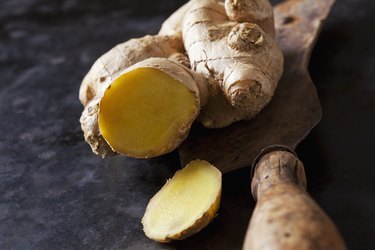
The root of the ginger plant, or Zingiber officinale, has a long history in the treatment of digestive disorders. The aromatic and slightly pungent root is also a food source used extensively in Asian and Middle Eastern cooking. While ginger is an herb of choice for treating an upset stomach, it may trigger heartburn in high doses. See your doctor if heartburn persists, and do not use ginger to self-treat a medical condition.
Heartburn
Video of the Day
It starts with a burning sensation behind your breastbone that may get worse if you lie down or bend over. Heartburn doesn't affect your heart; instead, it's a symptom of stomach acid backing up into your esophagus, the pipe that carries food from your mouth to your stomach.
Video of the Day
Ginger’s Effect on Digestion
Ginger, used in herbal circles to reduce nausea and vomiting, acts as a digestive aid to treat minor stomach upsets by increasing bile and gastric juices, according to the "PDR for Herbal Medicines." Gingerol and shogaol are the active components in ginger responsible for this effect. In most cases, ginger soothes the stomach and promotes digestion.
Dosage/Method
Adults may take up to 4 grams of ginger daily to ease nausea or a sour stomach. This amount represents a total of all sources of ginger, including ginger cookies and ginger ale. Ginger is available as a fresh root, which may be grated and used to season food or to make an herbal tea, in dried capsule form or as a liquid extract. At these doses, ginger is unlikely to cause heartburn.
High Doses and Heartburn
At doses higher than 4 grams per day, side effects may occur, including mild heartburn, the University of Maryland Medical Center notes. Additional side effects may include belching and stomach upset and are less likely to occur if you use ginger capsules instead of fresh ginger. If you experience heartburn, discontinue taking ginger and visit with your doctor. People with bleeding disorders and those taking blood-thinning drugs should not take ginger unless directed to do so by their doctors. Do not give ginger to children.
Is this an emergency? If you are experiencing serious medical symptoms, please see the National Library of Medicine’s list of signs you need emergency medical attention or call 911.