





























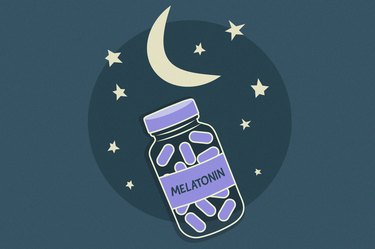




























A 2010 review in the "Medical Clinics of North America" states that insomnia is the most common sleep disorder. It is often reported during routine medical evaluations as well. Sleeping pills have long been used to treat difficulties initiating and maintaining sleep. Modern drug treatments for insomnia typically fall into two categories: benzodiazepines and nonbenzodiazepines. According to "Prescription Drug Info," the most popular benzodiazepine medication is Xanax, and the most popular nonbenzodiazepine medication is Ambien. These drugs share many features, but they are also unique.
History
Xanax is the trade name for the drug alprazolam. This medication was patented by Upjohn/Pfizer in 1976. It possesses anti-anxiety, anti-convulsant and sedative properties. Xanax is approved by the Food and Drug Administration, FDA, for use in anxiety disorders. Yet it is commonly prescribed for sleep disorders as well.
Ambien is the trade name for the drug zolpidem. This medication was patented by Synthelabo/Sanofi-Aventi in 1983. It possesses identical properties as Xanax, but it is approved specifically as a sleep aid.
Popularity
"Prescription Drug Info" has Xanax and Ambien on its Top 200 list. Xanax was, in fact, the most popular drug in the world as of April 2010. Ambien is listed as No. 96. According a summary in the "AARP Bulletin Today," 44 million prescriptions were written for alprazolam and 28 million for zolpidem in 2008.
Classification
Xanax belongs to a class of drugs known as benzodiazepines. Librium, first synthesized in 1955, was the first drug prescribed from this group. Valium is another common benzodiazepine, and the WHO considers it an essential medication. Although it has similar effects as Xanax, Ambien is chemically different. Zolpidem is a nonbenzodiazepine from the imidazopyridine group. It was the first drug from this class, which now includes Lunesta and Sonata. The patents for both drugs have expired and generic versions are now available.
Mechanism
Xanax and Ambien enhance sleep by affecting the body in a similar manner. They target a specific site called the GABA receptor. GABA is an important neurotransmitter in the central nervous system. Both sleep aids are more effective in the brain than in the spine. This specificity allows them to enhance sleep without overly affecting coordination. The drugs increase the likelihood of GABA reaching the GABA receptor without increasing GABA itself.
Efficacy
Benzodiazepines and nonbenzodiazepines have similar effects on sleep. They reduce the time it takes to fall asleep. They do not, in general, help maintain sleep. Ambien has one known advantage over Xanax. According to a 2006 report in "Progress in Neuro-Psychopharmacology & Biological Psychiatry," Ambien enhances the deeper stages of sleep whereas Xanax does not. Such nighttime enhancement is typically associated with greater daytime alertness.
Reactions
The side effect profiles for Xanax and Ambien are similar. Both drugs are commonly associated with tolerance and withdrawal issues. In addition, each medication has been abused in addiction and suicide cases. Most concerning is the potential implication of nonbenzodiazepines in cancer. A 2008 report in "Journal of Sleep Research" suggests that people taking certain sleep aids are more likely to get cancer. These drugs, including Ambien, are carcinogenic in rats. While sleep aids are effective, they must be carefully used.
References
- "Medical Clinics of North America"; Insomnia Pharmacology; S. S. Sullivan; May 2010
- "Prescription Drug Info": Top 200 Prescription Drugs
- "AARP Bulletin Today": The 50 Most Prescribed Drugs
- "Progress in Neuro-Psychopharmacology"; Effect of Zolpidem on Sleep; N. Uchimura et al.; Jan. 2006
- "Journal of Sleep Research"; Possibility that Certain Hypnotics Might Cause Cancer in Skin; D. F. Kripke; September 2008


