





























































Many people twitch, jerk, mumble or toss from side to side while sleeping. Jumping while asleep may be mild, moderate or severe and more often noted by a spouse or other sleeping partner instead of the sleeper, who usually remains blissfully unaware. Various conditions can cause jumping while asleep; treatments, if necessary, also vary, but all aim for the same result, a restful night's sleep.
A Natural Process of Falling Asleep
Physiological changes occur as your body prepares to relax and enter sleep mode. Muscles tensed for a day of action and alertness begin to loosen up. Breathing slows and the mind seeks a restful state. Sometimes, as these muscles relax, the change may be a bit abrupt, bringing about a falling sensation that your body naturally reacts to, causing a twitch or a jump. The relaxing-falling theory, as Hannah Jones outlined on Discovery Online's website, is one as yet unproven theory.
Restless Leg Syndrome
Another, more insidious, cause of jumping during sleep is associated with Restless Leg Syndrome (RLS). Restless Leg Syndrome causes a host of symptoms in addition to jumping or abrupt movements of arms and legs. Crawling sensations, jerking, twitching, weakness, tugging or a combination of all of these in the arms or legs plague RLS sufferers as they desperately try to relax and fall asleep. Conditions such as fibromyalgia and vitamin or mineral deficiencies can give rise to RLS. Long periods of immobility or sitting often initiates or exacerbate RLS and intensify bouts of jumping during sleep.
Hypnic Jerks and Sleep Myoclonus
Hypnic jerks describe rare occurrences of jumping during sleep. Hypnic jerks often accompany feelings of falling or dropping. Myoclonus jerks or twitching, on the other hand, are more violent episodes that can become regular and repetitive. Both hypnic and myoclonus jerks appear during the initial, drifting-off stage of sleep. If mild, no treatment is needed. If the muscle contractions become regular and more intense, it would behoove the sleeper to have a doctor investigate the situation more thoroughly, as these may indicate a potential health problem.
REM Sleep Behavior Disorder Link
Most of us have governors of sorts in our brains that limit our mobility during REM sleep and prevent us from acting out events in dreams that may be wild and vivid, frightening or funny. People who suffer from REM sleep behavior disorder may flail, punch, kick, jump or cry out while dreaming. Unlike sleepwalkers, people with this disorder---while often incredibly active---are only reacting to scenes and events in their dreams. Sleepers usually wake with ease when prodded by their sleep partners.
Treatments
A doctor may prescribe a drug such as Klonopin for people diagnosed with REM sleep behavior disorder. Safety of the sleeper is important, so anything within reach of the flailing sleeper is moved away from the bed and immediate vicinity.
Benzodiazepines and certain drugs for Parkinson's disease are the usual course of treatment for Restless Leg Syndrome sufferers, according to National Institute of Neurological Disorders and Stroke. Physicians tout regular sleep patterns and practices; massages, relaxing baths before bed and vitamin/mineral supplements, especially iron and folic acid.
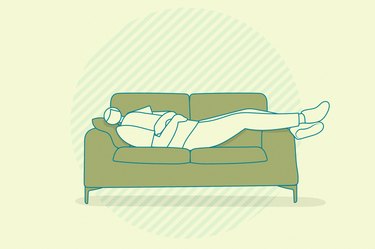
Poor circulation can also be a culprit in jumping during sleep, so elevating your legs and checking to see what underlying problems may be contributing to circulation problems is important.
Mild, occasional bouts of jumping aren't necessarily worrisome. Many people jump in their sleep but chronic or acute periods of such behavior during sleep may warrant further investigation.
References
- Sleep Education: REM Sleep Behavior Disorder
- National Institute of Neurological Disorders and Stroke: Restless Leg syndrom Fact Sheet
- Discover Online: Falling-Asleep Twitches
- National Public Radio: When Brain Shuts Down, Legs Kick into Overdrive
- Natural Institute of Neurological Disorders and Stroke: Myoclonus Fact Sheet


Member Comments