















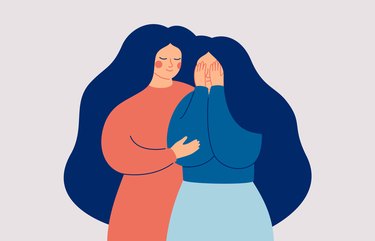







































Spousal abuse is an alarming trend in the United States, with the Centers for Disease Control and Prevention reporting that over 22 percent of women and 7 percent of men suffering abuse at the hands of a spouse or partner. Sometimes spousal abuse goes unreported because it is unidentified; you know that your spouse is making you feel bad, but you're not sure what it means. Understanding the different types of spousal abuse can make you more aware of what constitutes abuse so you can get the help that you need.
Physical
Physical abuse is largely recognizable because it can leave visible signs behind. It constitutes any abuse where your body is at risk; pushing, shoving, punching biting and any other action that is meant to cause you pain. Not all physical abuse is visible to the naked eye, though. You may mistakenly believe that because the physical abuse was minor, or a one-time happening that it doesn't constitute as abuse, says HelpGuide.org, but all spousal abuse is a serious affair.
Emotional
Emotional abuse is sometimes also known as verbal abuse. It is the seemingly subtle actions of a spouse or partner to make you feel bad about yourself, to belittle or control you psychologically. Your partner may call you names, discount your worth, embarrass you in front of other people or isolate you from your friends and family, says the American Academy of Experts in Traumatic Stress. Emotional abuse doesn't leave visible scars, which is why it is such a lonely and confusing type of spousal abuse.
Economical
Economical abuse is just another way for your abusive spouse to control your actions. Through economic abuse your spouse may limit your access to money, dictate where you work, how often you work and when you quit. There also may be the constant requirement for you to account where the money is going. You may feel scared or apprehensive of the reaction when you spend money on something necessary, or be forced away from your chosen career path, according to the Conference on Crimes Against Women.
Sexual
Sexual abuse can be confusing if you are married. You may mistakenly believe that rape only happens as a crime by someone you don't know. Unfortunately, rape and sexual assault can run rampant in a marriage. Sexual abuse by a spouse constitutes any time you're forced into sexual behavior, be it watching a sexual act, participating in an act that you've protested to or being penetrated against your will, according to the Michigan State Police. You may believe that it is simply part of your marriage to go along with what your spouse wants sexually, but if you protest or feel uncomfortable and your spouse forces you, it's considered sexual violence and spousal abuse.
References
- Centers for Disease Control and Prevention: Full Report of the Prevalence, Incidence, and Consequences of Violence Against Women
- Help Guide: Domestic Violence and Abuse
- American Academy of Experts in Traumatic Stress: Domestic Violence and Abuse: Types, Signs, Symptoms, Causes, and Effects
- Conference on Crimes Against Women. : Am I a Financial Abuse Victim?
- Michigan State Police: Are You a Victim of Domestic Violence?


Member Comments