























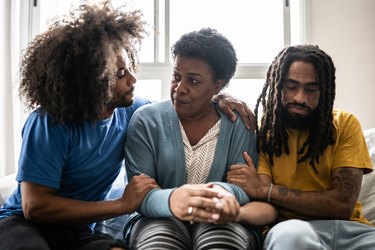































Handling Conflict

Text size:  |  Post a comment  |  Print  |   | 
Add to my favorites

Content
What is conflict?
Feelings involved in conflict
What behaviors help in managing conflict?
Steps that can be taken to handle conflict

What is conflict?

Some typical definitions of conflict include:

* Disagreeing with another.
* Difference of opinion with another.
* Complaints about our performance.
* Criticism of our behavior or attitude.
* Negative evaluation of our performance.
* Fighting with another.
* Stress-inducing event in which we are confronted in a negative way.
* A test of our power.
* A threat to our control.
* Matching of wills.
* An anger-producing event.
* A threat to our security.
* Taking a risk.
* Speaking out for our beliefs.
* Risking the loss of acceptance.
* A time when no one is communicating; whether people are angry silently or are yelling at one another.
* Someone acting in direct opposition to our request.
* Defending our rights when they are being ignored.

In a positive sense, conflict can be a/an:

* Time of growth for the parties involved.
* Time in which problems can be solved creatively by looking together at a variety of alternatives.
* Chance to evaluate our performance objectively.
* Time for us to increase our knowledge of one another.
* Chance to reveal our unique ways of thinking, acting and feeling.
* Chance to show understanding, respect, and acceptance of the unique ways in which others think, act and feel.
* Chance to be "devil's advocate'' in regard to our position, attitudes and beliefs.
* Opportunity to clarify our roles and functions in certain situations.
* Opportunity to clarify and define the rules of interaction in an attempt to strengthen our relationships.
* Process by which feelings ultimately can be aired openly and freely.
* Compromise that will leave all parties involved in a winning situation.
* Breath of fresh air in a stagnating relationship.
* Moment of honesty, which can result in a lifetime of improved communication.
* Opportunity to draw close to one another in intimate self-disclosure.
* Way in which we recognize our deficiencies and brainstorm alternatives to correct them.
* Challenge to growth.
* Chance to "problem solve,'' creating a more productive environment.
* Time to talk and communicate openly and honestly, reducing hostility, anger or misunderstanding in relationships.
* Time to clarify our expectations of others; a time to modify existing rules or sanctions based on our expectations.

Feelings involved in conflict

Negative Feelings Before or During Conflict : Positive Feelings After Proper Handling of Conflict

hurt : cared for

scared : confident

frightened : relieved

ignored : listened to

confused : clear on things

isolated : more intimate with others

challenged : challenged to grow

threatened : open to truth

unwanted : accepted by others

disliked : respected

put down : supported

controlled : understood

judgmental : accepting of differences


What behaviors help in managing conflict?

Use "I'' statements. Let the other party know how you feel when the conflict is occurring. Let the other person know how you react to the conflict. Let the other person know which of your rights you feel is being ignored in the conflict.

Be assertive, not aggressive. Speak about your feelings and your reactions. Keep the statements focused on how you are behaving, thinking and feeling rather than on how the other is acting.

Speak calmly, coolly and rationally. In this way you will be listened to, and you will be able to maintain better control of yourself. Otherwise, the other person may be put in a defensive attitude.

Avoid blaming. This will keep the communication flow going. It encourages understanding and empathy for each other's feelings. It recognizes that for a conflict to exist there must be at least two parties who are adversely affected by the conflict.

Create an atmosphere of healing. In an attempt to heal the wounds resulting from a conflict, all parties involved must feel that they are being listened to and understood; that their rights are being respected. They must feel the desire to work things out and a commitment to the process of working out the problems. They must feel wanted and cared for by the parties involved.

Be willing to forgive. Forgiveness is a powerful tool of healing. You have a chance for personal growth by forgiving others for their part in the hurt and pain you suffered. At times, this is the only way to resolve a conflict.

Be willing to forget. Once you have "resolved'' a conflict and felt like you were listened to, cared for, and understood, then "let go'' of the conflict. Once you have implemented an agreed resolution, put aside the conflict. Put it behind you. Get it out of your mind. Forget it. Don't bring it up in the future as if it had not been resolved. If you write down the resolution of the conflict, you will have written proof that it is over and is to be forgotten.

Be honest. In resolving a conflict it is imperative that you be honest with yourself and others about your feelings, and reactions to the conflict and to the resolutions. If you are feeling in a way you think you must, or in a way others want you to, not "being yourself,'' then the resolution of the conflict is a false one. The conflict is sure to recur. You gain nothing by being dishonest in the management of conflict. You waste your time and energy and end up feeling failure or guilt rather than growth.

Focus on feelings rather than on content. Effective listening and responding are key elements in the productive resolution of conflict. Listen for the feelings and emotions of the other and reflect them with empathy and understanding. This creates an atmosphere of being cared for and listened to. It reduces defensiveness. It focuses on the process involved rather than on the issues, and it brings the parties to a clearer recognition of their individuality and humanity. To focus on feelings, clarify the issues, eliminating extraneous items.

Show respect for yourself and for others. You will gain more in resolving a conflict by showing respect (honey), than by showing disrespect (vinegar), e.g., being vindictive, taking revenge, threatening, yelling, accusing, belittling, ostracizing, ignoring. If you are on the receiving end of disrespect, remove yourself as soon as possible. When the other has cooled down, perhaps the discussion can be continued in a respectful manner. If you lose your "cool'' and become disrespectful, stop as soon as you can by either removing yourself or by silencing yourself. Maintaining a respectful atmosphere is essential in resolving conflict.

Be willing to apologize or admit a mistake. It is necessary to admit to one's mistake and to apologize for one's behavior before a stalemate in conflict resolution can be overcome. It takes courage, character and fortitude to admit an error, a lack of judgment, an uncalled for action, disrespectful behavior, or a lack of caring, concern or understanding. Stronger relationships can result when such willingness is exhibited.

Be willing to compromise. If you cling to your position as the only one to be considered, you are closing out the other person(s). To succeed in resolving conflict, all parties must feel like they have gained in the resolution. To resolve a conflict where the opposing parties are at opposite extremes on an issue, there is a need to come to the middle if all are to experience a "winning'' posture. Only through compromise can each be a winner in conflict resolution. Without compromise, you've either given in and lost, or you've gotten your own way with the other party having lost. Ideally, all parties should feel that they have won.

Steps that can be taken to handle conflict

Step 1: Clarify that conflict exists. If you sense a conflict, answer the following questions in your journal:

a. What is the content (or issues) involved in the conflict?

b. For whom is this a conflict?

c. When does the conflict manifest itself? For how long?

d. Under what circumstances is this a conflict?

e. What are the hidden issues, those below the surface, in this conflict?

f. Why is this a conflict?

g. What is the worst possible consequence if this conflict is:

(1) never addressed?

(2) addressed and not resolved?

(3) addressed and I give in?

(4) addressed and the other gives in?

(5) addressed and we both win?

h. What are my feelings when facing this conflict?

i. How does this conflict fit into my belief system about myself?

j. What does this conflict say about the personality of the people involved?

k. What is the conflict, really?

Step 2: Summarize the answers to the questions in Step 1 into a clear, detailed description of the conflict with its variables.

Step 3: Begin to problem-solve in your mind. Write out alternative resolutions to the conflict. Use the Tools for Coping Series Creative Problem Solving model in Tools for Relationships, which involves brainstorming alternatives.

Step 4: Narrow the alternatives until you come to the top priority resolution in your mind. Write it in your journal and decide if the resolution:

a. Respects the rights of all parties.

b. Will ultimately have all parties feeling like winners.

c. Will allow a healing process to begin, with no one being blamed.

d. Provides for finality of the conflict with no recurrence.

e. Will result in better understanding by all parties with all feelings being respected.

Step 5: When you have completed Steps 3 and 4 on your own, you are ready to speak directly with the those with whom you are in conflict. Ask the person(s) to consider the script (i.e., written document) concerning the conflict. Go over all points on the conflict (Steps 1 and 2), possible resolutions to the conflict (Step 3) and analyze how the top priority resolutions are beneficial to all parties involved (Step 4).

Ask the party(ies) if they have done a similar exercise in conflict management on their own; if not, would they like time to try Steps 1 through 4?

Step 6: All parties closely examine the top resolutions (Steps 3 and 4). Jointly analyze the options based on the questions in Step 4. Spend time discussing them, then use joint problem solving.

Step 7: Once a jointly owned conflict resolution is decided upon, the parties set an implementation time and an evaluation procedure to determine if the resolution is successful in averting similar conflict(s). They commit to implement the resolution and set a specific date to meet and review the resolution.

Step 8: If, during the subsequent meeting, it is determined that the conflict has gone unresolved, alter the resolution accordingly, continuing to consider all feelings.

If you find yourselves at an impasse, return to Step 1 and begin again. Occasionally, professional help or that of an objective outsider might be necessary.

About this Author

James J Messina, PhD, is a licensed psychologist with more than 35 years of experience counseling individuals and families. Messina, who specializes in adult and children psychotherapy, serves as Director of Psychological Services at St. Joseph’s Children’s Hospital in Tampa, Fla. He has a private practice in Tampa and is also a member of the American Psychological Association.

Last updated on: 07/16/09

Member Comments

Tools

Track your daily calories. See how many calories you burn and consume.

BMI is a measurement of body fat based on height and weight.

Map your local running, cycling, walking and hiking routes and track your calorie burn.

Find us on the web, receive emails and use our mobile app to keep you motivated.

This tool will help you to decide whether to treat at home or see a doctor.