










































The American Dental Association warns that excessive consumption of foods and beverages that contain citric acid can contribute to erosion of tooth enamel. Citric acid is an organic compound that is often used as a preservative in canned and frozen foods. It is also used to flavor soft drinks and certain foods. Some amount of citric acid is naturally present in many fruits and vegetables. But regardless of the source, too much citric acid can be hard on the teeth.
Sources of Citric Acid
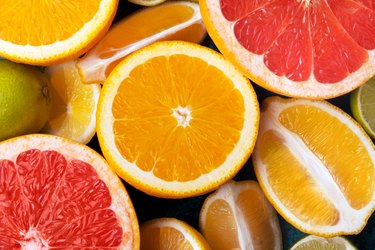
A report published in the journal General Dentistry points out that any type of soft drink can cause tooth erosion. Fruit juices, wine, pickles and sports drinks are other sources of citric acid that can wear away dental enamel. While most fruits and some vegetables have at least trace amounts of citric acid, it is most concentrated in the juices of lemons, limes, grapefruit and oranges. As a rule of thumb, sour fruits have a higher acid content.
Negative Effects
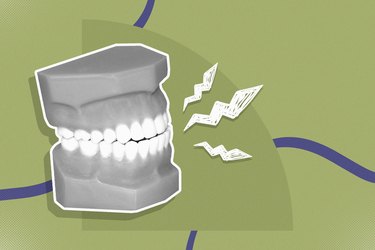
The citric acids in fruits and carbonated soft drinks dissolve the calcium salts that make up the surface of teeth. When the surface of a tooth becomes decalcified and soft, plaque forms and erodes tooth enamel. Teeth stripped of enamel are brittle and sensitive to pain. Furthermore, once enamel breaks down, bacteria can invade and cause decay.
Alternatives
Whenever you have a craving for a soft drink, root beer has less citric and phosphoric acids than other sodas. But drinking bottled or tap water is better than drinking sweetened, carbonated beverages. If you regularly consume sodas and highly acidic foods such as jams, jellies, citrus fruits, berries and yogurt, drinking more water will help to neutralize the acids and protect your teeth from damage. Low-fat or nonfat milk offers another healthy alternative to drinking sodas, lemonade, sports drinks and fruit juices.
Prevention
The American Dental Association says that if you drink carbonated beverages, have them at mealtime, because eating produces saliva to wash the acid off your teeth. And after eating, brush your teeth and swish water around your mouth to encourage saliva production. Drink soda or fruit juices through a straw to reduce the teeth's exposure to the acid. Cold drinks are not as likely as warm to cause dental erosion.
Other Causes
The acids from frequently sucking on lemons, limes or orange wedges can erode enamel. Health conditions such as acid reflux disease, gastrointestinal problems and eating disorders including bulimia can destroy tooth enamel, as well. Dry mouth, a diet high in sugar and starches and constant use of medications such as aspirin and antihistamines can also weaken the enamel that protects the teeth.
Risks
A study published in the January/February 2005 issue of General Dentistry found that the damage to tooth enamel caused by lemonade, energy drinks and sports drinks is three to 11 times greater than erosion caused by colas. While cola beverages contain phosphoric and citric acids, both of which can damage dental enamel, sports drinks contain other additives and acids that accelerate tooth erosion. Research shows that sports drinks can actually cause more permanent damage to dental enamel than carbonated sodas.
References
- Journal of the American Dental Association: Citric Acid Consumption and the Human Dentition
- Live Science: Acids in Popular Sodas Erodes Tooth Enamel
- Dental Health Directory: Adverse Effects of Lemon Sucking on Tooth Enamel
- Family Gentle Dental Care: Pop and Cavities---Cavities in a Can
- American Dental Association: Be Smart About Your Smile


Member Comments