





















































How Do Braces Move Teeth?

How Do Braces Move Teeth?
Photo Credit no more braces image by Kelly Kane from Fotolia.com

Teeth are vitally important because they help you eat, speak and smile. You can usually maintain them with good oral hygiene practices, such as frequent brushing and flossing, but sometimes you may have a problem that goes beyond the normal scope of home care. One such issue is misaligned teeth. You need a professional to correct teeth that are out of place, and this is usually done with braces.

Function

Braces move misaligned or crooked teeth into the proper place. The Healthy Teeth website explains that braces put continuous, gentle pressure on the affected teeth. Over time, the pressure shifts the teeth into the correct position. Braces are permanently fixed in the mouth for the entire course of treatment. The American Dental Association states braces may cause some minor discomfort, but they should not be overly painful.

Purpose

Teeth that are out of place must be moved or they will cause or a variety of problems. According to the Health Teeth website, they make chewing difficult and can affect speech. The misalignment may negatively affect your appearance, and your jaw may not line up properly. This may eventually lead to pain. Crooked teeth are also harder to clean thoroughly because of their odd spacing. This makes them more vulnerable to plaque and decay.

Description

Braces are made up of three separate parts. Brackets are attached to each individual tooth. The bonding or band attaches the brackets, and an arch wire runs between each bracket. The Healthy Teeth website explains that in the past braces had a very prominent appearance, resembling metal train tracks on the teeth, but nearly invisible options now exist. Some braces attach in the back, while others have clear brackets to make them less noticeable.

Application

Dentists with special training, known as orthodontists, apply braces. The American Association of Orthodontists states on its braces.org website that these professionals go through two to three years of additional training after dental school.

Time Frame

The American Dental Association states braces are usually used on children between eight and 14 years old. They can move teeth most successfully when used while a child is still growing. They can also be used on adults, but it takes longer to shift the teeth into the proper position. Some problems cannot be corrected in adulthood solely with braces because facial bones stop growing in adulthood. Braces are typically worn from one to three years.

Considerations

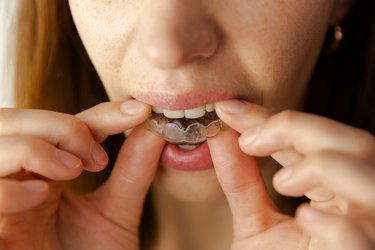
You will temporarily need to wear a device called a retainer once your braces have been removed. Healthyteeth.org explains a retainer is a removable appliance that keeps the realigned teeth in place. Retainers are also used to treat minor misalignments that do not require braces.

References

Article reviewed by Grygor Scott Last updated on: Jun 17, 2010

Must see: Photo Galleries