









































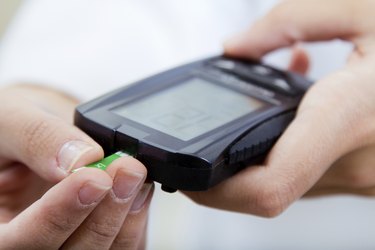







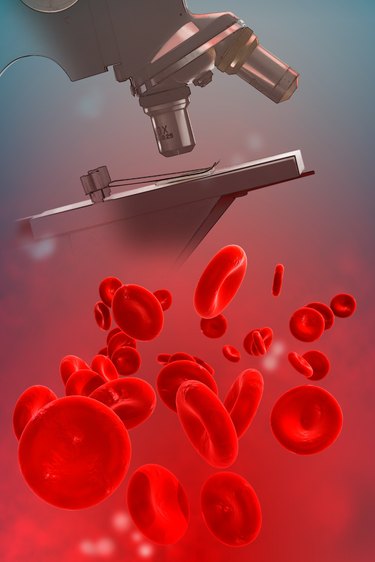













Hemoglobin is the molecule in red blood cells that delivers oxygen to tissues. Lab Tests Online notes that there are normal hemoglobin molecules as well as abnormal variants. Having high sugar circulating in the bloodstream can cause changes to the hemoglobin molecule, known as glycosylation. The A1C test measures the glycosylation of the hemoglobin over a period of three to four months. In diabetes, this test is used to manage glucose; however, there are some conditions which could result in falsely elevated levels of this marker.
Iron-deficiency Anemia
The main type of hemoglobin is hemoglobin A. There are subtypes of hemoglobin A, including the 1C form which is found to correlate best with high levels of glucose in the blood. In addition to high levels of glucose, it appears that A1C levels are also greatly affected by how fast or slow red blood cells, or RBCs, are recycled. More recently, studies have noted the effects that microcytic, or iron-deficiency, anemia has on changes in A1C levels.
Specifically, a 2004 "Acta Haematologica" journal article noted that people with iron-deficiency anemia had an average HbA1C level of 7.4 percent +/- 0.8 versus a healthy group with an average of 5.9 percent +/- 0.5. Upon supplementation with iron, the levels were reduced to 6.2 percent +/- 0.6. Similar findings were established by a 2008 "Diabetes Care" journal article that considered a population of pregnant women. A1C levels were noted to elevate in late pregnancy due to higher needs for iron and a resultant iron-deficiency, rather than gestational diabetes.
Recent Blood Transfusion
Measuring a person's A1C level after a recent transfusion is contraindicated. Receiving a one-time transfusion after a major accident would not present a real issue because within two to three months, the levels would normalize; however, there are conditions which require multiple and consecutive transfusions. Some of these disorders include anemia that occurs in chronic illnesses such as kidney, liver and endocrine diseases, as well as malignant tumors. Chronic blood loss during labor and delivery, or as the result of a bleeding ulcer or hemolytic anemias such as sickle cell, are also reasons. The donor's blood is stored in a solution of dextrose. LabTestsOnline states that the dextrose, a sugar-based substance similar to glucose, damages the hemoglobin structure and can lead to a falsely high level of A1C in the person receiving the transfusion.
Similarly, a 2004 "Journal of Endocrinological Investigation" notes that patients with end-stage kidney disease who require daily dialysis treatment are exposed to high levels of dextrose in the dialysis solution and have falsely higher levels of HbA1c.
Rare Genetic Defect
Hemogloblin has normal and abnormal forms. Some of the abnormal forms cause different thalassemias and sickle cell anemias. A 2005 issue of "Clinical & Laboratory Haematology" notes, however, that a very rare variant of hemoglobin known as Haemoglobin Osu-Christiansborg is known to result in falsely high HbA1c levels. It appears that this genetic mutation has been demonstrated in families of African origin, according to a 1999 "Ned Tijdschr Klin Chem" journal article.
References
- LabTestsOnline.com: A1C and eAG -- The Test Sample
- Acta Haematologica: "Effect of Iron Deficiency Anemia on the Levels of Hemoglobin A1c in Nondiabetic Patients:"
- Journal of Endocrinological Investigations: "Hemoglobin A1c levels in non-diabetic patients with end-stage renal disease (ESRD) receiving hemodialysis"
- Ned Tijdschr Klin Chem: "Hb-OSU Christiansborg: a rare abnormal hemoglobin observed in two independent families in The Netherlands"


