































































List of Natural Protease Inhibitors

List of Natural Protease Inhibitors
Photo Credit algae on the riverside image by McDanny from Fotolia.com

Protease inhibitors are agents that block the activity of proteases, proteolytic enzymes that break down proteins. When suppressed, viruses that depend on proteases for self-replication, such as HIV or hepatitis C, cannot duplicate themselves. Proteases involved in the spread of cancer or collagen breakdown are also affected. Natural protease inhibitors occur in plants, animals and some bacteria. While they may enhance therapy for certain conditions, they are not a replacement for conventional antiretroviral or chemotherapy drugs.

Bowman-Birk Inhibitors

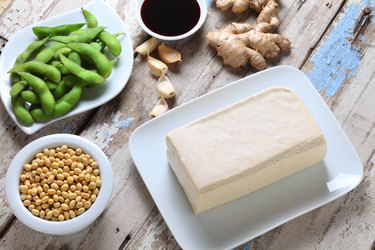
The National Cancer Institute defines the Bowman-Birk inhibitor, or BBIC, as an agent obtained from soybean extracts. The institute also states that this material effectively inhibits trypsin and chymotrypsin, two enzymes belonging to the serine family of proteases. These are the group of proteases involved in regulating immune function, blood clotting and inflammation. Specifically, the institute says that BBIC has demonstrated anti-cancer effects. While the exact mechanism of action is not well understood, the institute explains that this is most likely due to the inhibition of chymotrypsin.
BBIC is also made from other types of legumes, such as black-eyed peas and lima beans, which are collectively referred to as seeds from the Vigna genus of plants. A team of Brazilian researchers investigated the effects of BBIC produced from Vigna unguiculata seeds on breast cancer cells. The researchers observed that this preparation reduced the ability for cancer cells to duplicate and spread within 72 hours, leading to apoptosis, or cell death. The results of this study were published in the July 1, 2010 issue of "Cancer Letters."

Blue-green Algae

According to a study led by Alexei Ploutno of the School of Chemistry at Tel Aviv University, a type of blue-green algae known as Microcystis aeruginosa may be a potential new source of natural protease inhibitors. Ploutno and colleagues discovered that the algae contain two previously unknown inhibitors of the trypsin protease. The research team identified these natural inhibitors as micropeptins EI992 (1) and EI964 (2) in the July 2002 issue of the "Journal of Natural Products."
It should be noted that in the natural world, this type of algae presents a health hazard due to the presence of toxin called microcystin. Even contact with the skin can cause allergic reactions. However, in a laboratory setting, scientists are able to isolate specific compounds without posing risk to human health.

Green Tea Compounds

Green tea contains a type of polyphenol called epigallocatechin gallate, or EGCG. According to a review published in the Oct. 16, 2008 issue of "Inflammopharmacology," the existing medical literature widely supports evidence of EGCG as a natural protease inhibitor in cancer and potential anti-cancer therapy.
Unfortunately, this substance is unstable unless enhanced to increase bioavailability. In other words, simply drinking green tea is not likely to strangle cancer cells. However, a 2004 study published in "Bioorganic and Medicinal Chemistry" showed that when EGCG was modified to prevent it from degrading in an alkaline environment, it was six times more stable.

References

Article reviewed by Jenna Marie Last updated on: Jun 30, 2010

Must see: Photo Galleries

Member Comments