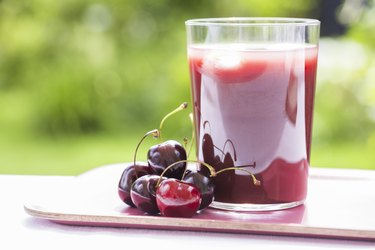
Cherries have several health benefits due to their antioxidant compounds known for lowering inflammation to prevent chronic disease, treating gout symptoms and helping with muscle pain and stamina during your workout. Drinking tart cherry juice or black cherry juice may offer these benefits in a concentrated form.
Keep in mind much of this research is at least partially funded by the Cherry Marketing Institute.
Video of the Day
Video of the Day
Tart Cherry Juice vs. Black Cherry Juice
Two of the most commercially sold varieties of cherries grown in the U.S. are tart cherries and sweet cherries. Sweet cherries, commonly known as Bing cherries, have a dark-colored skin and — you guessed it — a naturally sweeter taste. The tart Montmorency cherry retains its bright-red color after being harvested.
It's easy to tell the difference between tart cherry juice and the sweeter black cherry juice from their flavors. As the name implies, tart cherry juice has a more sour flavor, while black cherry juice is sweet. The two types of juice are nutritionally different in some ways, but both offer health benefits from their antioxidant properties. Tart cherries have significantly more phenolic compounds than black cherry juice, and black cherries have a higher amount of anthocyanin, per March 2018 research in Nutrients.
Tart Cherry Juice Benefits and Nutrition
According to the USDA, an 8-ounce serving of tart cherry juice will give you:
- Calories: 139
- Total fat: 0 g
- Saturated fat: 0 g
- Trans fat: 0 g
- Cholesterol: 0 mg
- Sodium: 24 mg
- Total carbs: 34 g
- Dietary fiber: 0 g
- Sugar: 27 g
- Protein: 1 g
Per cup, tart cherry juice has 139 calories. It's high in carbs and sugar, with the same serving giving you 34 grams and 27 grams, respectively. You'll also get a small amount of potassium from tart cherry juice. A serving will give you 360 milligrams, or 8% of your recommended Daily Value (DV).
Outside of its nutrient content, tart cherry juice has other health benefits you'll want to consider.
It Provides a Source of Energy
Cherry juice is high in carbs, with 34 grams per cup. The carbs in tart cherry juice are important in your diet to provide your body with glucose, which is converted to energy and used to support bodily functions and physical activity. According to the USDA 2020-2025 Dietary Guidelines for Americans, adults should be getting between 225 and 325 grams of carbohydrates per day.
It Contains Antioxidants
Tart cherries, like all red fruits and vegetables, are rich in anthocyanins — a class of antioxidant phytochemicals, or disease-fighting agents, found in plant-based foods, per the USDA.
Other fruits and vegetables in this class include raspberries, strawberries, beets, cranberries, apples, red onions, kidney beans and red beans. Phytochemicals are what give bright fruits and vegetables their colorful hues. Anthocyanins, in particular, encourage healthy circulation, ensure proper nerve function and may offer cancer-fighting properties.
Plus, the antioxidants in tart cherry juice may have a positive effect on joint pain caused by inflammatory osteoarthritis. People with osteoarthritis who drank two 10.5-ounce bottles of tart cherry juice daily for 21 days saw a significant reduction in pain and inflammation, according to a December 2012 study in the Journal of Food Studies.
It's Tied to Cancer Protection
Carcinogens are harmful substances in the air, water and foods that may damage the cells, triggering changes that could lead to cancer, according to the National Human Genome Reseach Institute. Tart cherry juice offers anthocyanins and other disease-fighting chemicals that may be beneficial for halting cell transformation that may lead to cancer.
The anthocyanins in tart cherry juice have been associated with reduced cancer cell spread and inhibited tumor formation, according to a December 2004 study in the Journal of Biomedicine and Biotechnology. What's more, these powerful pigments were shown to reduce the spread of colon cancer cells in a May 2003 study in Cancer Letters.
It's Linked to Better Heart Health
Two daily cups of tart cherry juice is linked to lower systolic blood pressure and harmful LDL cholesterol in older adults, according to a January 2019 study in Nutrients. This is due to its antioxidant and anti-inflammatory properties, the study found.
On top of that, tart cherry juice contains quercetin, a powerful antioxidant that's tied to significantly decreased blood pressure, according to a July 2013 study in the International Journal of Preventative Medicine.
Warning
The quercetin in tart cherry juice may interact with blood-thinning medications, such as Warfarin, according to April 2017 research in Biomedicine and Pharmacotherapy. People on blood thinners should talk to their doctor before adding tart cherry juice to their diet.
It's Associated With Relief From Gout Pain
Gout is an arthritic condition that is usually characterized by pain in and around the big toe area but may also affect your hands, wrists, elbows and other parts of the body. The antioxidants and anti-inflammatory agents in tart cherry juice have been shown to alleviate the pain associated with gout, per July 2017 research in the American Journal of Lifestyle Medicine.
Gout is caused by high amounts of uric acid in the blood. The 2017 study assessed the effects of 8 ounces of tart cherry juice for four weeks compared to a control group. The researchers found that the group who drank the tart cherry juice saw a reduction in uric acid levels in their blood.
It's Tied to Brain Health Benefits
Anthocyanins like those in tart cherry juice have been found to have a potential benefit for memory and mental processes and may slow the progression of degenerative brain disorders such as Alzheimer's.
Adults aged 65 to 73 years who drank 2 cups of cherry juice for 12 weeks improved their memory during a July 2019 study in Food & Function. The researchers chalk these potential effects up to the fruit's polyphenols, anthocyanins and melatonin but acknowledge that further research must be conducted to confirm the findings.
Drinking cherry juice was found to improve cognitive functioning in older adults with mild to moderate dementia, according to October 2015 research in the European Journal of Nutrition. The people who drank 6.5 ounces of cherry juice per day for a period of 12 weeks showed improvements in speech fluency as well as short-term and long-term memory.
It May Help You Recover Faster From Exercise
The anti-inflammatory and antioxidative capacity in cherries is thought to have an effect similar to that of over-the-counter nonsteroidal anti-inflammatory drugs, according to June 2014 research in the Scandinavian Journal of Medicine and Science in Sports.
If you partake in high-intensity workouts or prolonged training, tart cherry juice may help reduce muscle pain after exercising. Many athletes drink tart cherry juice for post-exercise pain.
"If you're working out consistently, you might want to consider taking tart cherry juice," says Los Angeles-based nutritionist Kelly Plowe, RD. "Research has shown in both endurance cardio and strength training that tart cherry juice can you recover faster thanks in part to less muscle damage, inflammation and soreness."
In fact, marathon runners who drank tart cherry juice for a few days prior to a marathon and right before a marathon experienced less muscle damage, soreness, inflammation and protein breakdown than runners who didn't sip, according to a December 2010 study in the Scandinavian Journal of Medicine and Science in Sports.
And people who drank just 2 to 3 ounces of tart cherry concentrate (in juice or powdered form) a week to 1.5 hours before exercising significantly improved endurance in cycling, swimming and running, according to a January 2020 meta-analysis in the Journal of the American College of Nutrition.
Even further, runners who had 11 to 12 ounces of tart cherry juice twice daily for seven days prior to a long-distance relay and during the race reported significantly less pain following the run than those who consumed a placebo, per a May 2010 study in the Journal of the International Society of Sports Nutrition. The researchers conclude that tart cherry juice is an effective remedy for muscle pain that doesn't come coupled with the side effects of NSAIDs.
Another May 2015 study in the Journal of the International Society of Sports Nutrition examined the effects of tart cherry juice on stress and respiratory inflammation response following a marathon. Results showed that runners who drank tart cherry juice five days before, on the day of and two days after running experienced lower inflammation and severity of upper respiratory tract symptoms with a faster recovery of strength compared to those who drank a placebo.
It's Been Associated With Better Sleep
Lack of sleep can make you feel physically unwell, stressed and anxious. The Mental Health Foundation says that lack of sleep may contribute to heart disease and premature aging.
"Forget the glass of warm milk. I'm a huge fan of tart cherry juice as a natural remedy for sleep," Plowe says. "If you're having trouble falling asleep, a glass of tart cherry juice may do the trick. The fruit is a natural source of melatonin and tryptophan."
When compared to a placebo, drinking tart cherry juice was shown to add 84 minutes of sleep a night for people with insomnia, according to an April 2018 study in the American Journal of Therapeutics. The study notes that because insomnia is common among older people and can increase the risk of falls by more than four-fold, tart cherry juice may provide an effective treatment for sleepless nights without the risky side effects of other sleep aids.
It's Linked to Lower Blood Pressure
The polyphenols, or plant compounds, in cherries may account for its positive heart health benefits, including reduced blood pressure, insulin resistance, and cholesterol, according to a June 2016 study in the American Journal of Clinical Nutrition.
The study showed that drinking 2 ounces of tart cherry juice reduced heart disease risk in people with high blood pressure. Researchers reported that the phenolic acids in tart cherry juice were possibly responsible for the beneficial reduction in blood pressure.
Black Cherry Juice Benefits and Nutrition
Black cherry juice is nutritionally similar to tart cherry juice, though it has more carbs and sugar. According to R.W. Knudsen, a manufacturer of black cherry juice, an 8-ounce serving will give you:
- Calories: 190
- Total fat: 0 g
- Saturated fat: 0 g
- Trans fat: 0 g
- Cholesterol: 0 mg
- Sodium: 40 mg
- Total carbs: 45 g
- Dietary fiber: 0 g
- Sugar: 33 g
- Protein: 2 g
It Has Antioxidants That Are Linked to Disease Prevention
Like tart cherries, black cherries also have polyphenols, which are plant compounds with antioxidant properties. Researchers tested the antioxidant potency of different fruit juices including black cherry juice, pomegranate, acai, blueberry, cranberry and concord grape juice during a February 2008 study in the Journal of Agricultural and Food Chemistry. They tested the juices' ability to reduce LDL cholesterol and also tested total polyphenol content. Black cherry juice was in the top four juices for antioxidant capacity, and was associated with lowering cholesterol.
It's Used as a Gout Treatment
Gout is a type of arthritis in which uric acid crystals form in the joints from a buildup of too much uric acid in the body. This causes the joints to become inflamed. One of the treatments for gout is drinking 8 to 16 ounces of any cherry juice, including black cherry juice, daily. After two weeks, this showed to lower uric acid crystal buildup, preventing gout attacks, according to a December 2012 study in Arthritis and Rheumatism.
Another study showed that black cherries lower uric acid level in the blood, which may reduce the inflammation associated with gout, per the June 2003 research in the Journal of Nutrition.
It May Act as a Sleep Aid
Like tart cherries, black cherries (and all cherries, really) are a source of nutrients like melatonin, serotonin and tryptophan, per the 2018 research in Nutrients. As mentioned, melatonin and tryptophan. The body uses tryptophan to make melatonin and serotonin, and both of these hormones help you sleep, per according to the National Library of Medicine.
Potential Downsides of Cherry Juice
It's High in Sugar
A large portion of the calories in cherry juice comes from sugar. The USDA reports that tart cherry juice has 27 grams of sugar per cup. That being said, the sugar content of commercially prepared juice may vary significantly depending on the brand you buy. Because the juice is made from sour cherries, manufacturers often add sugar for flavor.
Having too much added sugar in your diet is linked to a higher risk of conditions like heart disease, obesity, diabetes, high cholesterol and cavities, per the Heart and Stroke Association. The USDA Dietary Guidelines suggest that you limit sugar to less than 10 percent of your daily calories.
When buying ready-made tart cherry juice, be sure to check the nutrition facts label and choose a product that doesn't have added sugar.
It Lacks Fiber
Although juicing will retain many of the valuable nutrients in tart cherries, the fiber will be lost. Dietary fiber is important because it keeps your digestive tract functioning, which helps you avoid constipation by providing bulk to your stool.
Fiber can also help lower your cholesterol levels and reduce your risk for heart disease, stroke and type 2 diabetes, according to the American Heart Association.The USDA Dietary Guidelines for Americans suggests that you get between 24 and 30 grams of dietary fiber per day.
Tip
If you're juicing your own cherries, reserve some of the pulp and mix it back into your cherry juice to replace the lost fiber. Or, add the pulp to other foods, such as yogurt, oatmeal or cereal. You can even use the pulp for extra flavor when making muffins or pancakes.
It's Linked to Digestive Issues
Sorbitol is a sugar alcohol that either naturally occurs in fruits, especially cherries, or is semi-artificially produced and added as a low-calorie sweetener to tart cherry juice and other commercial foods. Sorbitol is a poorly digestible carb and draws water into the intestines, so its laxative effect can cause diarrhea if you have too much, per August 2019 research in Canadian Family Physicians.
In some individuals, such as those with a medical malabsorption issue, sorbitol can cause abdominal bloating, pain or cramps; loose stool; constipation; excessive burping; and headache, according to Nutrients Review.
- National Nutrient Database: Cherry Juice, Tart
- SELFNutritionData: Cherries, Sour, Red, Raw
- American Heart Association: Whole Grains, Refined Grains and Dietary Fiber
- Heart and Stroke Foundation of Canada: Reduce Sugar
- Mad About Berries: Glycemic Index and Glycemic Load of Common Berries and Other Foods
- Nutrients: A Plant-Based High-Carbohydrate, Low-Fat Diet in Overweight Individuals in a 16-Week Randomized Clinical Trial: The Role of Carbohydrates
- Science Direct: Anthocyanin
- European Journal of Nutrition: Consumption of Anthocyanin-Rich Cherry Juice for 12 Weeks Improves Memory and Cognition in Older Adults With Mild-to-Moderate Dementia
- Journal of the International Society of Sports Nutrition: Effects of Powdered Montmorency Tart Cherry Supplementation on an Acute Bout of Intense Lower Body Strength Exercise in Resistance Trained Males
- Journal of International Society of Sports Nutrition: Influence of a Montmorency Cherry Juice Blend on Indices of Exercise-Induced Stress and Upper Respiratory Tract Symptoms Following Marathon Running
- Mental Health Foundation: Sleep
- American Journal of Therapeutics: Pilot Study of the Tart Cherry Juice for the Treatment of Insomnia and Investigation of Mechanisms
- Cherry Marketing Institute: The Delicious Difference Between Tart and Sweet Cherries
- USDA: 2020-2025 Dietary Guidelines for Americans
- USDA: Comparison of anthocyanin levels in the USDA tart cherry collection
- National Human Genome Research Institute: Carcinogen
- Biomedicine and Pharmacotherapy: Interaction of quercetin and its metabolites with warfarin
- Journal of Scandinavian Medicine and Science in Sports: The role of cherries in exercise and health
- Canadian Family Physicians: Sorbitol
- RW Knudsen: 100% Black Cherry Juice
- Nutrients: A Review of the Health Benefits of Cherries
- Journal of Agricultural Food Medicine: Comparison of antioxidant potency of commonly consumed polyphenol-rich beverages in the United States
- Arthritis and Rheumatism: Cherry Consumption and Decreased Risk of Gout Attacks
- Journal of Nutrition: Consumption of cherries lowers plasma urate in healthy women
- National Library of Medicine: Tryptophan
- USDA: Montmorency Tart Cherry Juice