















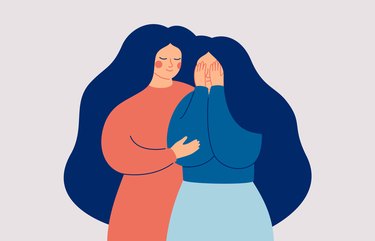







































Whereas mutual consideration and trust are elements of a healthy relationship, not all teens have the fortune of being in a healthy relationship. One in 11 high school students report having been physically injured by a boyfriend or date, according to the website Kids Health. Although not all abusive relationships will ever involve physical injury, many violent relationships begin with emotionally controlling behavior. Knowing the warning signs can help teens identify and end potentially abusive relationships.
Jealousy
An abuser or a person who may eventually become abusive often acts jealous, accusing his girlfriend of flirting with others, becoming upset when she spends time with family and friends and questioning her about whom she talks to, according to the University of Tennessee, Knoxville. All the while, an abuser may try to convince his girlfriend that jealousy is a sign of love.
Controlling Behaviors
An abuser's jealousy may escalate to controlling behavior. A boyfriend may make frequent calls, asking his girlfriend's friends to watch her while she's out and physically checking in on her. An abuser may also begin to control decisions that his girlfriend should be making on her own, such as what she wears, what she says and whether she has a job or a social life, according to Kids Health.
Quick Emotional Involvement
Teenage abusive relationships often begin quickly and intensely according to the Lindsay Ann Burke Memorial Fund, a relationship abuse website. An abuser may act charming and profess his undying love, making claims such as, "I could never be with anyone else," in order to hook his girlfriend into thinking that he is being romantic, according to the website Oprah.com. In return, he expects his girlfriend to meet all of his needs. His once-romantic phrases may turn into manipulative phrases such as, "If you loved me, you would..."
Isolation
An abuser may try to isolate his girlfriend from her social network, encouraging her to stay away from her friends and become emotionally distant from her family, taking her away from outside activities and eventually causing her to spend most of her time with him, according to Oprah.com. Her perceived lack of outside support may eventually cause her to feel more dependent on him, meaning she will be less likely to break up with him.
Mood Swings
A teen in an abusive relationship may find that her partner's moods fluctuate dramatically. One moment, he may act kind and gentle, and another he may threaten to injure her and break, throw or hit objects in order to frighten her.


Member Comments