



























































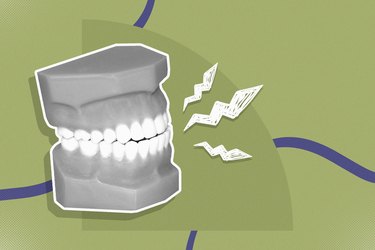










There are normally three molar teeth in each quadrant of the human dentition. These are the largest teeth and may have three or more roots. Removing the third molars or wisdom teeth is common when sufficient room for complete eruption is lacking. Molars function as the primary chewing teeth. The upper ones lie in close proximity to the maxillary sinus, while the lower ones can be near major blood vessels and nerves. Toothaches can originate from inside the tooth or from the surrounding bone, ligament and gum tissue.
Causes
One of the major causes of tooth pain is dental decay that approximates or enters the dental pulp, according to the American Dental Association. Inflammation of this tissue can lead to an infection with severe pain and swelling. This can also occur as the result of multiple dental restorations. This is common in the first molars because they erupt so early in childhood and are more prone to get cavities and fillings at an early age. Cracks can also cause pulpal inflammation and pain. Since molars function in chewing, they frequently develop cracks. Sinusitis or a sinus infection can make the maxillary molars hurt since their roots lie close to or in the sinus cavity. Pain from the temporomandibular joints in front of the ears and even the heart muscle can cause pain in the molar teeth and jaws. A gum infection produced by periodontal disease can cause pain in the molar teeth and swelling of the surrounding soft tissues.
Diagnosis
Getting rid of molar toothache pain depends on an accurate diagnosis. A dentist will take an X-ray and closely examine the painful area. Diagnostic tests include placing ice and maybe heat on the tooth to determine the condition of the dental pulp. An abscessed tooth is commonly tender to tapping with a metal dental instrument, according to the American Academy of Family Physicians. Probing along the outside of the tooth is important in determining the health of the attachment of the gum to the tooth and bone. Suspicion of a sinusitis or other non-dental condition requires referral to the appropriate physician.
Treatment
The treatment for an abscessed tooth is removal of the diseased dental pulp. Root canal treatment and tooth extraction both accomplish this goal. According to the American Association of Endodontists, root canal treatment can save most abscessed teeth. Pain from gum infections is usually resolved with periodontal cleaning of the pocket adjacent to the tooth. Severe cases of periodontal disease require surgical intervention. Pain medications and antibiotics may be prescribed for severe pain and swelling from either an abscessed tooth or periodontal abscess.
Complications
Root canal treatment and periodontal treatment cannot save all diseased molar teeth. Extensive decay, bone loss and deep fractures lead to extraction of some. According to the American Academy of Family Physicians, some dental infections can progress into a serious cellulitis that may compromise the airway.
Prevention/Solution
Regular dental checkups and meticulous oral hygiene prevent most the development of most molar toothaches. Consult a dentist at the first sign of any pain or swelling.


