



































































A peptic ulcer is an open sore or erosion of the inner layer of the stomach wall, the esophagus or the first part of the small intestine, called the duodenum. There are various causes of peptic ulcers and once diagnosis is established, it is important to identify the cause when possible in order to optimize treatment.
Epidemiology
Peptic ulcers are thought to affect about 10 percent of the population. According to an article in The Lancet, the disease has been an important cause of death and complications until the last decades of the 20th century. The fall in the death and complication rates is largely attributed to the discovery of new effective medications and a bacteria that contributes to the development of peptic ulcers.
Causes
According to the National Institutes of Health the most frequent cause of peptic ulcer is a bacterial known as Helicobacter pylori. It is unclear how the bacteria is transmitted, but it may stem from mouth to mouth transmission as in kissing or from unclean food or water. The majority of the people with H. pylori do not get ulcers, however.
The next most frequent cause of peptic ulcers is the use of medications known as NSAIDs, which includes such drugs as aspirin and ibuprofen. These drugs degrade the protective barrier of the stomach so it is more exposed to stomach acid.
Other causes are more rare and include radiation treatment, excessive alcohol or tobacco, being on a ventilator in an intensive care unit, and Zollinger-Ellison Syndrome, in which a pancreatic tumor signals the stomach to make too much acid.
Diagnosis
Diagnosis of peptic ulcer disease starts with a careful history of the symptoms by a heath-care provider. Typical symptoms include abdominal pain that may be worse with meals or several hours afterward, feeling of fullness, nausea, bloating, vomiting or weight loss. The health-care provider will also want to know about NSAID use, alcohol consumption and other potential contributing factors. Tests for Helicobactor pylori can be done on the blood, stool or urine. Diagnosis is usually established with certainty by endoscopy, which is the insertion of a small flexible scope into the stomach through the mouth.
Treatment
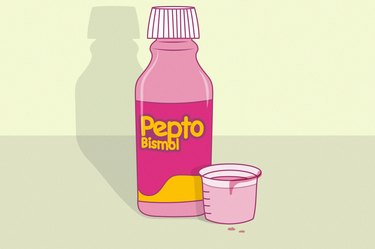
Treatment involves eliminating the cause of the ulcers and giving medications to help the stomach heal. Medications such as proton pump inhibitors or PPIs and histamine receptor blockers, or H2 blockers, help suppress acid so the lining of the stomach can heal. If H. pylori has been detected, antibiotics will be given to eradicate the infection. Bismuth, the primary ingredient in Pepto-bismol, may also be given. If bleeding occurs because of the ulcers, endoscopy or surgery may be needed to stop it.
Complications
Possible complications from peptic ulcers generally stem from continued erosion through the wall of the stomach. Bleeding into the GI tract, or internal bleeding, is one possible complication. If the erosion continues it can penetrate all layers of the stomach or intestine to cause a perforation, which is a medical emergency. Other complications include inflammation in the abdomen called peritonitis or obstruction of the outlet of the stomach, preventing food from passing into the intestine.


