



















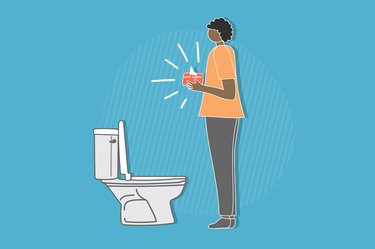











































Laxatives are over-the-counter medications used to help relieve constipation. These medications can be purchased without a doctor’s prescription and are sometimes abused by people who believe they will help them lose weight. At other times people are overly concerned about having regular bowel movements and use laxatives, enemas or suppositories to relieve perceived constipation. Over-the-counter products may use one or a combination of several different methods to achieve a bowel movement.
Types
There are five different types of laxatives used to affect bowel control. Bulk-forming laxatives draw water into the stool to make it larger and trigger the bowel to move the stool out. Lubricant laxatives coat the surface of the stool to help hold in water and make the stool move out more easily. Softeners mix fluid into the stool to soften them and make it easier to pass. Saline laxatives draw fluid into the stool from nearby tissue and soften the stool. Stimulant laxatives are the harshest type of medication. They cause the bowel to contract and squeeze the stool out. These should not be used for more than one or two days because they can cause rebound constipation.
Causes
Overuse, abuse or accidental overdose of laxatives can cause abdominal pain, swelling, bloating and cramping. Symptoms may be slightly different depending upon the laxative being used. The most common type of laxative to cause pain is the stimulant laxatives or combination medication that contains a stimulant. Discomfort can also include nausea, vomiting, diarrhea and bloody stools.
Risks
Oral laxatives can interfere with the absorption of some medications and nutrients from food and vitamins. Laxatives can also lead to electrolyte and fluid imbalances. These imbalances can result in weakness, confusion, heart arrhythmias and poor muscle contraction. Laxatives can be dangerous if used for constipation that has been caused by an underlying medical condition, such as appendicitis or a bowel obstruction. They are also not safe for pregnant women or children under the age of six.
Treatment
Abdominal pain, bloating and cramping caused by laxative use may be an emergency if an overdose has been taken or long-term abuse has led to severe symptoms. These symptoms may also be mild when laxative use does not fit these criteria. According to the U.S. National Library of Medicine, people suffering from severe symptoms should not be made to throw up unless told to by Poison Control. In the emergency room, physicians will determine the amount of medication taken, the time taken, how chronic the use of medication has been and the age and weight of the patient. They may administer activated charcoal, do blood tests to determine electrolyte levels, administer fluids through an intravenous line or empty the stomach by inserting a tube through the mouth and into the stomach.
Prevention
Before trying laxatives to relieve constipation, physicians at the Mayo Clinic recommend that people try making a few lifestyle changes that will address the occasional irregularity. By eating fiber-rich foods, drinking at least 10 8-oz. glasses of water each day and exercising regularly, most cases of constipation will improve.


