
































































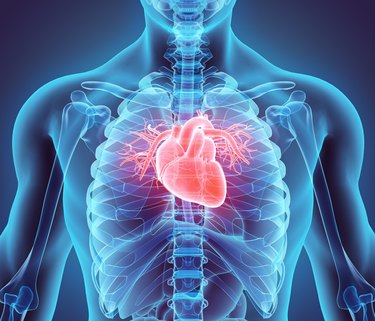
About Hereditary Heart Disease

According to the American Heart Association's 2009 update on heart disease statistics, more than 80 million Americans suffer from some form of cardiovascular disease. Sixteen million are diagnosed with coronary artery disease, 73 million have high blood pressure, 5.7 million have been stricken with heart failure and 6.5 million have had strokes.
Many people suffer from heart disease as a result of poor diet, sedentary living and other poor lifestyle choices. Others have inherited risks for heart disease from their family history. While there isn't much you can do about choosing your parents, there are a number of things you can do to minimize your risk for heart disease.

Common Risk Factors for Heart Disease

The primary risks for heart disease are cigarette smoking, high blood pressure, diabetes, obesity and high cholesterol. Other associated risk factors include age, gender and sedentary living. High blood pressure and diabetes are difficult to counter if they run in your family. But cigarette smoking, obesity and sedentary living are more easily managed.
Cigarette smoking is the single-most avoidable risk factor for heart disease. It is directly linked to coronary artery disease, pulmonary disease and high levels of high-density lipoproteins. Blood pressure over 140/90 mmHg is considered borderline hypertension. Over time, high blood pressure can cause the heart to work harder and damage the interior lining of the coronary arteries.
Diabetes is a serious metabolic disease that affects the body's ability to use glucose for energy production. Glucose levels over 100 mg/dL are consider pre-diabetic. Obesity affects more than 34 percent of American adults and is directly related to diabetes, high blood pressure and heart disease. One way to evaluate obesity is the body mass index. Individuals with a BMI over 24 are considered obese.
High cholesterol, particularly high LDL levels, put you at risk for developing coronary artery disease. Over time, LDL cholesterol can occlude the blood flow to the heart, causing a heart attack or stroke.
Age and gender are difficult to control in terms of risk for heart disease. However, sedentary living can easily be corrected through a program of regular exercise and activities of daily living.

Familial and Inherited Risks

Familial and inherited risk for heart disease are risks that you're born with. Men who are diagnosed with coronary artery disease before the age of 55 (65 for women) represent an independent risk for heart disease above and beyond the risk factors under your control. Besides coronary artery disease, you can inherit risks for high cholesterol (hyperlipidemia), diabetes, high blood pressure (hypertension) and obesity. While there's nothing you can do to correct your family's risk for heart disease, you can help to offset their severity by taking charge of your lifestyle.

Lifestyles and Habits

For people who are aware of their inherited risks for heart disease, it's never too early to get started monitoring their health and practicing heart healthy diet and exercise practices. They should follow the same guidelines as others for lowering their cholesterol, weight and blood pressure and emphasize physical activity in their daily lives but use the lower end of normal value ranges as their goal. Men and women with a family history of heart disease should make it a point to have annual physical examinations after the age of 40. They should include monitoring weight, blood pressure, resting electrocardiograms and blood lipids. If any of the test results are borderline, speak to your doctor. You may want to repeat the tests at 6-month intervals.

Managing Inherited Risks for Heart Disease

A number of inherited risk factors aren't really inherited at all. Instead, they are representative of common lifestyles and habits that put you at risk for heart disease. Cigarette smoking, diet and sedentary living are good examples of these. Children who are raised in homes where parents smoke and have been exposed to second-hand smoke should make an early decision not to take up the habit themselves. If the family eats foods that are rich in saturated fat and cholesterol, children should strive to make better choices when at school and on their own. If the parents don't exercise, the children should take advantage of school sports programs and other activities with their friends.

Preventing Heart Disease in Your Loved Ones

Parents who are aware of their family history for heart disease need to take steps to minimize their children's risk for heart disease. If they smoke, they should look into one of the dozens of smoking cessation programs so that they don't encourage smoking in their children. The family as a unit can eat a heart healthy diet and come up with new and delicious ways to manage their fat and cholesterol intake. Participating in exercise a family unit is a great way to get children started with a lifetime of activity. Parents should set examples by avoiding elevators, using the stairs and participating in sports with their children. At the appropriate age, children should be informed of their inherited risk for heart disease so that they can assume responsibility for their own health.

References

Article reviewed by Brad Walters Last updated on: Apr 26, 2011

Must see: Photo Galleries