
































































Causes of Water on the Knee

The knee, the largest joint in the human body, acts as a hinge so that the leg can easily bend to walk, run and kick. Synovial fluid in and around the knee insures joint flexibility. Ordinarily, the correct amount of fluid is present, but sometimes, an overproduction of fluid occurs, a condition called “water on the knee.” The causes of water on the knee are varied and include disease, broken bones or damaged soft tissues, and bacterial infection. Discovering the cause of water on the knee is the first step to treating this uncomfortable condition.

Facts

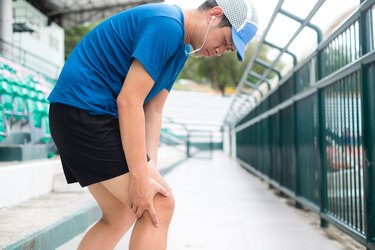
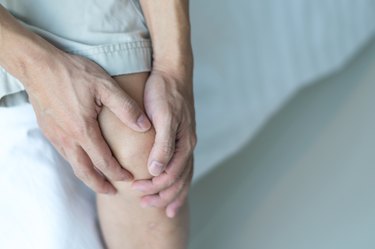
Water on the knee, also known as knee effusion, presents with symptoms of swelling, pain and stiffness in the knee. These symptoms result from an accumulation of fluid around the knee joint. The causes of this build-up of fluid can only be determined by diagnostic testing. Risk factors include aging, playing sports and being overweight. People aged 55 or older have a higher risk of developing water on the knee, as do people who play sports that stress the knee joints such as basketball and soccer. Obesity wears down the knee joint, sometimes leading to water on the knee through osteoarthritis, according to the Mayo Clinic.

Disease

The most common disease that causes water on the knee is osteoarthritis, according to the Mayo Clinic. Other conditions include gout, calcium pyrophosphate deposition disease, Lyme disease, tumors, cysts and bursitis. Each of these diseases causes joint inflammation, which often results in the fluid retention that characterizes water on the knee. Pain medication and treatment of the underlying condition usually relieves the symptoms of water on the knee caused by disease.

Infection

A bacterial infection can cause inflammation of the knee joint, leading to stiffness and pain. If testing—usually an examination of the fluid in the knee—detects the presence of bacteria, the appropriate antibiotic may be the remedy, according to the Mayo Clinic.

Injury

A traumatic injury, such as a broken bone, torn ligament or tendon, can lead to the development of water on the knee, sometimes years later, according to the American Academy of Orthopedic Surgeons. Repetitive-use injuries and high-impact sports activities can also cause water on the knee. When injury occurs, inflammation results, often leading to fluid retention in the affected area.

Diagnosis

Doctors run various tests to determine the cause of water on the knee. X-rays and MRIs can detect torn ligaments, broken bones or arthritis. Blood tests detect diseases such as gout, Lyme disease or blood disorders. Fluid from the knee, or joint aspiration, is evaluated for the presence of blood, bacteria or crystals. Blood indicates injury as the cause, while a bacterial result indicates an infection. Crystals in the fluid point to gout or pseudo gout as the cause of water on the knee. Once the cause is determined, the appropriate treatment can be administered.

References

Article reviewed by Mia Paul Last updated on: Jul 19, 2010

Must see: Photo Galleries