































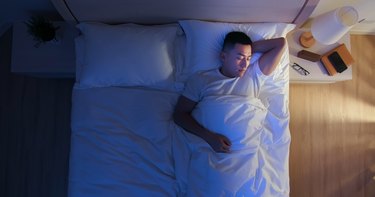











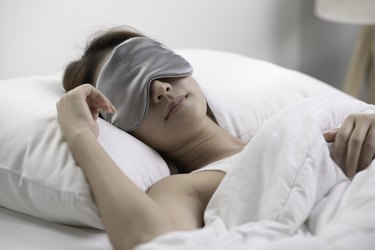

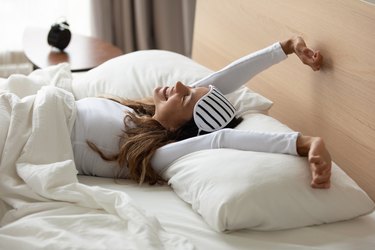
Proper posture is important for several reasons. According to the Cleveland Clinic, good posture decreases stress on ligaments, keeps the bones and joints aligned correctly so the muscles can work best and prevents or reduces backaches. Practicing good posture is a matter of habit, and one of the easy ways to begin improving posture is to work on the right posture for sleeping. If you have trouble sleeping in the recommended positions, consult your doctor about what the best sleeping position is for you.
Best Positioning for Sleep
Step 1
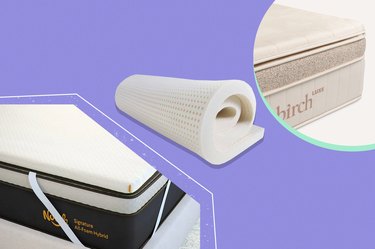
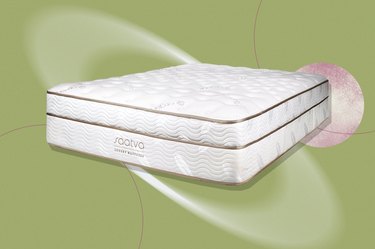
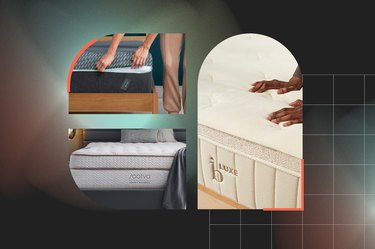
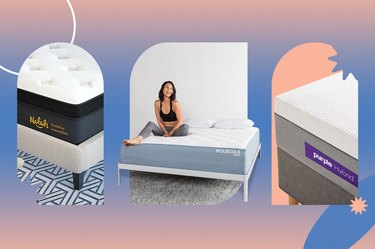
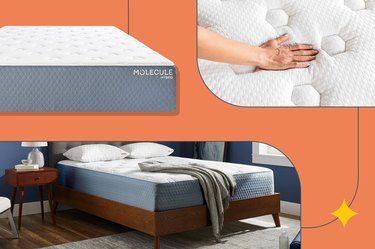
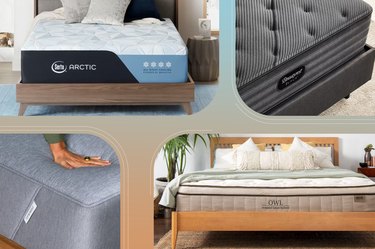
Choose a firm mattress for good support. If you can't afford a new mattress or don't want a firm one, you can put a board underneath your mattress for a bit of extra support. Another option is to put your mattress directly on the floor for the same supportive effect.
Step 2
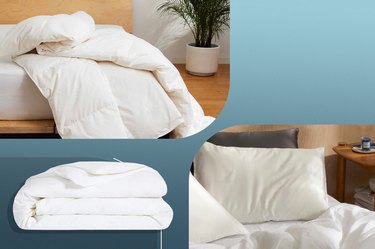
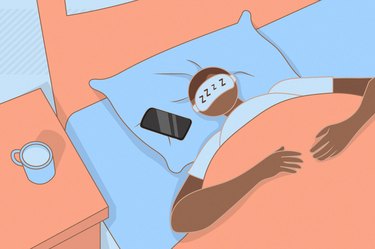
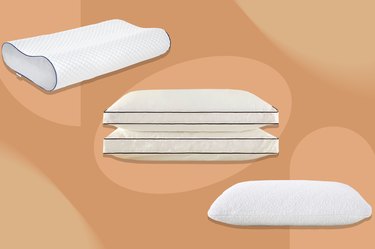
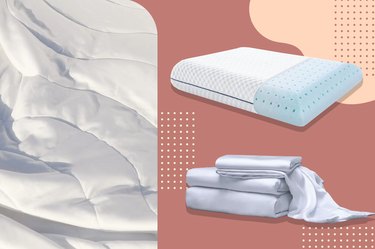
Position your pillow under your head only, not your head and shoulders, to keep your neck at the correct angle. Pillows should be a medium thickness.
Step 3
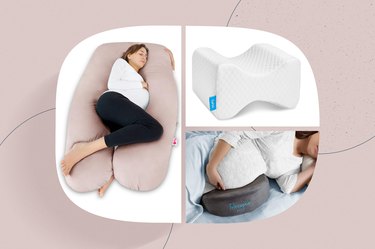
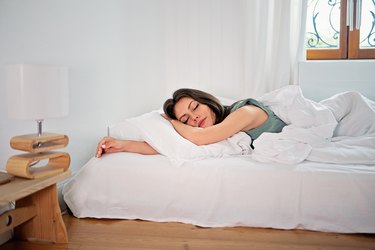
Place a pillow behind your knees if you like to sleep on your back, recommends the American Chiropractic Association. This will ensure that your body is aligned in the right posture. Those who prefer to sleep on their sides should put a pillow between their knees. There is a small type of pillow known as a lumbar roll that some people may also find useful when sleeping on their back. It's used underneath the low back, known as the lumbar area.
Step 4
Avoid bending deeply at the waist when getting out of bed in the morning. Instead, roll to your side, pull your knees up and swing your legs over the side of the bed before slowly getting up.
Tips and Warnings
- Those with chronic back trouble should ask their doctor if wearing a lumbar support to bed might help. These supports can be found online, or in many pharmacies and medical supply stores.
- If you usually sleep on your stomach, try to break the habit. Sleeping in this position can put strain on the back and neck.
Things You'll Need
- 2 pillows
- Firm mattress


