






































































Hyperglycemia is a medical term that means high levels of sugar in the blood. The differential diagnosis of hyperglycemia includes several different conditions linked to abnormalities involving insulin, a hormone that moves sugar out of the bloodstream and into the body's cells. These conditions have different treatments designed to lower blood sugar levels.
Diagnosis of Hyperglycemia
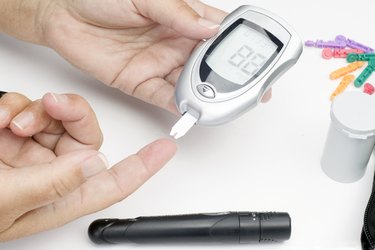
Hyperglycemia is diagnosed through blood testing. Usually a finger is pricked with a small needle and the sugar level in a drop of blood is tested. According to Williams' Textbook of Endocrinology, after fasting for eight hours, a blood sugar level greater than 126 mg/dL is defined as hyperglycemia. A random blood sugar level of 200 mg/dL, without fasting, is also defined as hyperglycemia. A test known as an oral glucose tolerance test (OGTT) is also used to diagnose diabetes. A patient is given a specific dose of sugar and his blood sugar is measured two hours later. A level greater than 200mg/dL is abnormal.
Type 1 Diabetes
An important disease on the differential diagnosis of hyperglycemia is type 1 diabetes. This disease is due to the pancreas decreasing its production of insulin to abnormally low levels. Without insulin, sugar does not move out of the bloodstream and into the body's cells, so blood sugar levels begin to rise, causing hyperglycemia. The disease usually develops in children, not adults, so was previously known as juvenile diabetes.
Type 2 Diabetes
Type 2 diabetes is an important consideration in the differential diagnosis of hyperglycemia. People who have this type of diabetes usually produce enough insulin, but their bodies are resistant to its effects. Obesity is an important cause of insulin resistance in type 2 diabetes. Some people are also more likely to develop insulin resistance due to their genes. Since the insulin cannot effectively drive the blood sugar inside the cells, the sugar remains in the bloodstream and patients become hyperglycemic.
Other Causes of Hyperglycemia
In addition to diabetes, there are several other considerations for the differential diagnosis of hyperglycemia. One of the most common other causes of hyperglycemia is a medication side effect. Steroids like prednisone or dexamethasone, which are commonly used to treat asthma and allergic reactions, can cause hyperglycemia. Some drugs used to treat HIV can also cause hyperglycemia, as can a drug called cyclosporine. Pregnancy can also lead to hyperglycemia. More rare causes of hyperglycemia include diseases such as chronic pancreatitis, hemochromatosis, Cushing's syndrome and pheochromocytoma.
Treatment of Hyperglycemia
The treatment of hyperglycemia varies depending on the cause. Insulin is typically used to treat type 1 diabetes. Exercise, a healthy diet and weight loss can sometimes effectively treat the hyperglycemia associated with type 2 diabetes. If that is not effective, then oral medications can be used. Should oral medications not work effectively, then insulin can also treat type 2 diabetes. Hyperglycemia caused by medications can be effectively treated by stopping the medicines. For hyperglycemia due to other causes, doctors can help patients obtain the best treatment, which varies according to the underlying problem.
References
- "Williams Textbook of Endocrinology"; 11th Ed.; H.M. Kronenberg; 2008
- "Cecil Medicine"; 23rd Ed.; L. Goldman; 2007


