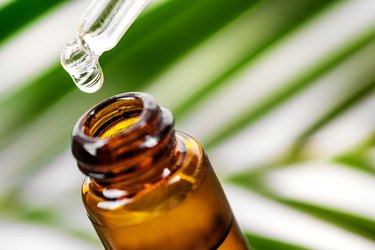
Tea tree oil, or Melaleuca alternifolia as it's known botanically, has been used in Australia since the early 20th century as an antiseptic and anti-inflammatory, but it has come to be used worldwide due to its healing properties. Depending on the age of your child, using tea tree oil can be a hugely beneficial treatment, but there are certainly side effects to be aware of.
Always discuss with your pediatrician before introducing any new treatments to your child's care.
Video of the Day
Video of the Day
Tea Tree Oil for Babies
If you wish to use tea tree oil with your baby, it's important to recognize the strength of this particular essential oil. Though it can be a beneficial health treatment, it's also much stronger than other oils of its type (such as lavender oil). For this reason, it's advised that your baby be at least 6 months old before making use of tea tree oil.
There are several uses of tea tree oil for babies who are 6 months old or older:
- Infection treatment: If your baby has the common cold, rubbing some tea tree oil onto your baby's chest can help as it may promote nutrient absorption in the body, which can aid in recovery from illness.
- Sleeping with a cough: If your baby is struggling to sleep due to a cough, try applying a drop of tea tree oil to the pillow before he or she goes to sleep. This can provide relief for your baby and allow him or her to fall asleep easier.
- Diaper rash: Mixing five drops of tea tree oil with 2 tablespoons of coconut oil can make for a great soothing remedy for your baby's diaper rash. It's important to dilute the tea tree oil with the coconut oil to avoid any burning.
Read more: Sinus Infection and Tea Tree Oil
Tea Tree Oil for Kids
If your child is a little older, there are still many ways she can benefit from tea tree oil uses. Once children are running around, they can get themselves into more trouble, but tea tree oil can be used to help heal the inevitable scrapes:
- Antiseptic for cuts and scrapes: Not just a turn of phrase, tea tree oil really can aid any cuts your little one ends up with. It acts as an antiseptic, and even though it can sting a little, it's a lot less painful than an infection.
- Soothing sunburn: Your child will be spending a lot more time outside, and unfortunately, this can mean sunburn. Prevention through sunscreen is, of course, recommended, but if he still ends up a little red, tea tree oil can be used to soothe his pain and encourage healing. Mix eight drops of coconut oil and eight drops of aloe vera extract with one drop of tea tree oil for application.
- Eczema: Use tea tree oil to soothe any inflammation your child has eczema. Though it certainly isn't a cure, it's antibacterial properties will help ease your child's skin. One drop of tea tree oil per tablespoon of carrier oil applied two to three times a day is recommended.
Read more: Tea Tree Oil vs. Vitamin E
Is It Safe?
As long as you dilute tea tree oil properly, there should be no issues when applying it to your child's skin. It is true that it is stronger than other essential oils, but that shouldn't be cause for concern provided you're mindful in your use of it.
If the skin does become irritated or red following application, or if any other health concerns arise, consult your doctor as this may be due to allergic reaction and will need immediate attention.
It's also hugely important that ingestion or oral consumption is avoided entirely. This can prove highly toxic, so again: be careful when applying to your child's skin. There's no need to be afraid of using tea tree oil providing due care is applied.
Read more: Negative Effects of Tea Tree Oil
- Parasitol Research: Evaluation of the Effectiveness of Tea Tree Oil in Treatment of Acanthamoeba Infection
- Healthline: Essential Oils for Babies
- Lil Bums: 7 Natural Diaper Rash Remedies That You Can Do at Home
- Healthy Gut: 7 Uses of Tea Tree Oil for Kids’ Skin Problems
- The Journal of Antimicrobial Chemotherapy: Evaluation of Short Exposure Times of Antimicrobial Wound Solutions Against Microbial Biofilms: From in Vitro to in Vivo