























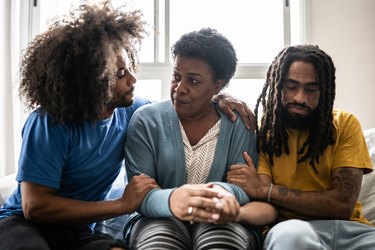































According to experts at Mental Health America and the Mayo Clinic, the loss of a spouse often produces a major period of grief and stress. The grieving process begins with a deep sense of shock and possibly denial, and as time passes, these feelings can change to profound sadness, anger, and even guilt. Experts at the Mayo Clinic note that the first year after the death of a spouse can be full of reminders that cause difficult feelings of loneliness and loss. Fortunately, individuals can learn self-help techniques to cope with these changes, and with time, the process will often get easier.
Step 1
Seek emotional support from a bereavement group or individual therapist. Experts at the Mayo Clinic note that grief can be an intense emotional process that can produce anxiety and depression. Individuals can take advantage of community support groups for grieving spouses. The peer support from people who are experiencing the same loss can give people a sense of perspective and security. Likewise, grief counseling with a professional therapist can help an individual cope with the overwhelming feelings of sadness and loneliness that often occur after the loss of a spouse.
Step 2
Plan social activities or outings during difficult times. Experts at the Mayo Clinic note that specific events such as birthdays or holidays can trigger strong feelings of loneliness after the loss of a spouse. Grieving spouses should try to anticipate these events ahead of time and make plans to be with friends or family who can offer support and companionship.
Step 3
Take part in a new hobby or sport. Experts at Mental Health America note that it is important for grieving spouses to gradually develop lifestyle changes that help them process the loss and grief. An enjoyable activity can provide a needed distraction as well as new social connections. Spouses should consider trying something new that they have always hope to learn or experience, such as learning a new language or hobby.
Step 4
Connect with others by attending family events, joining community activities, or adopting a pet. Experts at the Mayo Clinic suggest that loneliness and grief caused by the death of a spouse is eased by participation in enjoyable family activities, or community service projects. By maintaining strong emotional connections with others, and individual will likely experience positive emotions that can often ease the difficult emotions such as loneliness.


Member Comments