


































































People who have acid reflux may experience nothing more than a bitter taste in the back of their throats upon belching. However, some people experience this along with the chest clutching pain of heartburn, which sends many to the ER thinking they're having a heart attack. According to a study reported on Acid Reflux Facts in 2009, close to 60 million adults suffer from acid reflux at least once a month and 25 million suffer from acid reflux once a day.
Definition
Acid reflux occurs when acid from the stomach backs up into the esophagus. The esophagus is the tube that leads from the throat to the stomach. This tube has a band of muscles at the end of it that keeps food and acid from backing up into it after eating. However, certain conditions may prevent it from working correctly, causing acid reflux. Acid reflux is also known as heartburn; when it occurs several times a week or after eating or drinking certain things, it is called gastroesophageal reflux disease, or GERD. People with acid reflux often complain of a burning sensation in the chest, belching up acid or food, bloating and stomach pain. Stomach pain associated with acid reflux is called dyspepsia.
Causes
A weakness in the lower esophageal sphincter (LES) is the most common cause for acid reflux. The LES is a band of muscles that normally loosen to let food and liquid pass from the esophagus into the stomach. Once the food has passed through, the band tightens, so the food, liquid or stomach acid cannot reflux. When this band of muscles relaxes prematurely, the contents of the stomach come back up, causing heartburn and dyspepsia. Other causes include pregnancy, hiatal hernia, asthma, peptic ulcer, smoking, laying down directly after eating, eating foods that are spicy or acidic, and wearing clothes that are too tight.
Diagnosis
People who have acid reflux and dyspepsia are urged to see a doctor. In the first instance, he may ask questions pertaining to the condition, take blood work and do an examination of the throat. This will help rule out other conditions that may cause the acid reflux or mimic it. After this, he will order an upper gastrointestinal X-ray; this is an X-ray of the stomach. He will look for ulcers or hernias or any other condition of the stomach that could be causing the acid reflux. The doctor may also suggest keeping a food journal to pinpoint if any foods are causing the acid reflux.
Treatments
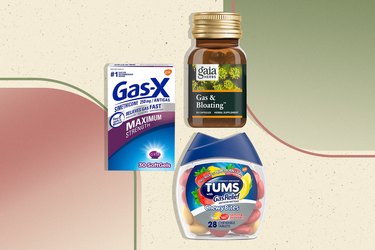
Medications are often used to suppress acid reflux. The first type of medication, antacids, can be purchased over the counter under many brand names. Although some of these antacids are in pill form, most are in liquid form. Antacids work by neutralizing stomach acid in people with infrequent or mild cases of acid reflux. Another medication used for acid reflux is histamine2-receptor antagonist. This medication works to reduce excess stomach acid produced by an inflamed stomach. If a condition such as a hernia or ulcer is causing the acid reflux, medication may be given to reduce pain and promote healing; in some cases, surgery may be necessary.
Warnings
Experiencing heartburn every now and then can be normal. However, experiencing heartburn twice a week or more should be followed up by a doctor. Any persistent stomach pain should also be followed up with a doctor.


