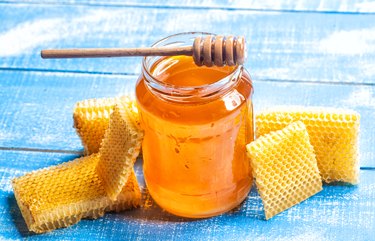
Raw honey is much more than just a sweetener: It's also prized for it's antibacterial, antioxidant and other health-supporting properties. But beyond these perks, are there any raw honey dangers to be aware of?
First things first, raw honey is "honey as it exists in the beehive," according to the U.S. Department of Agriculture. In other words, this is honey that hasn't undergone additional processing to extend its shelf life or add sweetness.
Video of the Day
Video of the Day
But is this raw, unfiltered honey safe? Here, we explain whether you can eat raw honey, plus the risks and benefits of doing so.
Is Raw Honey Safe?
Short answer: Yes, it is safe to eat raw honey if you're over the age of 1, according to the Cleveland Clinic.
And not only is raw honey safe to eat, but it's the least-processed version of the sweetener, so it likely also contains the most antioxidants (more on that later).
Tip
Any kind of honey — including raw honey — may be bad for your infant, per the Cleveland Clinic. Your baby can't eat honey until they're over the age of 1 to avoid potential raw honey dangers.
Raw Honey Benefits
Unfiltered honey is generally safe and boasts many health-supporting qualities. Here's why raw honey is good for you:
1. It Has Antibacterial Properties
Honey is naturally antibacterial and antimicrobial, according to the Cleveland Clinic. That's because most types of honey generate hydrogen peroxide, an antibacterial agent, per a December 2020 review in Food Chemistry.
As a result, you can use honey to kill certain bacteria that can lead to infection, according to an April 2021 report in the Saudi Journal of Biological Sciences. These bacteria include:
- Escherichia coli (E. coli)
- Enterobacter erogen
- Salmonella zyphimurium
- S. aureus
2. It Can Support Wound Healing
Similarly, the antibacterial benefits of local, raw honey can also support wound healing, according to the Mayo Clinic.
Research shows it can help disinfect a wound, promote tissue repair and reduce scarring, per the Saudi Journal of Biological Sciences.
3. It's a Rich Source of Antioxidants
Raw honey is a natural source of antioxidants, which are substances that can protect the body from harmful free radicals and oxidizing agents, according to August 2018 research in Molecules.
As a result, the antioxidant-related benefits of eating local honey are linked to reduced risk for problems like:
- Heart disease
- Cancer
- Immune system decline
- Cataracts
- Inflammation
Tip
There's evidence to suggest that dark varieties of honey — like buckwheat, chestnut and manuka honey — contain more antioxidants than light honey, per the Cleveland Clinic.
4. It Can Soothe Cough Symptoms
Ever drink tea with honey when you have a cold? Well, there's evidence to back up this natural cough remedy.
According to the Mayo Clinic, honey can soothe an irritated throat and act as a cough suppressant when you're sick.
5. It Might Relieve Digestive Discomfort
Another positive side effect of honey is that it can help ease digestive distress.
According to the Mayo Clinic, honey can help treat diarrhea. It may also support rehydration as you recover.
6. It Could Support Brain Health
Honey isn't just good for your body — it may also be good for your brain.
Indeed, there's some evidence to suggest that honey has antidepressant, anticonvulsant and anti-anxiety qualities, according to the Mayo Clinic. It may also help prevent memory disorders, per an April 2017 review in Pharmacognosy Research.
Raw Honey Dangers
Now that you know the benefits of this natural sweetener, are there any dangers of raw honey to consider? While it's generally a safe ingredient, there are a few particular circumstances where raw honey can make you sick. Here's what happens if you eat bad honey:
1. It Can Lead to Infant Botulism
Raw and heat-treated honey may contain spores of the Clostridium botulinum bacteria, which can cause botulism, a rare but serious illness that attacks the nerves, according to the Cleveland Clinic.
These spores are harmless if ingested by most children and adults, but infants' digestive systems are not mature enough to prevent this bacteria from forming toxins. As a result, no honey of any kind should be given to babies under the age of 1 year.
Per the Centers for Disease Control and Prevention, this contaminated honey can make your child sick and cause symptoms like:
- Constipation
- Poor feeding
- Ptosis
- Sluggish pupils
- Flattened facial expression
- Diminished suck and gag reflexes
- Weak and altered cry
- Trouble breathing
Tip
Organ transplant patients may also be at higher risk for this side effect of raw honey, per the American Academy of Family Physicians. If you're recovering from a transplant, ask your doctor if raw or local honey is good for you or if it's best to avoid it.
2. It Can Lead to Digestive Discomfort
Honey is sometimes used to ease digestive issues like diarrhea. But what about the reverse — does honey cause diarrhea?
Honey can give you diarrhea and other symptoms like a stomach ache or gas due to its high fructose content. This can trigger digestive issues for people who are more sensitive to the sugar, like those who have irritable bowel syndrome or fructose malabsorption, according to September 2016 research in Medical Hypotheses.
If honey does give you diarrhea, it's best to avoid it.
3. It Could Trigger Allergies
If you're allergic to bee pollen, it's possible that eating raw honey can trigger symptoms, according to the Mayo Clinic.
This allergy is rare, but if you have it, it can cause symptoms like:
- Wheezing and trouble breathing
- Dizziness
- Nausea
- Vomiting
- Weakness
- Excessive sweating
- Fainting
- Irregular heart rhythms
Warning
Some people can have an extreme allergic reaction called anaphylaxis, where your throat closes up and makes it difficult to breathe, per the Mayo Clinic. Seek medical care immediately if this happens to you.
- Pharmacognosy Research: "Honey and Health: A Review of Recent Clinical Research"
- American Family Physician: "Primary Care of the Solid Organ Transplant Recipient"
- U.S. Department of Agriculture: "Commercial Item Description"
- Mayo Clinic: "Honey"
- Cleveland Clinic: "The Benefits of Honey + How to Incorporate It Into Your Diet"
- Food Chemistry: "A current perspective on hydrogen peroxide production in honey. A review"
- Saudi Journal of Biological Sciences: "The antibacterial activities of honey"
- Molecules: "Antioxidant Activity as Biomarker of Honey Variety"
- Cleveland Clinic: "When Is It Safe to Give Honey to My Baby?"
- Centers for Disease Control and Prevention: "Infant Botulism"
- Medical Hypotheses: "Is Fructose Malabsorption a Cause of Irritable Bowel Syndrome?"
- Mayo Clinic: "Food allergy"
- The National Honey Board: Frequently Asked Questions
Is this an emergency? If you are experiencing serious medical symptoms, please see the National Library of Medicine’s list of signs you need emergency medical attention or call 911.