
























































Recommended Diet for PCOS

Recommended Diet for PCOS
Photo Credit fruit and vegetables on a pile studio isolated image by dinostock from Fotolia.com

Diagnosed in 5 to 10 percent of American women, PCOS, or polycystic ovary syndrome, is the most common endocrine disorder in women. Some of the symptoms include irregular menstrual cycles, acne, excessive hair growth on the body and face and cysts on the ovaries, which can ultimately lead to infertility. The underlying cause of PCOS is thought to be insulin resistance, or the incapacity of the body to respond appropriately to this hormone. Some important nutritional considerations can help reduce most of the symptoms associated with PCOS.

Moderate Carbohydrate Intake

Because of the underlying insulin resistance, a traditional low-fat, high-carbohydrate diet is definitely not the best approach with PCOS. The optimal carbohydrate intake needs to be individualized. Dr. Walter Futterweit, clinical professor of the Division of Endocrinology of the Mount Sinai School of Medicine, has been working with women with PCOS for over 25 years. He recommends a carbohydrate intake corresponding to 50 percent of the calories in women at a healthy weight, or 225 g for an 1,800-calorie diet, while women with weight problems should restrict their carbohydrates to 40 percent or less of their daily calories, or 150 to 180 g or less for a 1,500- to 1,800-calorie diet, respectively. The daily carbohydrate intake should never be lower than 40 g to prevent ketosis.

Low-Glycemic Carbohydrates

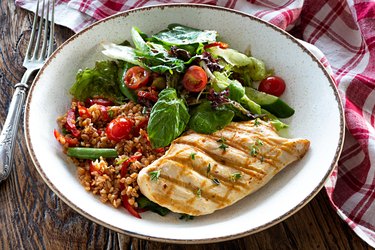
In addition to controlling carbohydrate intake, choosing high-quality carbohydrates is recommended in order to lower the levels of insulin. Low-glycemic-index carbohydrates are the best option. Since they are digested more slowly, they are released at a slower rate into the bloodstream and do not overstimulate insulin production. Legumes such as beans and lentils, nonstarchy vegetables, sweet potatoes, most fruits, stone-ground or sourdough bread, basmati rice, barley, oatmeal, quinoa and bulgur all have a low glycemic index and are therefore good foods to include in a PCOS diet.

Protein with Carbohydrates

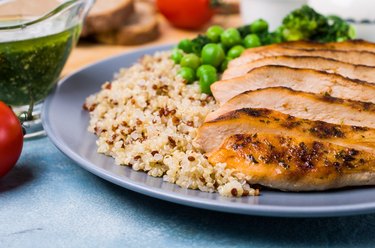
To further reduce the impact of carbohydrate-containing foods on the insulin secretion, avoid eating carbohydrates on their own. It is better to pair carbohydrates with a source of protein, as recommended by dietitian Carol Brannon. For example, carbohydrate-rich foods such as fruits, crackers or bread could be paired with a protein source such as peanut butter, cheese or lean meat.

Healthy Fats

Saturated and trans fats are not good for patients with PCOS, as they contribute to insulin resistance. Instead, unsaturated fats, monounsaturated and omega-3 fats in particular, are recommended. These include olive oil, canola oil, nonhydrogenated margarine, nuts and seeds, nut butter, fish and flax seeds. These healthy fats improve the sensitivity of the body to insulin, in addition to optimizing blood cholesterol levels, which is especially important considering the higher risk of developing cardiovascular diseases in women with PCOS.

Healthy Weight

PCOS is characterized by insulin resistance. To compensate, the pancreas tries to secrete more and more insulin, which results in high levels of insulin, called hyperinsulinemia, in most women affected with PCOS. High concentrations of insulin promote fat storage, which explains why 60 percent of women with PCOS are overweight or obese, according to Pcosupport.org. Obgyn.net reports that a 5 percent weight loss can significantly improve PCOS-related symptoms and can be achieved by following a moderate-carbohydrate diet and reducing portion sizes.

References

Article reviewed by Holland Hammond Last updated on: Jun 15, 2011

Must see: Photo Galleries

Member Comments