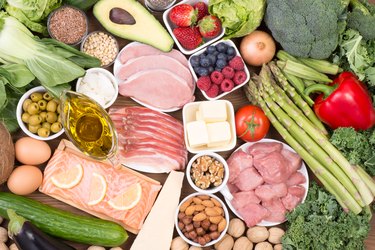
If you're a carb lover, a low-carb diet might seem like cutting out everything you love, and maybe that used to be true. But today, you can use zero-carb foods to make just about any dish. Enjoying a low-carb diet is all about planning. It's knowing which foods you can eat and which ones you must avoid.
The Best Low-Carb Diet
Video of the Day
If you're looking into a low-carb diet, it's probably because you want to lose weight. There are many options: the keto diet, the Atkins diet and the paleo diet. It's hard to figure out which one is right for you and more important, which one works?
Video of the Day
Low-carb diets are effective for weight loss, according to a March 2019 article in StatPearls. Out of all the low-carb options, the keto diet is most effective. Generally, keto dieters experience an immediate loss of weight. This is partially due to water loss, but you lose fat, too.
As with most low-carb diets, the effects don't last forever. In about a year, weight loss becomes similar to other diets. But that doesn't mean that continuing the diet won't allow you to maintain your weight. It does mean you won't be losing weight forever, and you'll need additional methods for further loses.
How the Keto Diet Works
Unlike the Atkins diet, the keto diet has been around for quite a while. The Nutrition Source's May 2018 review of the Keto diet, dated it back to the 19th century. That's more than 100 years of history. It was initially used as a treatment for people with diabetes and then as a method to reduce seizures for severe cases of epilepsy.
But how exactly does the keto diet work? You've heard buzz words like ketones and ketosis, but without context, they lack meaning. Your body uses glucose for energy from carbohydrates. When it runs out of accessible glucose, it uses your liver's reserve. That's when your glucose levels are entirely depleted, and you enter ketosis.
There may be a period where muscles break down for energy, but it'll be short-lived. Once your glucose levels are entirely depleted, your insulin will begin to drop. Then, the blood starts to use fat as its primary source of energy. So the liver creates ketones from your fat, maintaining ketosis.
Doing the Keto Diet
With such a long history and effectiveness, the keto diet makes a lot of sense. But there are questions about how it works. The Nutrition Center's review recommended eating about 70 to 80 percent fats, 15 to 20 percent protein and 5 to 10 percent carbs. Of course, there are a lot of different ways you can break that down.
You'll notice that the diet doesn't require total abstention from carbs. So, carb lovers can rejoice. But watch out for foods with too much protein, the amino acids can turn to glucose disrupting ketosis. Here's a rundown of what a 2,000-calorie diet should look like:
- 165 grams of fat
- 75 grams of protein
- 40 grams of carbohydrates
For the most part, healthy individuals will avoid ketoacidosis or a toxic build-up of ketones. It's a life-threatening condition and the most dangerous side effect of the keto diet. People in good health will continue to produce enough insulin on their own. Specific populations, however, should be wary due to keto's impact on insulin and energy synthesis, such as those with diabetes.
Best Foods to Avoid
Starting a new diet is all about planning. You need to know what you can eat, what you can't and the secret places they're hiding. Once you know which foods to avoid, you'll have an easier time determining what you can order on a menu. Better yet, you'll know which foods to buy at the grocery store.
The book Addictocarb Diet by Bruce Roseman, MD, lists nine foods that are best avoided. It's not a complete list of carb-loaded foods, but it's the worst of them. Dr. Roseman found that certain carbohydrates are more addictive than others. By eliminating the most addictive carbs, you'll be able to reduce your carb cravings.
Some of the foods on the list are rather obvious such as sugar, high fructose corn syrup and soda. They're pretty much at the top of every list. Then there are the grains every diet wants you to quit: bread, pasta and flour. The ones you might forget, though, are fruit juice, rice and potatoes.
Read more: Do Not Eat List for Low-Carb Diets
High and Low-Carb Fruits
Fruits are an excellent source of essential minerals and vitamins. But they're full of carbohydrates, albeit from natural sugars. Of course, a low-carb diet doesn't mean cutting out all carbs. There are also a lot of low-carb fruits.
Make sure you know where to look up the nutritional information of your food. The USDA has a "FoodData Central Search" that provides nutritional information for any food item.
Low-carb fruits include:
Blueberries
Strawberries
Berries, in general, are low in carbs making them a great option* Grapefruit
Cantaloupe
Apricot
High-carb fruits to avoid include:
- Bananas
- Raisins
- Pears
- Peaches
What About Vegetables?
When creating your low-carb food list, you don't want to forget vegetables. They're some of the best sources for vitamins. While they may not seem like a hardy source of carbs, some of them can be. But that doesn't mean you can skip out on the vegetables, even if you aren't a big veggie fan.
Deciding which vegetables are okay for the keto diet is as simple as checking the same USDA website. It's actually an excellent source for any time you have any questions about whether you can eat an item.
The worst vegetables for a low-carb diet are starchy vegetables. Potatoes, yams and sweet potatoes all have too many carbohydrates for regular consumption. But that doesn't mean you can't have them on occasion.
The low-carb vegetables you can add to your low-carb food list include:
- Cabbage
- Spinach
- Lettuce
- Hearty greens
- Broccoli
- Fennel
- Asparagus
- Zucchini
- Cauliflower
- Alfalfa
- Celery
Zero-Carb Foods
While your diet can consist of 5 to 10 percent carbohydrates, the best foods are zero-carb foods. They not only help you lose weight but also leave space in your diet for treats. Or you can combine these zero-carb foods with things from your low-carb lists to make delicious meals.
Some of the simplest low-carb foods are meats. The best meats include chicken, beef, turkey and salmon. Dairy is also a great option, it tastes delicious and has a lot of zero calorie options. Butter is a great one, as is cheese, though it does contain about 1 percent carbs. Some other zero carb foods are vinegar, mustard and salt, so you don't have to worry about skimping on flavor.
Read more: 6 Reasons Why the Keto Diet Is Not for You
Side Effects of Going Keto
The Continuum of Care Project created a booklet in 2015 covering possible side effects of ketosis. They recommend weaning yourself onto the diet to avoid possible dramatic side effects. Limit yourself to one-third of the diet's recommendations the first day, two-thirds the second day and day three go full force. This will allow you to monitor your body's responses, ensuring that this is the best diet for you.
And that's because this diet isn't for everyone. There are those who will struggle on keto. Healthy individuals, however, are at lower risk of side effects and will likely be fine. Since they are a possibility though, everyone should be aware of them.
Some possible side effects include constipation, hypoglycemia and high cholesterol. Other, more severe side effects are osteoporosis, kidney stones and pancreatitis. If you're at higher risk for any of these conditions, you should consult a doctor before starting this diet. Even if you aren't at risk. if you begin to notice any related symptoms, talk to your doctor.