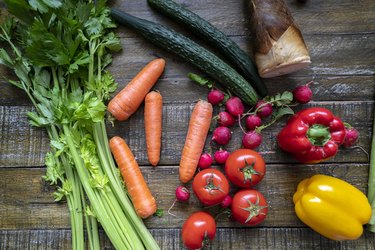
Make the most of your trip to the grocery store by following a vegetarian diet full of plant-based foods. Even if you are not a vegetarian, a basket filled with fresh fruits; vegetables; whole grains, like brown rice and quinoa; and protein options, such as beans and tofu, will ensure that your meatless Monday meals are never boring or void of nutrients.
Benefits of a Vegetarian Diet
Video of the Day
A well-balanced vegetarian diet should meet all your nutrition needs. Benefits of a vegetarian diet include:
Video of the Day
- A reduced chance of obesity
- Lower risk of heart disease
- Lower blood pressure
- Lower risk for Type 2 diabetes
Even if you aren't interested in giving up meat completely, keeping a list of vegetarian food items handy and incorporating as many vegetables, fruits, nuts, seeds and grains in your diet is a great way to make your health a priority.
Beans, Lentils and Peas for Protein
Since vegetarian meal plans don't contain meat, other options, like beans, should be substituted. Legumes, such as beans and lentils, are a staple on a vegetarian food list because of the amount of protein they have.
Chickpeas, also known as garbanzo beans, are a good source of carbohydrates, protein and fiber. Both the canned and dried varieties have a low glycemic index as they contain a resistant starch that makes them slow to digest, which is good news for those who have diabetes.
The Grains and Legumes Nutrition Council recommends up to two or three servings of beans and other types of legumes each day. Beans are classified as a good source of nonmeat protein. Beans also do double duty. Not only are they a protein, but they can stand in as a source of vegetables as well.
Beans for Fiber and Minerals
According to the Bean Institute, dry beans are rich in insoluble fiber, which helps keep you full and regular and may help to combat constipation, colon cancer and other gut-related issues. Most beans are a great source of potassium, a mineral that helps regulate blood pressure, and supply a good amount of copper and magnesium. Cut down on the time it takes to prepare dry beans with an alternative cooking method.
Read more: What Are the Benefits of Fava Beans?
Soy: The Original Meat Alternative
It's not unheard of for vegetarian meals to include a soy-based main dish. The Soy Foods Association of America says that soy is the only plant protein that is equal to meat protein, as soy contains all nine essential amino acids. Vegetarians often use soy in place of chicken and other meats in a variety of dishes.
Naturally cholesterol-free and low in saturated fat, unprocessed soy products reduce your risk of heart disease. According to PETA, less processed soy products, such as tofu and tempeh, are the best options to consume, but processed products, like mock hotdogs and hamburgers, are still cholesterol free and obviously a better choice than animal protein.
Read more: Soy Milk Advantages and Disadvantages
Vegetarian Shopping List: Fruit
When it comes to fruits and vegetables, the American Heart Association recommends filling half your plate with these foods at any meal. This breaks down to about 2.5 cups of fruit each day. Sneak fruit into your diet by eating it with your cereal or blending it into a smoothie. Even 1 cup of 100 percent orange juice in the morning can do the trick.
Keep It Versatile With Vegetables
The Harvard T.H. Chan School of Public Health says that a diet rich in vegetables can help lower blood pressure, reduce the risk of heart disease and stroke, and prevent digestive problems. The International Vegan Association suggests that plant-based eaters get at least four servings of vegetables each day.
A good rule of thumb is to consume a colorful array of vegetables each day for optimal nutrition results. Vegetable servings are generally half a cup of cooked vegetables, one full cup of raw veggies or half a cup of 100 percent juice.
Sprinkle Nuts Liberally
Tree nuts, like walnuts and almonds, have a wealth of nutritional benefits. Naturally cholesterol free, nuts are a good source of dietary fiber, and they contain lots of essential nutrients, such as B vitamins, and minerals, like calcium, iron, zinc and potassium.
According to the Cleveland Clinic, some studies suggest that consuming 5 ounces of nuts per week can help to reduce the risk of heart disease by 30 to 50 percent. Be mindful, though, that nuts are high in calories, so make sure to eat them in place of other high-fat foods. For example, sprinkle nuts on top of a salad instead of bacon bits or croutons.
More Health Benefits With Seeds?
Throughout history, seeds have been an important energy source for the human body. The Dietary Guidelines, 2015-2020, suggests limiting your fat intake and emphasizing healthy fat, which seeds have plenty of. Options like pumpkin, flax, sesame and sunflower seeds are high in omega-3 fatty acids and should be on every vegetarian shopping list.
Largely considered a superfood, chia is another seed that vegetarians and vegans should incorporate into their diets. As a complete protein, they contain nine amino acids that are not made by the body and are also the richest source of omega-3 fatty acids of all seeds.
Great Grains to Try
Wheat, barley, bulgur, oatmeal, rye and quinoa are a few types of whole grains. A whole grain is the entire seed of a plant, which is made of three parts: the bran, the germ and the endosperm. When a whole grain is refined and stripped of the bran and the germ, about 25 percent of the grain's protein is lost along with upward of 17 vital nutrients.
White rice is a good example of a refined grain that offers little nutritional value. As such, vegetarians and anyone interested in optimizing their health should make sure to eat whole grains, like brown or wild rice.
Wheat, the second most consumed cereal for humans after rice, is a nutritious grain that's chock-full of proteins, minerals, B vitamins and fiber. This healthy carbohydrate is often used to make bread and cereals. Bran cereal for breakfast is a great option for keep you feeling full until your next meal.
- Harvard T.H. Chan School of Public Health: Chickpeas (Garbanzo Beans)
- The Bean Institute: Bean Nutrition Overview
- Health.gov: Dietary Guidelines, 2015-2020: Chapter 2. A Closer Look at Current Intakes and Recommended Shifts
- Soy Foods Association of North America: Why Vegetarians Love Soy
- Cleveland Clinic: Soy Foods: Benefits of Soy
- PETA: Everything You Wanted to Know About Soy but Were Afraid to Ask
- Harvard T.H. Chan School of Public Health: Vegetables and Fruits
- American Heart Association: How to Eat More Fruits and Vegetables
- International Vegan Association: Demystifying Vegan Nutrition
- Cleveland Clinic: Nuts and Heart Health
- Nutrition Australia: Nuts and Health
- Health.gov: Dietary Guidelines, 2015-2020: Chapter 1. A Closer Look Inside Healthy Eating Patterns
- Harvard T.H. Chan School of Public Health: Chia Seeds
- Food & Nutrition: 9 Super Seeds Are Small but Mighty
- Oldways Whole Grain Council: What Is a Whole Grain?
- Advances in Biotechnology & Microbiology: Wheat Bran - Composition and Nutritional Quality: A Review
- MedlinePlus: Vegetarian Diet
- Grains and Legumes Nutrition Council: Recommended Amount of Legumes