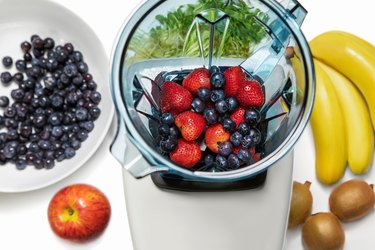
Eating five small meals when you're trying to lose weight may help keep you from feeling deprived or overly hungry. It may also help stabilize your blood sugar and energy levels so that restricting your overall calorie intake is more manageable. Eating multiple meals doesn't necessarily lead to more weight loss than other eating strategies, though. But, if the idea of regular grazing fits your schedule and allays your concerns that you'll feel hungry and deprived when dieting, use it to help you lose weight.
Frequent Eating Pros and Cons
Video of the Day
If you are new to dieting, eating five small meals per day may help you develop a connection to your feelings of hunger and fullness. Because the meals are small, you'll eat until the edge is taken off your hunger — not until you're stuffed. Five mini-meals can also help calm the serious cravings and hunger signals that accompany wild swings in blood sugar levels — which affect many dieters. Giving yourself permission to eat regularly and often also helps prevent overeating and binge episodes. A meal plan consisting of frequent, small meals has a positive effect on cholesterol and insulin levels, too.
Video of the Day
The strategy of eating five small meals per day does not, however, cause weight loss. The International Society of Sports Nutrition noted in March 2011 that meal frequency seems to have no impact on body composition in non-exercising people. You don't burn more calories by eating small meals more frequently, nor do you experience a rise in your resting metabolic rate as a result.
A February 2013 study published in Obesity found that eating up to six meals per day does not stimulate greater fat burning and may cause you to eat more than you otherwise would. This may be because food is often on your mind, and you pay more attention to time cues rather than indications of true hunger.
Read more: Why Is It Healthy to Eat Three Meals a Day?
Planning Five Small Meals
If you're committed to experiencing the pros of eating five small meals per day for weight loss, your first step is to determine how many calories you should consume daily to safely lose 1 to 2 pounds per week. An online calculator can help you estimate how many calories you need per day to maintain your weight by taking into account your size, age, gender and activity level.
Weight loss results when you eat fewer calories than you need for maintenance; consume 3,500 calories fewer, or about 500 fewer per day for a week, and you'll lose one pound. So, subtract 500 to 1,000 calories from the number of calories you need to maintain your weight to determine your daily total calorie intake for weight loss. Divide this calorie goal by five to determine approximately how many calories to eat at each meal. For example, if you determine you need 2,200 calories to maintain your weight, eat between 1,200 and 1,700 calories total per day to lose 1 to 2 pounds per week. Each meal could then contain about 300 calories.
You should consume a minimum of 1,200 calories per day; fewer than this amount leads to low energy, muscle loss and possible nutrient deficiencies. If your calorie deficit would take you under 1,200 calories, readjust your goals for slower but healthier weight loss.
Read more: A Meal Plan for Obesity
Composition of Each Small Meal
Plan ahead to create nutritionally-complete and satisfying small meals. Avoid the pitfall of making small meals out of easy-to-grab snack foods; you'll likely end up consuming more calories than you should to lose weight. A study published in the American Journal of Clinical Nutrition in May 2012 found that people who frequently indulged in snacks in addition to meals had a higher risk of type 2 diabetes. This risk was greatest for snackers who ate a typical processed food diet. These snack foods are not usually nutrient rich or filling.
Sample Small Meals
Each small meal for weight loss should contain 2 to 4 ounces of lean protein, 1 or more cups of fresh vegetables, about 1 to 2 teaspoons of healthy unsaturated fats and 1/2 cup of whole grains or starchy vegetables. Fresh fruit can stand in at one or two of the five meals for the fresh vegetables. The exact amount you eat at each meal depends on your daily calorie quota.
Sample mini-meals could consist of two corn tortillas wrapped around chicken breast topped with 1/4 of an avocado and shredded lettuce; Greek yogurt topped with blueberries and walnuts; a bowl of oatmeal with milk, almonds and strawberries alongside scrambled egg whites; 100 percent whole-wheat toast topped with sliced deli turkey, avocado and spinach leaves; 2 cups of leafy greens topped with a few ounces of sliced flank steak, grape tomatoes, bell peppers and sunflower seeds; a smoothie made with spinach, coconut milk, 1/2 of a banana, berries, flax meal and whey protein; or steamed tofu over quinoa with stir-fried vegetables.
Exercise, Small Meals and Weight
The International Society of Sports Nutrition did note that although sedentary people don't see a weight loss impact from increased meal frequency, active people who restrict calories may lose less lean body mass and more fat when they stick to five small meals per day. Limited research has been conducted on why frequent small meals benefit athletes more than sedentary people, however. If you are active, plan to eat two of your five meals around your training time — having a small meal an hour or so prior to promote energy and a small meal afterward to facilitate muscle repair and refill your energy stores.
- Obesity: "Effects of Increased Meal Frequency on Fat Oxidation and Perceived Hunger"
- LifeTime Weight Loss: "Why Meal Frequency Matters"
- American Journal of Clinical Nutrition: "Eating Patterns and Type 2 Diabetes Risk in Men: Breakfast Omission, Eating Frequency, and Snacking"
- Journal of the International Society of Sports Nutrition: "International Society of Sports Nutrition Position Stand: Meal Frequency"
- AsktheDietian.com: "Overweight and Weight Loss"
- National Heart, Lung and Blood Institute: "Healthy Eating Plan"
- Health Status: BMR Calculator