










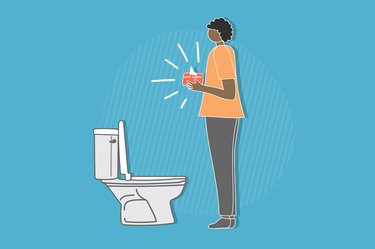
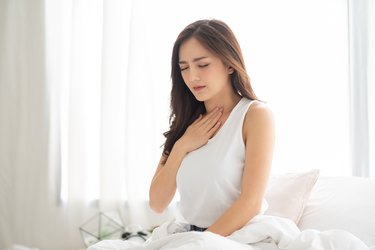









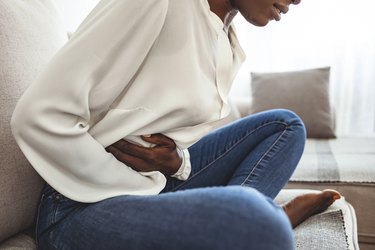





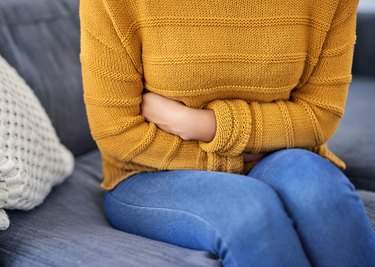







Gallstones affect an estimated 20 million people in the United States. Gallstone formation (cholelithiasis) occurs in the gallbladder, a small pear-shaped organ beneath the liver that stores and releases bile into the intestinal tract. Most people who have gallstones are unaware of their presence and don't experience symptoms. However, symptomatic gallstones can cause abdominal or back pain. Hundreds of thousands of gallbladders are removed each year as a result of gallstones (cholecystectomy).
Diet to Treat
While no diet therapy can dissolve gallstones, experts recommend a low-fat diet for people already diagnosed with gallstones to reduce the pain and discomfort. Each time a high-fat meal is consumed, the gallbladder contracts to release bile. If gallstones are present, pain can result each time the gallbladder contracts.
Weight
According to the National Institutes of Health, obesity is a strong risk factor for gallstones, and that is especially true for women. While weight loss can reduce the risk of gallstone formation, ironically, rapid weight loss (more than 3 lb. per week) can promote gallstone formation or increase the likelihood that silent gallstones will become symptomatic. The same is true for people who lose and gain weight repeatedly, especially losses and gains of more than 10 lb.
Heathy Eating
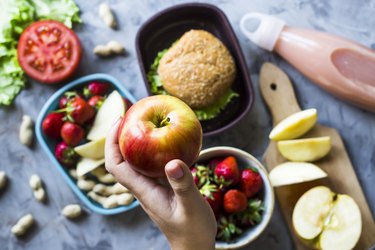
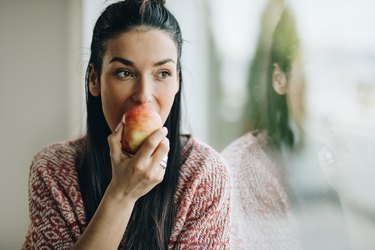
The findings of an Italian study, published in the American Journal of Clinical Nutrition, compared the diets of 100 newly diagnosed gallstone patients and 290 healthy subjects without gallstones. The study suggested that the risk of developing gallstones can be reduced by consuming a diet already recommended for preventing several other common diseases, such as heart disease, diabetes and hypertension. That means a diet low in saturated fat and refined sugar, higher in polyunsaturated and monounsaturated fats, and high in fiber.
Vegetarian Diet
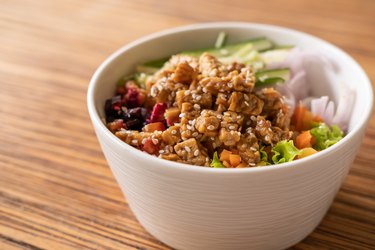
Both animal and human studies have found that gallstones and surgery for gallbladder removal is significantly less common among vegetarians than among nonvegetarians. The more vegetables consumed, the lower the risk. Vegetable protein seems to be particularly important for reducing risk.
Other Food Connections
Both the Health Professionals follow-up study of men and the Nurses Health Study of women, conducted by researchers at the Harvard School of Public Health, found that drinking caffeinated coffee was linked to a lower incidence of symptomatic gallstones. Drinking decaffeinated coffee was not beneficial, suggesting the preventive effect came from the caffeine. Another study suggested that alcohol might decrease the formation of cholesterol gallstones. Neither caffeine nor alcohol has been proven as a way to help prevent gallstones.
Supplements
Nutritional supplements could help prevent gallstones, but evidence doesn't back up such claims. Several animal studies suggest that vitamin C supplements could help prevent gallstones and a large population study of women found that higher blood levels of vitamin C were linked to lower risk of gallbladder disease. However, experts say more research is needed to know for sure and to identify a correct dosage.
References
- "Alternative Medicine Review" Nutritional Appraoches to Prevention and Treatment of Gallstones; Alan R. Gaby; Alternative Medicine Review; Alan R. Gaby; Volume 14, 2009
- "American Journal of Clinical Nutrition" Diet, Physical Activity, and Gallstones--A Population-Based, Case-Control Study in Southern Italy; G. Misciagna, S. Centonze, C. Leoci, V. Guerra, A.M.Cisternino, R. Ceo, M. Trevisan; Volume 69, 1999
- "Journal of the American Medical Association" A Prospective Study of Coffee Consumption and the Risk of Symptomatic Gallstone Disease in Men; M. F. Leitzmann, W.C. Willett, E.B. Rimm, M.J. Stampfer, D. Spiegelman, G.A. Coldtiz, E Giovannucci; Volume 281(22), 1999
- "Gastroenterology" Coffee Intake is Associated With Lower Risk of Symptomatic Gallstone Disease in Women; M.F. Leitzmann, M.J. Stampfer, W.C. Willett, D. Spiegelman, G.A. Colditz, E.L. Giovannucci; Volume 123(6), 2002


