






























































Fish need omega-3 fatty acids to stay alive in the cold ocean waters, and humans need it to maintain joint health, cell fluidity and skin elasticity. Omega-3 also reduces inflammation in the body, prevents the blood from excessive clotting, helps the arteries dilate, improves the body's insulin response and reduces lipids in the bloodstream. Omega-3 fatty acids are essential to the body's health and, because the body does not make them, must come from the diet.
Salmon
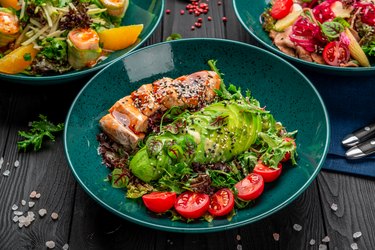
According to Dr. Garry Gordon and Herb Joiner-Bey in the book, "The Omega-3 Miracle," king salmon has 1.9g of omega-3 fatty acids per 3-oz. serving, and Sockeye salmon has 2.7g. You can purchase salmon fresh, frozen or canned, but wild-caught salmon may have higher levels of omega-3 than farm-raised salmon.
Flaxseed Oil
Flaxseed oil has 7.2g of omega-3 fatty acids per tablespoon. There are three different types of omega-3 fatty acids--alpha-linolenic acid (ALA), eicosapentaenoic acid (EPA) and docosahexaenoic acid (DHA). While EPA and DHA exist primarily in seafood, flaxseed oil contains ALA acid. ALA helps to promote brain health and good circulation.
Walnuts
Walnuts have 2.5g of omega-3 fatty acids per 1-oz. serving. An added benefit to walnuts is that they also contain high levels of omega-6 fatty acids, which help regulate the metabolism and contribute to healthy skin and hair. The University of Maryland Medical Center says that a healthy diet contains a combination of these two essential fatty acids.
Mackerel and Sardines
Mackerel and sardines are fatty fish with high levels of omega-3. Mackerel has 1.2g of omega-3 fatty acids per 3-oz. serving, and sardines have 1.1g. The American Heart Association says people should eat two servings of fatty fish per week to promote good health.
Swordfish, Golden Bass and Shark
With .97g per 3-oz. serving, swordfish is loaded with omega-3. Golden bass and shark are also high in omega-3, with .90 and .83g per 3-oz. serving, respectively. The American Heart Association says that children and pregnant women should avoid consuming swordfish, golden bass and shark due to high levels of mercury. For healthy adults however, the benefits of occasionally consumption likely outweigh the health costs.
Eggs
You can eat eggs to get omega-3. A hen fed a diet rich in omega-3 fatty acids will produce eggs with 130mg of omega-3 per egg.
References
- "The Omega-3 Miracle"; Dr. Garry Gordon, Herb Joiner-Bey, N.D.; 2004
- The George Mateljan Foundation: The World's Healthiest Foods: Omega-3 Fatty Acids
- American Heart Association: Fish 101
- The Vegetarian Society: Omega-3 Fats
- University of Maryland Medical Center: Omega-6 Fatty Acids


Member Comments