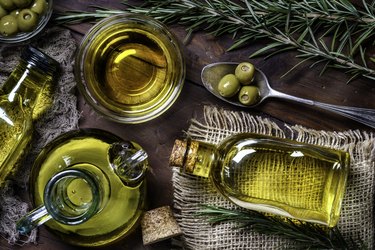
Extra virgin olive oil may cost a little more, but you'll understand why when you review the vast benefits of extra virgin olive oil nutrition. Extra virgin olive oil is rich in monounsaturated fat and polyphenols, so it supports a healthy body and reduced risk of disease.
Extra Virgin Olive Oil Nutrition
Video of the Day
Creating olive oil is a relatively simple process. At one time, people pressed olives to extract their oil as an edible product. Modern techniques involve crushing whole olives, and then separating the oil from the pulp using a centrifuge.
Video of the Day
According to the USDA, the calories in a tablespoon of olive oil are approximately 120, contained in 14 grams of fat. Of these fats, 11 grams are monounsaturated and 1 gram is polyunsaturated. One tablespoon of olive oil does contain 2 grams of saturated fat, but as it is a plant product, the oil features 0 grams of cholesterol.
Olive oil is a pure fat, and contains no other macronutrients, such as carbohydrates or protein. A tablespoon serving offers you 13 percent of the recommended daily dose of vitamin E and 7 percent of the dose of vitamin K. This paucity of micronutrients, specifically in terms of vitamins and minerals, doesn't mean extra virgin olive oil isn't healthy, however. It offers trace nutrients that aren't measured on a food label.
Olive Oil vs. Butter
The number of calories in butter and olive oil are similar, but their other nutritional aspects are quite different. One tablespoon of butter contains 100 calories and 11 grams of fat, seven grams of which are the unhealthy saturated type. Butter offers up 30 milligrams of cholesterol per tablespoon serving, which should be considered if you're on a low-cholesterol diet. Because olive oil contains valuable trace nutrients and unsaturated fat, it's often recommended instead of butter for culinary applications.
Olive oil makes a quality stand-in for butter when you sauté vegetables, sear chicken, pan-fry fish or scramble eggs. You can even dip crusty bread into a dip made with olive oil and spices, instead of slathering it with butter. When you use olive oil exclusively for culinary applications, it supports healthy aging, according to research published in Foods in January 2019. To truly reap its benefits, you shouldn't combine olive oil with other dietary fats during cooking. The research found that this healthy effect was particularly significant in people aged 70 and older.
It’s an Unsaturated Fat
All fat contains 9 calories per gram, but fats aren't all created equal when it comes to their impact on your health, explains the American Heart Association. Saturated fats, which are found in full-fat dairy, some tropical plants and meats, and trans fats, which are mostly synthetic, can negatively affect your health by increasing inflammation, encouraging weight gain, and clogging your arteries. Transfats and saturated fats raise the level of LDL — a harmful form of cholesterol — in the blood, contributing to heart disease development. Unsaturated fats and monounsaturated fats can have a positive effect on your health when consumed in moderate amounts as part of an overall healthy diet.
The Academy of Nutrition and Dietetics suggests replacing foods that are higher in saturated fat with foods that are higher in unsaturated fats. You want just 10 percent, or fewer, or your daily calories to come from saturated fats, while unsaturated fats can make up 20 to 35 percent of daily calories. This means if you're on a 2,000-calorie per day diet, aim to consume no more than 22 grams of saturated fat per day. But if you stick to unsaturated fats, you can enjoy between 44 and 77 grams a day while still following a healthy eating plan.
Olive Oil is Monounsaturated
As the AHA explains, monounsaturated fat is any fat where the individual fat molecules all have just one unsaturated carbon bond in the molecule. You can tell that extra virgin olive oil is monounsaturated because it starts to turn solid when chilled — even though it's typically liquid at room temperature.
Extra virgin olive oil contains oleic acid and trace amounts of other monounsaturated fats, which help to increase your body's level of high-density lipoproteins, or HDL — the "good" kind of cholesterol. Choosing olive oil instead of butter or other saturated fats, such as lard, may help reduce the levels of cholesterol in your body. Too much cholesterol can build up and clog your blood vessels, increasing your risk of stroke and heart attack. Extra virgin olive oil also provides nutrients that support the health of your body's cells.
Although extra virgin olive oil is a fantastic source of monounsaturated fat, you may seek out additional sources that include nuts, peanut butter and avocados.
Rich in Polyphenols
Polyphenols are found in the fruits, nuts, vegetables, seeds, bark, leaves and roots of various plants, grains and herbs. Coffee, tea and red wine also contain these compounds that are naturally beneficial to your health.
Research published in a March 2018 issue of the_ International Journal of Molecular Science_ explained that consumption of polyphenols can slow down the development of cardiovascular and neurodegenerative diseases, as well as the development of cancer. Polyphenols have antioxidant properties, which fight off inflammatory free radicals that you're exposed to in pollution, processed foods and chemicals.
Free radicals contribute to disease and the infirmities associated with aging. The research published in Foods explained that olive oil is able to reduce free radical production at a deep cellular level, much more so that oils high in polyunsaturated fats, such as corn and soybean oils, and is thus superior for consumption.
Olive oil comes in three main grades: refined, virgin and extra virgin. Olive oil that's been refined is missing these valuable polyphenols, as well as phytosterols and other healthy compounds. Because extra virgin olive oil is less processed than virgin or refined oils, however, it contains the highest level of polyphenols, explains research in the May 2014 issue of Antioxidants.
As explained by the Cleveland Clinic, manufacturers cold-press olive oil within 24 hours of picking the olives. Other versions of olive oil are processed with high heat and chemical solvents, reducing their valuable nutritional qualities. Manufacturers use natural methods to extract extra virgin olive oil and standardize batches for purity, taste, and odor.
The careful, minimal processing explains the higher antioxidant content as compared to highly-refined, cheaper versions. To be sure you're getting a health-promoting oil, look for the words "extra virgin" on the label.
Direct Health Benefits
Extra virgin olive oil is a primary component in a Mediterranean Diet, which is celebrated for being one of the healthiest ways to eat. Many elements of the Mediterranean eating pattern, such as limited red meat, lots of vegetables and whole grains and robust servings of extra virgin olive oil, are associated with improved health and longevity, explains a paper published in Nutrition Today in 2017.
Extra virgin olive oil nutrition supports your overall well-being and reduces your risk of chronic disease. A meta-analysis of studies published in the December 2018 issue of Maturitas concluded that olive oil has a significant impact on human health. Consumption of this oil may help prevent cardiovascular disease, metabolic syndrome, diabetes, and some cancers, including breast cancer.
Research published in the _European Journal of Clinical Nutrition i_n July 2019 shows that extra virgin olive oil can positively reduce inflammation and boost cellular health. This is due to the presence of oleic acid, extra virgin olive oil's primary fatty acid, as well as other minor components in the oil.
Extra virgin olive oil may also help improve your bone health. Because there's a lower incidence of osteoporotic fractures in countries in the Mediterranean basin, researchers decided to look at the relationship between the Mediterranean Diet, particularly extra virgin olive oil, and the population's superior bone health. The data, published in the February 2018 issue of Clinical Nutrition, concluded that higher consumption of extra virgin olive oil is associated with a lower risk of osteoporosis-related fractures. More research is needed, however, as this and other studies have analyzed only small groups.
The nutrients in extra virgin olive oil may also improve your brain's health and support your mind as you age. The Journal of Nutrition, Health, and Aging published research in 2013 showing that people who consumed a Mediterranean diet enhanced with extra virgin olive oil suffered less loss of brain function and memory than people on a standard low-fat diet, after 6 1/2 years.
Using Extra Virgin Olive Oil
Use extra virgin olive oil as you would use other oils, for cooking or salad dressings. You may want to use another monounsaturated oil with a neutral flavor, such as canola oil, when it comes to baking. Extra virgin olive oil may impart a distinct flavor to cookies and cakes.
Read more: What are the Benefits of Drinking Olive Oil?
When you cook vegetables in extra virgin olive oil, you receive extra health benefits too. Extra virgin olive oil acts as a food excipient, meaning it helps pull the nutrients out of food that it comes into contact with while cooking. This means that when you saute foods such as tomato, onion and garlic in olive oil, some of the bioactive ingredients in these vegetables are more available for your body to use. In the April 2019 issue of Molecules, researchers showed that the presence and effect of polyphenols such as quercetin, ferulic acid and naringenin, as well as valuable carotenoids, can be amplified when these vegetables are sautéed in olive oil.
Another study, published in the Journal of Agriculture and Food Chemistry in April 2014, concluded that adding extra virgin olive oil to tomato sauce enhances the extraction of healthy phenolic compounds from the tomatoes — meaning your spaghetti sauce will be that much more nutritious. The benefit of the Mediterranean diet, and of the consumption of extra virgin olive oil, isn't isolated to the ingredient or ingredients themselves, but is in fact derived from the synergy of how they react when heated together.
- USDA Food Data Central: "Extra Virgin Olive Oil"
- International Journal of Molecular Science: "Potential Health Benefits of Olive Oil and Plant Polyphenols"
- Antioxidants: "Antioxidants in Greek Virgin Olive Oils."
- Academy of Nutrition and Dietetics: "Choose Healthy Fats"
- USDA Food Data Central: "Butter"
- Foods: "The Effect of Exclusive Olive Oil Consumption on Successful Aging: A Combined Analysis of the ATTICA and MEDIS Epidemiological Studies"
- Maturitas: "Olive Oil Consumption and Human Health: A Narrative Review."
- European Journal of Clinical Nutrition: "Extra Virgin Olive Oil: More Than a Healthy Fat"
- Nutrition Today: "Mediterranean Diet and Prevention of Chronic Diseases"
- American Heart Association: "Monounsaturated Fat"
- Cleveland Clinic: "Heart-Healthy Oils"
- Molecules: "Using Extra Virgin Olive Oil to Cook Vegetables Enhances Polyphenol and Carotenoid Extractability: A Study Applying the Sofrito Technique"
- Journal of Agriculture and Food Chemistry: "Home Cooking and Phenolics: Effect of Thermal Treatment and Addition of Extra Virgin Olive Oil on the Phenolic Profile of Tomato Sauces."
- Clinical Nutrition: "Extra Virgin Olive Oil Consumption Reduces the Risk of Osteoporotic Fractures in the PREDIMED Trial"
- The Journal of Health, Nutrition and Aging: "Virgin Olive Oil Supplementation and Long-term Cognition: The PREDIMED-NAVARRA Randomized, Trial."
- American Heart Associated: The Skinny on Fats
Was this article helpful?
150 Characters Max
0/150
Thank you for sharing!
Thank you for your feedback!