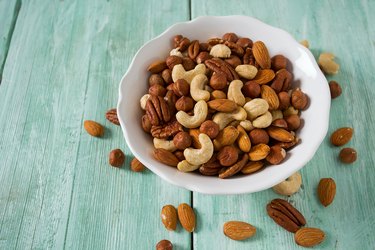
You keep peanuts and pistachios in your desk as a way to snack smarter. Or maybe you add a dollop of almond butter to your smoothie every morning. Nuts have a lot of nutrition to offer — but can they also cause heartburn? It's possible, but it depends on which nuts and how many you eat.
Read more: The Effects of Overeating Nuts
Video of the Day
Video of the Day
What Is Heartburn?
People typically describe heartburn as a burning pain behind their breastbone. You may also have a bitter or acidic taste in the back of your throat.
According to the American Gastroenterological Association (AGA), heartburn is often caused by acid reflux. That's when the band of muscle (called a sphincter) at the bottom of your esophagus, or food pipe, doesn't close properly, allowing stomach acid and food from your stomach to wash back up toward your mouth. If you get heartburn more than a few times a week, you may be diagnosed with a condition called gastroesophageal reflux disease (GERD).
Nuts and Heartburn
Nuts are powerhouses of healthy fats — the kind that could have benefits for your heart, according to the Mayo Clinic. But foods high in fats are also known to contribute to acid reflux.
"Fat is one of the triggers to make the bottom sphincter in the esophagus relax and promote a tendency towards reflux," says C. Prakash Gyawali, MD, a gastroenterology professor at Washington University School of Medicine in Saint Louis. "If a person with reflux disease were to have a big amount of nuts, their esophageal symptoms could potentially worsen temporarily."
Dr. Gyawali notes that you'd probably have to eat a lot of nuts for this to become a problem. And a large meal of any kind can trigger heartburn. "So, if somebody ate a full peanut butter sandwich, is it the peanut butter that made them reflux or the volume of the meal? Probably both," he says. Dr. Gyawali's recommendation, if you have heartburn: Choose nuts that are lower in fat, and don't eat too many.
To help you choose, here's how some popular types of nuts stack up, according to the U.S. Department of Agriculture, in terms of their fat content, described as the amount of fat in 1 ounce of the nuts, shelled:
- Pistachios, 12.8 grams
- Cashews, 13.4 grams
- Peanuts, 13.9 grams
- Almonds, 14 grams
- Hazelnuts, 17 grams
- Walnuts, 18.5 grams
- Brazil nuts, 18.8 grams
- Pecans, 20.2 grams
While almonds aren't the lowest-fat nut on the list, they do have another property that may make them less likely to worsen reflux symptoms: "They are alkaline; they're not acidic," says Dr. Gyawali.
Heartburn and Eosinophilic Esophagitis
Nuts can also trigger heartburn if you have what's called eosinophilic esophagitis. In this condition, the lining of your esophagus becomes inflamed with a type of blood cell called eosinophils. People with this condition can have heartburn or chest discomfort they describe as heartburn, says Dr. Gyawali.
Because eosinophilic esophagitis is thought to be caused by an immune system or allergic reaction, people who have the condition are often encouraged to try an elimination diet. This means removing major food allergens — which include peanuts and tree nuts — from your diet to help identify which ones worsen your symptoms, according to the U.S. National Library of Medicine.
Other Foods That Cause Heartburn
If nuts don't seem to be the cause of your heartburn, there are other food culprits to consider — and avoid. Known triggers, according to the AGA, include:
- Fried or fatty foods
- Chocolate
- Alcohol
- Coffee
- Carbonated beverages
- Tomato sauce
- Citrus fruits or juices
Read more: The 10 Worst Foods for Acid Reflux
Nonfood Heartburn Causes
Other possible triggers to avoid that aren't related to specific foods include the following:
- Eating large meals
- Lying down within a few hours after eating
- Wearing tight clothing that puts pressure on your stomach
- Taking aspirin and other nonsteroidal anti-inflammatory pain medications
- Smoking
The AGA notes that these are all known to contribute to or worsen heartburn symptoms.
- C. Prakash Gyawali, MD, AGAF, gastroenterologist, Washington University School of Medicine, Saint Louis
- U.S. Department of Agriculture: "Search FoodData Central"
- U.S. National Library of Medicine: "Eosinophilic Esophagitis"
- American Gastroenterological Association: "Gastroesophageal Reflux Disease (GERD)"
- Mayo Clinic: "Nuts and Your Heart: Eating Nuts for Heart Health"
Is this an emergency? If you are experiencing serious medical symptoms, please see the National Library of Medicine’s list of signs you need emergency medical attention or call 911.