








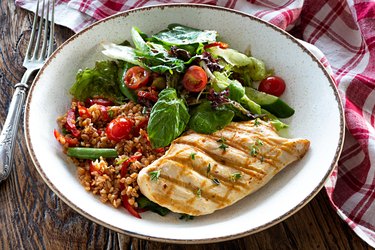



















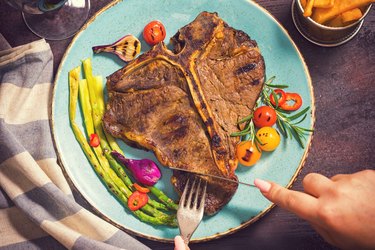























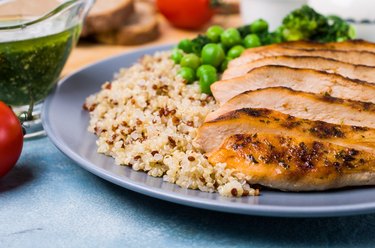









The U.S. Department of Agriculture's Food Pyramid lists lean meat as a healthy component of a balanced diet. However, meat poses health risks if your diet contains too much of it. Fortunately, with the wide varieties of foods available in even the average supermarket, meat no longer needs to be the centerpiece of your meal. Being mindful of these health risks may convince you to focus more on fruits, vegetables, healthy dairy products and grains.
Weight Gain
Overconsumption of meat can lead to weight gain. Although lean meats are considered to be a healthy component of a balanced diet, they still pack a caloric wallop on an ounce-for-ounce basis when compared to fibrous vegetables like broccoli or green beans. No wonder, then, that people who eat large quantities of meat tend towards more obesity. A population-based study published in the "International Journal of Obesity" found that the people in the top 20th percentile for meat consumption took in an average of 700 more calories a day than people in the bottom 20th percentile.
Shorter Life Span
According to MayoClinic.com, eating less meat may lead to a longer life. A study sponsored by the National Cancer Institute discovered that people who consumed four ounces or more of meat daily had a 30 percent higher risk of dying during ten years of follow-up than their less carnivorous counterparts. People who ate large quantities of processed meats, like hot dogs, bacon, salami and other cold cuts, were also at higher risk.
Diabetes and Heart Disease
A Harvard University analysis of previous research on meat consumption found that people who consumed 100g of meat daily, roughly the size of a pack of cards, had a 12 percent greater risk of developing diabetes. Those who ate 50g or more of processed meat had a 17 percent higher diabetes risk. Surprisingly, those who ate 100g of meat per day did not have a significantly higher risk of heart disease, but those who ate 50g or more of processed meat were at a 42 percent higher risk. More studies are needed to determine if unprocessed meat is the heart disease risk that people commonly assumed it to be. However, diabetes itself causes cardiovascular complications, so there are still good reasons to steer away from red meat.
References
- Mayo Clinic: Nutrition and Healthy Eating; Meatless Meals: The Benefits of Eating Less Meat
- "International Journal of Obesity"; Meat Consumption is Associated with Obesity and Central Obesity among US Adults; Y. Wang et al; Jun. 2009
- Mayo Clinic: Nutrition and Healthy Eating: Red Meat - No Longer Bad for Us?


Member Comments