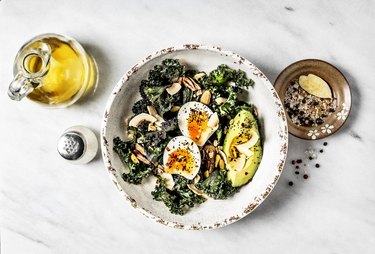
If your parents made a point of reminding you to eat your vegetables when you were a kid, they weren't just trying to ruin your day. Vegetables (and many other types of foods) are packed with vitamins that can keep your body functioning properly.
And getting enough vitamins can help keep your body healthy and prevent a multitude of diseases. Below, find the top foods high in vitamins A, B, C, D, E and K.
Video of the Day
Video of the Day
Vitamin A
Vitamin A is a fat-soluble nutrient that provides a host of health benefits, including strengthening your eyes, immune system and production of red blood cells, according to Oregon State University Linus Pauling Institute. On average, adults should get 700 to 900 micrograms of this vitamin per day.
Foods High in Vitamin A
There are plenty of vegetables with vitamin A, and many of them are orange because of the beta-carotene in them, which is a precursor to vitamin A. See the top foods high in vitamin A, according to the USDA, below.
- Carrots: 148% Daily Value (DV) per 1 cup cooked
- Tuna: 143% DV per 6 oz. cooked
- Butternut squash: 127% DV per cup cooked
- Sweet potato: 122% DV per cup cooked
- Spinach: 105% DV per cup cooked
In addition to these vegetables, there are some vitamin A fruits as well, such as:
- Cantaloupe: 33% DV per cup
- Pink grapefruit: 15% DV per cup
B Vitamins
B vitamins are a long list of nutrients, including B1, B2, B3, B5 B6, B7, B9 (folic acid) and B12. In general, B vitamins help you make energy from the food you eat and help form red blood cells, according to the U.S. National Library of Medicine.
Food sources of B vitamins include animal products such as meat, poultry, seafood, eggs and dairy but leafy greens are also a source of B vitamins.
Vitamin C
Vitamin C has many functions, including acting as an antioxidant to keep your cells healthy, keeping your immune system strong and helping build collagen, according to Oregon State University.
Adults should get 75 to 90 milligrams of vitamin C daily. Vegetables and fruits, especially citrus fruits and juices, are packed with this vitamin, according to the USDA.
Some foods high in vitamin C include the following:
- Guavas: 419% DV per cup
- Kiwi: 185% DV per cup
- Bell peppers: 169% DV per cup
- Strawberries: 108% DV per cup
- Oranges: 106% DV per cup
Vitamin D
The fact that vitamin D is manufactured by one part of the body and causes another part to respond makes it technically a hormone rather than a vitamin. Vitamin D maintains blood concentrations of calcium and phosphorus for bone growth and helps maintain a healthy immune system, per Oregon State University.
Some foods high in vitamin D include the following:
- Trout: 168% DV per 6 oz. cooked
- Sockeye salmon: 142% per 6 oz. cooked
- Cremini mushrooms: 139% DV per cup raw
- Portobello Mushrooms: 122% DV per cup raw
- Gefilte Fish: 103% DV per cup
Vitamin E
Vitamin E is a fat-soluble nutrient that consists of a family of antioxidants that contribute to cell health and can help prevent disease. Adults should get 15 milligrams of vitamin E per day. This vitamin is common in foods such as oils and nuts, according to the USDA.
Other foods high in vitamin E include the following:
- Sunflower seeds: 49% DV per oz.
- Almonds: 49% DV per oz.
- Avocados: 28% DV per avocado
- Spinach: 25% DV per cup cooked
- Butternut squash: 18% DV per cup cooked
Vitamin K
Vitamin K is a fat-soluble vitamin that helps regulate blood clotting, according to Oregon State University. Adults should get 90 to 120 micrograms per day.
Some foods high in vitamin K include the following:
- Kale: 453% DV per cup cooked
- Broccoli: 183% DV per cup cooked
- Brussels sprouts: 182% DV per cup cooked
- Cabbage: 136% DV per cup cooked
- Pickles: 109% DV per cup
What Foods Have Vitamins E and K?
Some foods with vitamins E and K include spinach, avocados and cooked turnip greens.
- University of Maryland Medical Center: Vitamins
- Linus Pauling Institute: Vitamin A
- Linus Pauling Institute: Vitamin B6
- Linus Pauling Institute: Vitamin B12
- National Institutes of Health: Vitamin B12
- Linus Pauling Institute: Vitamin C
- Linus Pauling Institute: Vitamin E
- University of Maryland Medical Center: Vitamin B9 (Folic Acid)
- U.S. National Library of Medicine: B Vitamins
- USDA: "Top 10 Foods High in Vitamin A"
- USDA: "Top 10 Foods Highest in Vitamin C"
- Linus Pauling Institute:"Vitamin D"