
It may be a challenge to get your 12-year-old to eat healthy, but proper nutrition is essential for growth and development and peak performance in school. A healthy diet is about balance and variety. Instead of focusing on taking away unhealthy foods from your child, find nutritious foods that you child enjoys.
Calories
Video of the Day

The USDA recommends 1,800 calories per day for an inactive 12-year-old male and 1,600 per day for an inactive female. Physical activity will increase calorie needs. However, it is not recommended that a 12-year-old count every calorie consumed. At this age, the focus should be on making calories count by choosing nutrient dense foods. Foods such as fruits and vegetables are nutrient dense because they provide a lot of nutrition for very few calories.
Video of the Day
Fruits and Vegetables
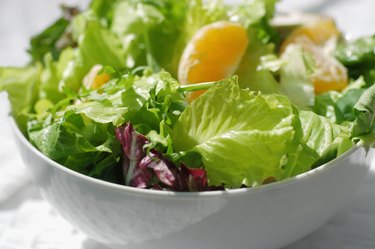
The recommended amount of fruits and veggies for an active 12-year-old consuming 2,000 calories per day is 2 cups of fruit and 2 1/2 cups of veggies. These numbers can be overwhelming. A simpler way to achieve this goal is to fill half of every plate with fruits and veggies. If your child is a picky eater, add veggies into his favorite foods and serve fruit with fat-free pudding or yogurt as dessert.
Whole Grains
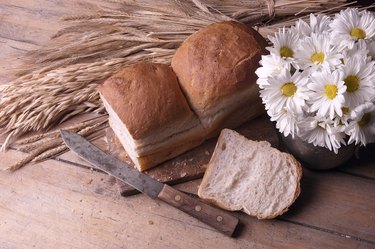
Make at least half of your child's grain products whole grains. Whole grains are a good source of fiber and important vitamins and minerals. Instead of white bread, use wheat bread. Choose brown rice instead of white and look for cereals that have a whole grain listed as the first ingredient. The USDA recommends a total of 6 ounces of grain products per day on a 2,000-calorie diet.
Low-Fat Dairy

Dairy products are an important source of calcium and protein and your 12-year-old should be consuming 3 cups per day. Low-fat versions have the same amount of calcium as the full-fat versions without the excess calories and saturated fat. Use non-fat or 1 percent milk and low-fat yogurt and cheeses.
Lean Proteins
A 12-year-old should consume 5 1/2 ounces of protein foods per day. Lean beef, pork, poultry, fish, beans, nuts, dried peas and seeds are examples of healthy protein sources. Offer seafood twice per week to provide heart-healthy omega-3 fatty acids.
Limit Sugars, Added Fats and Salt

Foods that are high in added fats and sugars contain a lot of empty calories, meaning calories without nutrition. Limit these foods in your child's diet. Serve beverages such as milk, water or 100 percent fruit juice instead of sugar-sweetened beverages. Limit processed and fast foods that contain excess sodium. Foods that are high in sugar and fat should be a treat rather than a dietary staple.