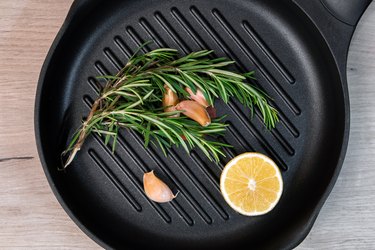
A single study has raised the possibility that a daily dose of lemon juice and garlic could lower your cholesterol levels. But the findings haven't been confirmed, and the garlic dose may be more than you — or the people around you — can tolerate.
A better bet may be just boosting fruit consumption overall, experts say.
Video of the Day
Video of the Day
More than 102 million adults in the United States have unhealthy levels of cholesterol, including more than 35 million who have levels so elevated that they're at high risk for heart disease, according to the Centers for Disease Control and Prevention.
As a result, millions of people are searching for ways to reduce their high cholesterol levels. Medications are one option, the CDC notes, as are smoking cessation and maintaining a healthy diet, exercise and weight. However, researchers have also looked for other strategies to lower cholesterol levels.
What the Research Says
A study in the International Journal of Preventive Medicine, published in July 2016, found an unusual approach may be helpful — drinking lemon juice and chowing down on raw garlic every day.
For the study, researchers recruited 112 people, ages 30 to 60, who had high cholesterol and assigned them to one of four groups. Each day for eight weeks, those in the first group ate 20 grams of garlic and 1 tablespoon of lemon juice. Group two consumed 20 grams of garlic, group three consumed 1 tablespoon of lemon juice and the final group consumed neither garlic nor lemon juice.
"A teaspoon of minced garlic weighs about 5 grams, so participants took about 4 teaspoons of garlic a day or about three to four garlic cloves per day, assuming regular, supermarket-size garlic cloves," says Isabel Maples, MEd, RDN, a Washington, D.C.-based dietitian/nutritionist and a spokesperson for the Academy of Nutrition and Dietetics.
"I suspect that getting people to eat three to four cloves of garlic a day was harder than getting them to drink a spoonful of juice, even though lemon juice is sour," she says.
The study found that cholesterol levels dipped dramatically for those who drank lemon juice and ate garlic each day, with their low-density lipoprotein (LDL) cholesterol dropping by 30 milligrams per deciliter (mg/dL), on average, and their total cholesterol level falling by an average of 41 mg/dL. The study reported that these participants' blood pressure dropped as well when compared with those who had no garlic (either lemon juice alone, or neither).
Though the results show promise, the study has limitations. For one thing, the number of participants was small (just 27 in the group that consumed garlic and lemon juice). "The smaller the study, the greater the risk is that any difference the researchers find is due to chance, not a real difference," Maples says. Also, the study was relatively short-lived. "Researchers only looked for eight weeks," she says. "Would a longer time frame, like a year, have made a difference? We don't know."
What to Do
When it comes to lemon juice and garlic, the guidelines are also unclear, according to Maples. For instance, if you don't like straight lemon juice, could you try consuming lemon juice in another form? "I haven't seen studies that have looked at that," she says.
"What we do know is that a higher sugar intake seems to negatively affect heart disease, so what I would not recommend is adding sugar — like honey — in order to consume more lemon juice," Maples says. "Does lemon cooked into a recipe have the same effect? Maybe, but maybe not. Heat de-activates vitamin C."
Beyond lemon juice and garlic, other dietary changes remain an option. "Increasing fruit and vegetable consumption seems to have more impact on whether someone has heart disease," Maples notes. "Adding fruit can be a very affordable way to eat healthier."
In addition, keep in mind that "food goals don't have to be accomplished overnight," she says. "For instance, if one is working on increasing fruit consumption, it may be more realistic to go from one fruit a few times a week, then to fruit once a day almost every day of a week, then, maybe six months later, to twice a day."
- Isabel Maples, MEd, RDN, dietitian/nutritionist, Washington, D.C., and spokesperson, Academy of Nutrition and Dietetics
- International Journal of Preventive Medicine: “Effect of Garlic and Lemon Juice Mixture on Lipid Profile and Some Cardiovascular Risk Factors in People 30-60 Years Old With Moderate Hyperlipidaemia: A Randomized Clinical Trial”
- Centers for Disease Control and Prevention: “September Is National Cholesterol Education Month”
Is this an emergency? If you are experiencing serious medical symptoms, please see the National Library of Medicine’s list of signs you need emergency medical attention or call 911.