
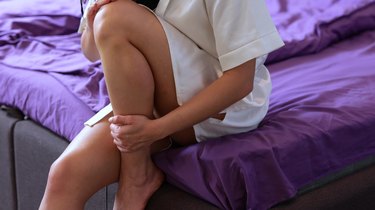

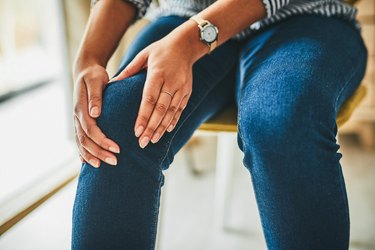
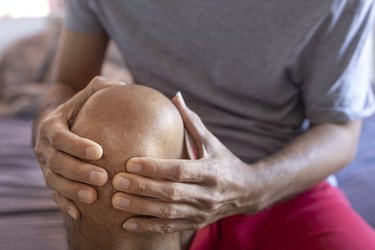














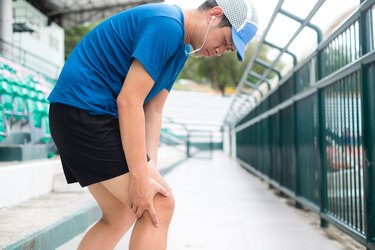



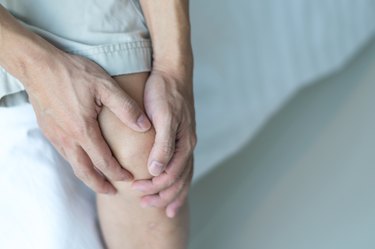

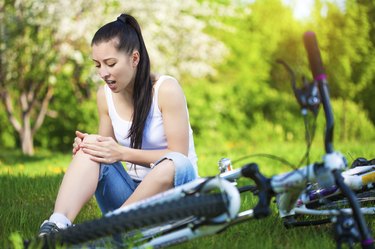

Housemaid's knee, preacher's knee and bursitis are all terms for swelling on the front of the knee, a condition that has been documented for centuries. Bursitis is the most common cause of a fluid-filled sac on the front of the knee, and it can occur for several reasons.
Bursa
Bursa are fluid-filled sacs that cushion bones and tendons. Of the 11 bursa, only four typically become inflamed. The most commonly affected bursa is the prepatalla bursa, which is under the knee between the patella tendon and the skin. The next-most-common bursa to become inflamed is the infrapatellar bursa under the patella tendon.
Bursitis
Inflammation resulting in excess fluid in the bursa is referred to as bursitis. When prolonged pressure is applied to the bursa through kneeling, fluid may accumulate in the bursa. Occupations that require kneeling include roofing, carpet laying, mining, plumbing and gardening. Trauma to the knee also is associated with bursitis, as seen in wrestlers and football players. Arthritis diseases, including rheumatoid arthritis, gout and psuedogout, also can cause bursitis.
When bursitis is due to repeated kneeling, it develops gradually. Acute bursa swelling after an injury, however, develops quickly. Bursitis usually involves redness and warmth over the bursa, and the area is tender.
Infected Bursa
Infected bursa, much like inflamed bursa, are tender, warm and enlarge rapidly. Bursitis must be differentiated from an infected bursa, which requires prompt medical attention so the joint does not also become infected. Children are more likely to have an infected bursa than bursitis. Fever is an indication that a bursa is infected.
Other Fluid Sacs
Other causes of a fluid sac on the knee include joint swelling. When fluid accumulates in the knee joint, the capsule bulges out on the sides of the patella tendon. The swollen capsule is also prominent around the kneecap. Due to pressure, a small, fluid-filled sac, or cyst, can arise from from a weak spot in the joint capsule. Cysts can also arise from the meniscus. Cysts usually occur on the posterior part of the knee, but they may also occur in the front of the knee. Blisters are fluid trapped between superficial and deep layers of the skin.
Bursitis Treatment
The initial treatment for bursitis is to avoid activity that aggravates the knee. Ice, elevation and use of nonsterodial anti-inflammatory medicine may alleviate symptoms. A physician may remove some fluid from the bursa with a sterile needle and syringe to diagnose gout or infection. Fluid removal followed by injection of a corticosteroid may resolve bursitis. If bursa fluid is infected, the bursa is opened, and antibiotics are started. When bursitis is chronic or recurrent, the bursa may need to be surgically removed.
Bursitis Prevention
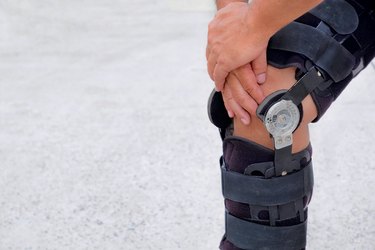
Bursitis is less likely to develop when frequent breaks are taken from repetitive kneeling. Kneepads or a compressive sleeve are often recommended, as are ice and elevation after working or playing sports. Physical therapy may decrease the chance of bursitis recurring.
References
- MayoClinic.com: Knee Bursitis
- Wheeless' Textbook of Orthopaedics: Bursae and Bursitis of the Knee
- National Institute of Arthritis and Musculoskeletal and Skin Diseases: Bursitis and Tendinitis
- American Academy of Orthopaedic Surgeons: Prepatellar (Kneecap Bursitis)
- The Merck Manuals Online: Bursitis


