The National Institutes of Health advises that adult men get a minimum of 3,400 milligrams of potassium each day while adult women need 2,600 milligrams daily. While many Americans don't get enough potassium, according to the Dietary Guidelines for Americans, there are groups of people for which potassium — even at amounts below the recommended daily level — can be dangerous.
An overly high potassium level in the blood is a condition known as hyperkalemia. According to an article in the November 2017 Journal of the American Society of Nephrology, hyperkalemia is more likely to occur in people using certain blood pressure medications, as well as those with kidney disease and/or heart failure.
Video of the Day
Video of the Day
These conditions can damage the kidneys, making it harder for the body to rid itself of excess potassium and causing it to build up in the blood. While the average American doesn't need to worry about dangerously high potassium levels from food sources, people in these risk groups should aim to limit their daily potassium intake to less than 2,000 milligrams, according to the National Kidney Foundation.
High-potassium foods are those containing more than 200 milligrams per serving, per the University of Michigan Health System. So if you happen to fall in a high-risk group, watch out for these high-potassium foods to avoid.
1. Potassium-Rich Fruits
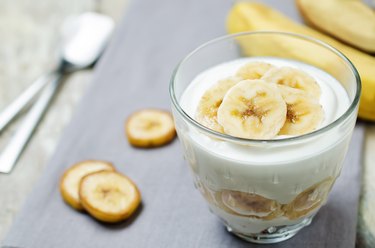
Bananas have become the poster child for high-potassium foods, but at about 420 milligrams per fruit, they contain way less potassium than half a cup of dried apricots, which contains over 750 milligrams while a half-cup of prunes contain about 600 milligrams.
Read more: Is Eating a Banana a Day Healthy?
"They're dried, so [their nutrients] are more concentrated," explains Jerlyn Jones, RDN, owner of the Lifestyle Dietitian in Atlanta and a spokesperson for the Academy of Nutrition and Dietetics.
Other high-potassium fruits include oranges and orange juice (about 325 and 500 milligrams per cup, respectively), mangoes (about 564 milligrams per fruit) and pomegranates (410 milligrams per cup).
Cantaloupes, kiwis and nectarines have more moderate levels of potassium (between 200 and 300 milligrams), but are still considered to be rich sources of the mineral — and therefore should be eaten in moderation if you're watching your potassium levels.
Berries, grapes, watermelon and apples are safer fruit choices for those concerned with potassium, says Jones.
2. Potassium-Packed Vegetables
Although vegetables are good for you, some types can be risky for those watching their potassium intake.
For instance, a medium sweet potato with skin contains about 540 milligrams of potassium while a medium baked potato with skin has a whopping 925 milligrams. One cup of cooked yams contains 911 milligrams of potassium, one cup of baked acorn squash contains 895 milligrams and a half cup of carrots has almost 410 milligrams of potassium.
According to the National Kidney Foundation, you may be able to enjoy some of these vegetables by "leaching" them to lower their potassium levels.
How to Leach Potatoes, Sweet Potatoes, Carrots, Beets and Winter Squash to Reduce Their Potassium Content
Rinse them, slice the vegetables so they're an eighth of an inch thick, soak them in 10 times the amount warm water to the amount of veggie for at least two hours, rinse them again and then boil them in five times the amount of water. Bear in mind that leaching won’t get rid of all the potassium.
The National Kidney Foundation also advises dumping out the liquid in canned fruits and vegetables to reduce your potassium intake.
3. Dairy
Dairy products are high on the list of protein items to avoid (or at least limit) if you're worried about potassium levels. According to Jones, that means milk, ice cream and yogurt should be enjoyed with caution regardless of the dairy's fat content. A cup of skim milk has 382 milligrams of potassium, while plain nonfat yogurt has almost 365 milligrams per three-quarters of a cup.
4. Fish
Other protein sources are risky as well: Fish such as salmon and halibut contain 533 milligrams and 448 milligrams of potassium per three-ounce serving, respectively. Therefore, they may not be good choices for those monitoring their potassium.
5. Salt Substitutes
Beware of salt substitutes or salts with reduced sodium content, which are often loaded with potassium, says Jones. Potassium chloride — a source of the mineral — is a common ingredient in many of these products, an article published in the July 2017 issue of Comprehensive Reviews in Food Science and Food Safety confirms.
Read more: What Role Does Potassium Play in Muscle Contraction?
- Journal of the American Society of Nephrology: “How Dangerous Is Hyperkalemia?”
- University of Michigan Health System: “Potassium Content of Food”
- National Kidney Foundation: “Potassium and Your CKD Diet”
- Dietary Guidelines for Americans 2015-2020: “Food Sources of Potassium”
- Comprehensive Reviews in Food Science and Food Safety: “Potassium Chloride‐Based Salt Substitutes: A Critical Review with a Focus on the Patent Literature.”
- U.S. Department of Health and Human Services and U.S. Department of Agriculture: “2015-2020 Dietary Guidelines for Americans”
- USDA MyFoodData: "Banana"
- USDA MyFoodData: "Dried Apricot"
- USDA MyFoodData: "Prunes"
- USDA MyFoodData: "Oranges"
- USDA MyFoodData: "Orange Juice"
- USDA MyFoodData: "Mangoes"
- USDA MyFoodData: "Pomegranates"
- USDA MyFoodData: "Baked Sweet Potato"
- USDA MyFoodData: "Baked Potato"
- USDA MyFoodData: "Carrots"
- USDA MyFoodData: "Baked Acorn Squash"
- USDA MyFoodData: "Cooked Yams"
- USDA MyFoodData: "Skim Milk"
- USDA MyFoodData: "Plain Nonfat Yogurt"
- USDA MyFoodData: "Salmon"
- USDA MyFoodData: "Halibut"