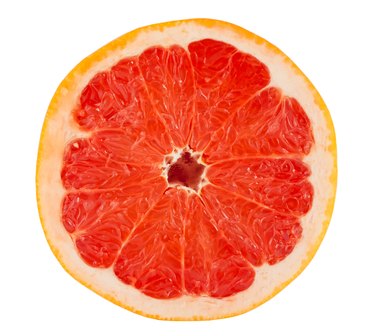
The Cara Cara is sometimes called the red orange fruit because, while it resembles a navel orange from the outside, the inner flesh is pinkish-red. The flavor is like that of an orange but slightly tangier. It imparts a range of nutritional value, including vitamin C, folate, vitamin A and potassium. The nutrition in these fruits help you meet your daily needs for several vitamins and minerals.
Calories and Protein
Video of the Day
One medium Cara Cara weighing 154 g adds 80 calories to your meal plan, which makes it a good choice for snacking. Choosing nutritionally dense foods for snacks, such as the Cara Cara, gives you more bang for your calorie buck. While this citrus fruit may be rich in vitamins and minerals, it does not provide much in the way of protein. One piece of fruit has 1 g of the 50 to 175 g of protein you should consume daily.
Video of the Day
Carbohydrates and Fiber
Include a Cara Cara in your meal plan, and you take in 19 g of carbohydrates. The 225 to 325 g of carbohydrates recommended for daily consumption are necessary for keeping up your energy levels. This type of fruit is a good source of fiber, containing 3 g per piece. The soluble fiber in Cara Caras -- you need 22 to 34 g daily -- helps maintain normal cholesterol levels.
Vitamin C and Vitamin A
A Cara Cara delivers 150 percent of the daily recommended intake of vitamin C if you follow a 2,000 calorie diet. The vitamin C in this fruit is good for your skin and joints, but it may also offer particular benefits for smokers. A study published in the 2011 "Journal of Oncology" indicates that vitamin C may help prevent the proliferation of lung cancer cells triggered by cigarette smoke. You also take in 30 percent of the vitamin A you need each day in one Cara Cara, which positively influences your vision.
Folate
Eating Cara Caras when trying to get pregnant is a good option -- this fruit provides 15 percent of the recommended folate. Folate is useful when attempting to conceive and during pregnancy by protecting a developing fetus from some types of birth defects. The folate in your meal plan from this fruit and other foods may also protect you from cancer as it maintains normal cell growth.
Potassium
One Cara Cara contains 250 mg of potassium; you need 2,000 mg of this mineral each day. Potassium plays a critical function in your body's function, conducting electricity along your body to influence your heart's ability to beat properly. Getting adequate amounts of potassium may also reduce your risk of having a stroke.
- Sunkist: Cara Cara
- "Journal of Oncology"; Molecular Mechanisms of Cigarette Smoke-Induced Proliferation of Lung Cells and Prevention By Vitamin C; N. Dey, et al.; May 2011
- All About Vision; Vitamin A and Beta Carotene: Eye Benefits; G. Heiting, OD; October 2010
- Office of Dietary Supplements; Folate; April 2009
- University of Maryland Medical Center; Potassium; Steven Ehrlich; May 2009