








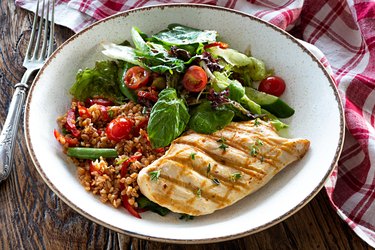






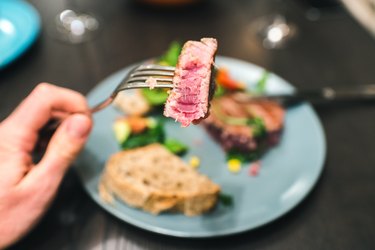













































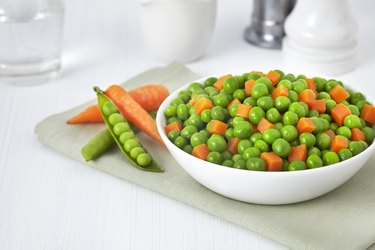
Vitamins B12 and folic acid are two of the B vitamins. Sources of B12 include meat, eggs, poultry, shellfish and dairy products. Leafy green vegetables, fortified cereals, cornmeal, dried beans, peas, nuts and fruits contain folic acid, also known as folate. Both promote physical health and proper functioning of your body. People over the age of 14 require 2.4mcg of vitamin B12 daily, and people over the age of 19 require 400mcg of folic acid daily.
Red Blood Cell Formation
Folic acid and B12 help produce DNA and RNA, your cells' building blocks. Both B12 and folic acid aid in the formation of red blood cells. Red blood cells transport oxygen to your tissues and carry carbon dioxide or waste away from your tissues. According to the Franklin Institute, blood cells live for 120 days. Both vitamins play key roles in constantly developing new red cells and fulfilling your body's demands for them.
Healthy Pregnancy
You require additional amounts of vitamin B12 and folic acid during pregnancy to help you grow a healthy baby. Pregnant women require 2.6mcg of B12 daily, and lactating women require 2.8mcg. Your body transports B12 through your placenta to the baby to help develop the child's brain and spinal cord. The American Dietetic Association recommends taking a B12 supplement during pregnancy if you are vegan or vegetarian. Non-meat products do not contain the vitamin. The Centers for Disease Control and Prevention recommends that women start taking 400mcg of folic acid before conception. Folic acid helps prevent birth defects associated with early pregnancy, including spina bifida, a spinal column defect, and anencephaly, a condition where the baby's brain and skull do not fully develop. You require 500mcg of folic acid daily when you are pregnant and 600 while you are breastfeeding.
Vitamin Deficiency Anemia Prevention
If you have either a B12 or folic acid deficiency, you may develop anemia, a condition in which your body does not have enough red blood cells to deliver adequate amounts of oxygen to your body. Low vitamin intake may hinder your body's ability to make new red blood cells and may cause anemia. Symptoms include dizziness, weakness, an irregular heartbeat, headache, shortness of breath, fatigue and irritability. If a blood test confirms that your anemia is related to low levels of folic acid or B12, dietary changes or supplements recommended by your doctor may restore your health.


Member Comments