
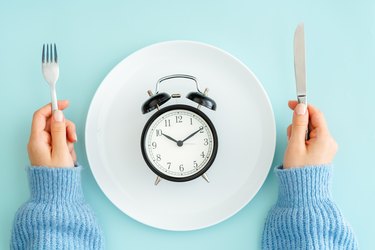





















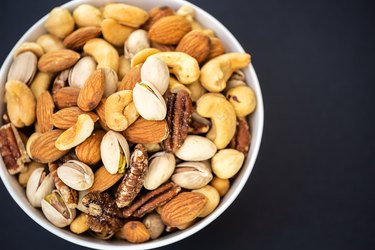



A 10-pound annual weight gain can occur if serving sizes are increased by only 5 percent. Using a 2000-calorie daily diet, the 5 percent increase adds 100 extra calories every day. Multiplying by 365 days gives an excess of 36,500 calories, or 10 pounds of weight gain. The key to successful dieting is portion control of moderate- and high-calorie foods.
Prepared Foods
On the packages of prepared foods, you can see the serving size expressed in three ways. The label tells you how many servings are in the package. On another line, there is a suggested serving size, by volume---such as 1 cup. Next to the serving size in volume, the serving size weight in grams appears in parentheses. Below this box is the nutrition information per serving. It may surprise you to know that the Food and Drug Administration requires that calorie and nutrition information be based on the serving weight.
FDA regulations require that suggested serving sizes conform to standard household measurements, such as 1 cup. If the suggested serving falls between two volume measures, the FDA requires that the manufacturer round up to the next serving size. The FDA also requires that the weight in the package be at least the stated amount. If you measure out a serving, or use half of a two serving package, you get the same or higher weight portion. The calories you consume will be greater.
USDA Nutrient Recommendations
The United States Department of Agriculture makes dietary recommendations using three values. All are expressed in weight measurements, usually grams per day. Dietary reference intake, DRI, is the recommended amount of a nutrient for adults. The minimum adequate intakes, AI, is also for adults. When chronic disease is associated with eating too much of a nutrient such as fat, USDA publishes an acceptable macronutrient distribution range or AMDR. The USDA also provides a database that you can search for the nutrient value of foods. Weighing food portions is the most accurate way to assess nutrient consumption.
Preparing Foods
There can be a significant variation in the size of a three-egg omelet. Since eggs vary in size, weighing is more accurate than using a specified number. The same holds true for fruits, vegetables and meat. Weighing is not only more accurate but quicker and less prone to recipe error: an industrial cook has a much easier time weighing 5 lbs. of flour than measuring out 20 cups. European recipes and recipes for large groups, including the USDA recipes for schools, list ingredient amounts by weight.
Food Scales
If you decide to begin weighing your food, a wide range of scales are available. Households use a tabletop model. The most important step is to zero the scale after placing the container on it, before weighing your food. Keep your scale clean and check its accuracy using known weight.
Measuring By Volume
If you do not wish to use a scale but would like to use recipes that list ingredients by weight, or you want to measure some ingredients, such as eggs, by volume there are cooking measurement conversion tables. Some specialty stores sell German measurement cups that have lines showing the approximate grams of flour, sugar and other dry ingredients.
References
- Argonne National Laboratories: Division of Educational Programs: Conversion Guidelines
- Food and Drug Administration: Food Labeling Guide VII. Nutrition Labeling Questions
- Child Nutrition Program: Alabama Department of Education: Managers Manual; Weighing and Measuring
- University of Mississippi: National Food Service Management Institute: USDA Recipes for Schools
- United States Department of Agriculture: Dietary Reference Intake Tables


Member Comments