







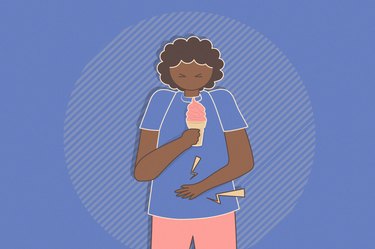


















































There are a number of reasons you might experience abdominal pain, but only a few that cause pain in the upper right abdomen immediately after eating, according to MayoClinic.com. Pain that occurs immediately after eating usually can be attributed to a digestive problem and should be brought to a doctor's attention.
Symptoms
Pain can be acute, meaning it flares up suddenly, or chronic, meaning it reoccurs over weeks or months, says MayoClinic.com. Describing the kind of pain you experience can help a doctor determine a cause. Adjectives that may describe your abdominal pain could include gnawing, burning, cramping, generalized, shooting, constant or periodic.
According to the UMM website, some causes of upper right abdominal pain can present other symptoms as well. For instance, symptoms of gallbladder disease can include nausea, vomiting, fever, chills and diarrhea as well as upper right abdominal pain.
Causes
Common causes of upper right abdominal pain that occurs after eating include gallbladder disease, gallstones, pancreatitis, gastroesophageal reflux disease, or GERD, and intestinal obstruction.
Doctors are not sure what causes gallstones to form, according to MayoClinic.com, but fatty foods can cause a gallbladder attack, which includes sudden, intensifying pain in the upper right abdomen.
Chronic heavy alcohol use can lead to pancreatitis, according to the National Digestive Diseases Information Clearinghouse website. Other causes may include gallstones, trauma, medications, infections, tumors or genetic causes.
Although pain from GERD often may be felt in the middle of the upper abdomen, it may radiate to the right upper quadrant. GERD is caused by the backup of stomach acid into the esophagus and may be triggered by eating spicy or fatty foods.
An intestinal obstruction can be caused by a mechanical obstruction or a dysfunction of the digestive system, says MayoClinic.com.
Risk Factors
A number of factors may contribute to the risk of getting gallbladder disease or gallstones, advises MayoClinic.com. Such factors include being female, over 60, overweight and of a specific ethnicity. Additional risk factors include pregnancy, diabetes, diet, quick weight loss, family history, or cholesterol-lowering or estrogen-containing medications
Long-term alcohol abuse may increase the risk of getting pancreatitis. Pancreatitis occurs more often in men than women.
People who are obese, have a hiatal hernia, smoke, have diabetes or are pregnant may be at increased risk of developing GERD.
Adhesions from previous abdominal or pelvic surgery are the most common risk factors for an abdominal obstruction.
Treatment
Treatment depends on the diagnosis and your doctor's recommendations. Losing weight and cutting back on or quitting smoking and heavy alcohol use may help alleviate symptoms.
Gallbladder disease or gallstones may require surgical removal of the gallbladder.
Pancreatitis may require hospitalization. Doctors may prescribe digestive enzymes and encourage patients to eat small, frequent, low-fat meals and avoid alcohol and tobacco use.
Doctors often prescribe acid-controlling medications for patients with GERD.
An abdominal obstruction often requires surgery.
Prognosis
While most pain in the upper right abdomen is not immediately life-threatening, the underlying causes can become dangerous if not treated. See a doctor for any upper abdominal pain that occurs after eating.


