

















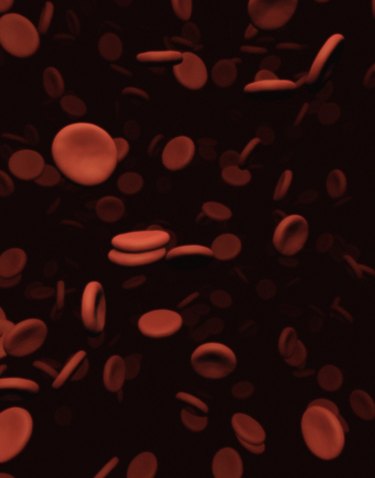






















































Blood consists of protein-rich liquid and platelets, red blood cells and white blood cells, collectively known as formed blood elements. A complete blood count, or CBC, includes counts of the formed blood elements along with other measurements that help doctors interpret test results. Many diseases and medical conditions can cause a low red blood cell, white blood cell or platelet counts.
Iron Deficiency
Iron deficiency is a leading cause of low red blood cell count among Americans, according to the National Heart Lung and Blood Institute. The bone marrow requires iron to produce red blood cells. When the body's iron stores fall to abnormally low levels, red blood cell production slows and anemia ensues.
Iron deficiency develops owing to inadequate dietary intake, blood loss or a combination of these factors. Women of childbearing age, infants, young children and patients with medical conditions that causes chronic blood loss have increased risk for iron deficiency and anemia.
Bleeding
Patients with substantial ongoing or recent bleeding typically exhibit a low red blood cell count. Trauma proves a common cause of acute blood loss. Substantial bleeding also commonly occurs with digestive tract diseases and conditions, including blood vessel rupture associated with chronic liver disease, peptic ulcer disease, Crohn's disease, hemorrhoids and cancerous and noncancerous tumors, reports the National Institute of Diabetes and Digestive and Kidney Diseases. Among women, menstrual disorders, pregnancy and related reproductive complications may cause significant blood loss, leading to a low blood count.
Hereditary Hemolytic Anemias
Several hereditary blood disorders cause chronic or episodic destruction of the red blood cells, or hemolysis, leading to a low red blood cell count. These disorders, known as hereditary hemolytic anemias, include sickle cell disease, thalassemia, glucose-6-phosphate dehydrogenase deficiency, hereditary ovalocytosis and hereditary spherocytosis, notes the National Heart Lung and Blood Institute.
Infection
Infections may cause a temporary decrease in white blood cell count, a condition known as leukopenia. In a severe bacterial infection, white blood cells that normally circulate in the bloodstream migrate to the site of the infection, leading to leukopenia, explains the University of Virginia School of Medicine. Leukopenia also occurs with certain viral infections, including those caused by influenza and hepatitis viruses, cytomegalovirus and Epstein-Barr virus, notes the medical reference text "Infectious Diseases."
Aplastic Anemia
Aplastic anemia is an uncommon condition characterized by profoundly decreased production of all formed elements of the blood. Patients with aplastic anemia, also known as bone marrow failure, have markedly low red blood cell, white blood cell and platelet counts. Inherited forms of aplastic anemia include Fanconi and Diamond-Blackfan anemias, dyskeratosis congenita and Shwachman-Diamond syndrome. Acquired causes of aplastic anemia include chemotherapy drugs, radiation therapy, benzene poisoning and HIV/AIDS, reports the National Heart Lung and Blood Institute. Aplastic anemia is also a rare complication of certain autoimmune disorders, including systemic lupus erythematosus and rheumatoid arthritis.
References
- National Heart Lung and Blood Institute: Iron Deficiency Anemia
- National Institute of Diabetes and Digestive and Kidney Diseases: Bleeding in the Digestive Tract, Causes
- National Heart Lung and Blood Institute: Hemolytic Anemia
- University of Virginia School of Medicine: Benign White Cell Disorders, Leukopenia
- "Infectious Diseases, Third Edition"; Sherwood L. Gorbach, M.D., John G. Bartlett, M.D. and Neil R. Blacklow, M.D., Editors; 2004


