
























































How to Stay Slim Without Exercise

How to Stay Slim Without Exercise
Photo Credit breakfast image by Wolfgang Zintl from Fotolia.com

If you are currently slim, you are less likely to develop chronic diseases, such as type 2 diabetes, high blood pressure and high cholesterol, which are commonly associated with being overweight. If you fear that you are going to start packing on pounds, but want to stay slim, you can achieve this goal by being disciplined. If exercise is not your thing, take an approach that involves other lifestyle choices.

Step 1

Determine your current caloric intake. Utilize an online calorie tracker such as Calorie King to monitor your intake for three days. Add your totals together and divide by three to get your average. Commit this number to memory and do not go above it on a daily basis. This will keep your weight regulated.

Step 2

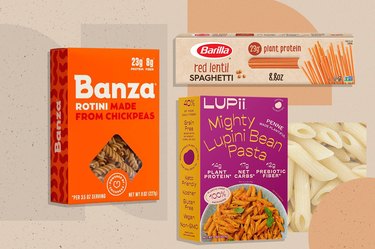
Stick with foods that are high in nutrients. Avoid foods that are high in saturated fat and empty calories, such as cream-filled doughnuts, sausage patties, pancakes with syrup and deep-fried cheese sticks. Eat foods instead that can give you energy and have higher vitamin and mineral content, such as fruit, vegetables, beans, whole grains, lean meats, fish and low-fat dairy products.

Step 3

Drink water instead of high-calorie beverages. Calories from soda, fruit punch, lemonade, sweetened teas and alcohol can all add up and cause you to gain weight. Avoid all of these and sip on water with your meals and throughout the entire day. The Institute of Medicine recommends that females get about 90 oz. a day and males get about 120 oz. a day.

Step 4

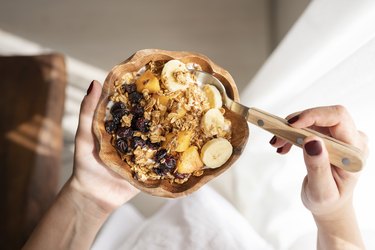
Take the time to eat breakfast. When you skip breakfast, your body's insulin response increases, which in turn increases fat storage and weight gain, according to the Mayo Clinic's website. Have something quick and easy if you are pressed for time, such as a cup of yogurt with berries mixed in.

Step 5

Eat small meals every two or three hours for the rest of the day after breakfast. This will keep your metabolism elevated and hunger under control, and you will be less likely to overeat. Add a portion of protein and complex carbs to each meal to make them balanced. A bowl of brown rice with beans is a meal example.

Step 6

Spend your nighttime hours in bed sleeping. Lack of sleep can cause exhaustion during the day, and it can throw your hunger-controlling hormones off balance, leading to overeating. Aim for at least seven hours of sleep a night and make sure your room is quiet and dark.

References

Article reviewed by OmahaTyppo Last updated on: Jun 14, 2011

Must see: Photo Galleries

Member Comments