














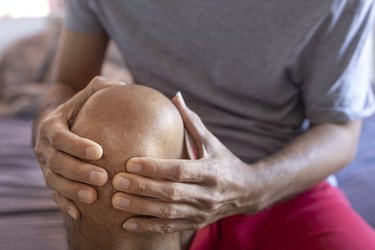
























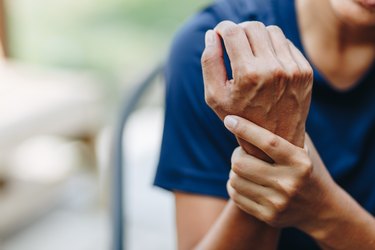




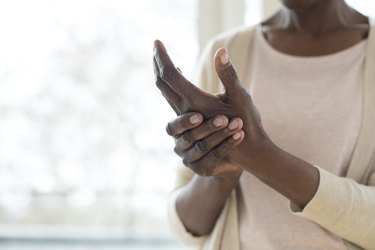









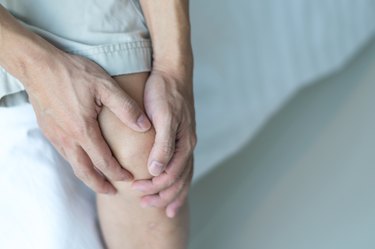








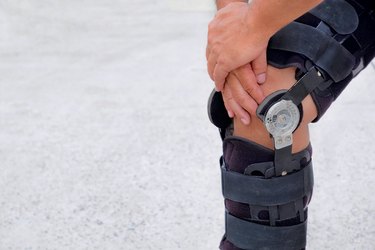


Joints occur where two bones meet. Without joints, you would not have movement or flexibility in your wrists, knees, elbows and ankles. If you have discomfort, inflammation, achiness or soreness in and traveling away from your joints, you are experiencing joint pain. The National Institutes of Health reports that joint pain can be caused by an injury or a variety of conditions including arthritis, bursitis, an autoimmune disease and more.
Most Common Joint Problems
According to The Cleveland Clinic's Arthritis and Joint Pain Guide, joint pain can be associated with more than 50 types of arthritis as well as conditions that have no relation to arthritis at all. Rheumatoid arthritis is an autoimmune disease that causes painful swelling in the lining of the joints. Bursitis occurs when the fluid-filled sacs in the joints are inflamed. An injury or accident can easily cause a fracture in your joints and overuse can cause a sprain or strain. Osteoarthritis is a degenerative joint disease. Joint tendonitis is an inflammatory condition of the joints.
Risk Factors
While your traveling joint pain could be attributed to dozens of different causes, some conditions and lifestyle choices increase your risk for joint problems. The Cleveland Clinic indicates that being overweight or obese, having a previous injury, surgical procedure or cartilage damage in the joint, a sedentary lifestyle, congenital conditions, including bone deformities at birth and diseases including Paget's disease, hyper-mobility and gout up your chances for having joint problems. Other risk factors for joint issues that you have no control over include being female and ageing. It's important to tell your doctor if you have any diseases, conditions or old injuries that could be linked to your current joint problems.
Treatment
Unless your doctor has reason to believe your joint pain is caused by a serious illness or condition, she may first suggest a conservative treatment approach like physical therapy, medications that reduce inflammation or bracing your joint. If your doctor recommends dropping a few pounds, the hope is that by losing weight you will remove pressure from your joints. Physical therapy and exercise can strengthen muscles around your joints and increase your flexibility. Bracing constricts joint movement and can alleviate pressure. Over-the-counter, non-steroidal anti-inflammatory drugs and steroid injections can reduce inflammation and pain.
Prevention
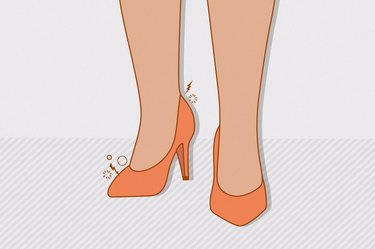
Arthritis Today, an online magazine published by the Arthritis Foundation, suggests a variety of ways to keep your joints from aching. Keep your computer at eye level and use a hands-free telephone headset to reduce neck strain. Wear flats. High heels can increase your risk of developing osteoarthritis. Use a wrist rest when typing at your computer. Lose weight. According to the Arthritis Foundation, every pound you gain adds four times more stress on your knees. Increase your calcium intake, which can help keep bones healthy.
Statistics
If you have joint pain, you're not alone. According to a 2006 report by the Centers for Disease Control and Prevention, approximately 30 percent of adults reported experiencing some type of joint pain in the previous 30 days. The most common types of joint pain occurs in the knee, followed by the shoulder, finger and hip.


