

























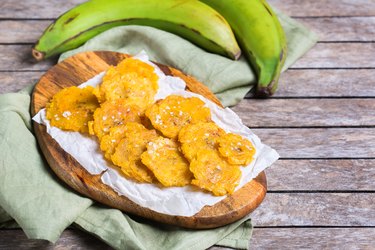































Tapioca flour is a starchy white flour that has a slight sweet flavor to it. Grain-free, it comes from the root of the cassava plant, also known as the yucca plant, which grows in tropical regions. Tapioca is most familiar to Americans in its rice-like form, as one of the primary ingredients in tapioca pudding. Tapioca flour, on the other hand, is often used to sweeten baked goods made with millet or rice flour. It is also used to thicken soups, pies and soups, according to Purcell Mountain Farms, a farm that sells tapioca flour and other products.
Calories
Tapioca flour has 100 calories per 1/4 cup serving, according to the FDA-compliant nutrition information available from Bob's Red Mill. In contrast, white, all-purpose, enriched, bleached wheat flour, or what we think of as traditional flour, has 109 calories in the same serving size, according to Self magazine's nutrition data.
Fat
Tapioca flour contains no fat in a 1/4 cup serving, according to Bob's Red Mill. In contrast, traditional flour contains a miniscule amount of fat in a 1-cup serving -- 1 gram of fat -- but this becomes negligible in a 1/4 cup serving size.
Carbohydrates
A 1/4 cup serving of tapioca flour contains 26 grams of carbohydrates, but no grams of either dietary fiber or sugars. In contrast, traditional flour contains 23 grams of carbs, including 1 gram of dietary fiber, which constitutes 3 percent of your daily recommended intake if you follow a 2,000-calorie-per-day diet.
Other Nutrients
There is no protein in a serving of tapioca flour, although it contains 2 percent of your daily value of iron. In contrast, traditional flour contains 3 grams of protein per 1/4 cup serving, as well as 8 percent of your daily value of iron.
Other Advantages
According to Purcell Mountain Farms, tapioca flour is gluten-free, dairy-free, wheat-free and low-protein, which makes it a good choice for many restricted diets.


Member Comments