
























































Testosterone is primarily a male steroid hormone that performs numerous functions in the body, including stimulating sperm production and controlling sex drive. After the age of 30, testosterone levels naturally start to decline. Although undergoing testosterone therapy or taking testosterone supplements are viable options, incorporating certain foods into your diet to boost testosterone works, as well.
Salmon
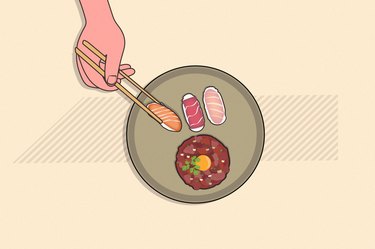
Elisabeth Wehr led a team of researchers that examined the relationship between vitamin D intake and testosterone levels in men, according to findings reported in the 2010 issue of the journal of "Clinical Endocrinology." Participants referred for coronary angiography had their vitamin D, testosterone and sex hormone binding globulin measured. Scientists discovered that men with sufficient vitamin D levels had higher testosterone and lower sex hormone binding globulin levels compared to men with insufficient vitamin D levels. Sex hormone binding globulin is a hormone that binds to testosterone in the blood and makes it inactive, which in turn lowers testosterone levels. Therefore, lowering sex hormone binding globulin enhances testosterone effects. Include vitamin D food sources such as salmon into your diet.
Onion
In a 2009 study conducted by Arash Khaki and colleagues that was published in the journal of "Folia Morphologica," researchers evaluated the impact of onion on sperm production in subjects. They discovered that participants consuming fresh onion juice for three weeks experienced significant improvements in testosterone production compared to the control groups. Scientists suggest that onion boosts testosterone levels by increasing the output of luteinizing hormone, which signals to the testes to stimulate testosterone production.
Low Fat Cheese
Researchers led by Cinar Vedat studied the effects of calcium supplementation on testosterone levels, according to research reported in the 2008 issue of the "Biological Trace Element Research." Scientists observed that calcium supplementation increased testosterone levels at rest and after exercise compared to those without calcium supplementation. Incorporate calcium-rich foods such as cheese into your daily diet.
References
- Clinical Endocrinology: Association of vitamin D status with serum androgen levels in men
- Folia Morphologica: Evaluation of androgenic activity of allium cepa on spermatogenesis in the rat
- Biological Trace Element Research: Testosterone Levels in Athletes at Rest and Exhaustion: Effects of Calcium Supplementation


