



































































Color is what makes food appeal to the eye; it affects the way people respond to food. Food manufacturers add food additives, such as flavor, coloring and preservatives to improve color, taste and shelf-life. Without food coloring, most food would be dull, unappetizing, and colorless. These dyes can cause allergy-like symptoms, especially in children.
Food Coloring Additives
The Food and Drug Administration explains that a color additive is any dye, pigment or substance which is added or applied to a food, drug or cosmetic, which is capable of leaving color on that object. MedlinePlus states that food coloring additives are used for a variety of reasons including to maintain consistency, protect nutritional value, preserve wholesomeness, provide color, enhance flavor and control pH.
Classifications
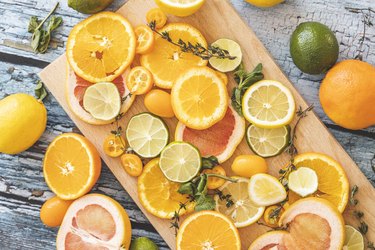
Food additives permitted as coloring agents are classified as either certified or exempt from certification, notes the FDA. Both categories of food additives undergo rigorous safety standards before their approval and listing for use in foods. Certified colors consist of synthetically produced agents and provide intense, uniform color, are less expensive, and blend more easily to create additional colors. Colors which are exempt from certification include pigments derived from natural sources, such as vegetables, fruits or minerals. Naturally derived food color was originally created as an alternative to synthetic agents secondary to consumer demand. As with any substance, even naturally occurring color agents can cause allergy-like symptoms in some children.
Allergy vs. Intolerance
According to the Scott Sicherer in an article in the Jan. 15, 1999 issue of "American Family Physician," allergic reactions to food coloring are difficult to diagnose. Certain additives have been documented to cause similar reactions as those caused by immune-mediated allergies, but at a much lower prevalence. For this reason, allergies to food coloring are actually considered food intolerances, not food allergies. A food intolerance is a digestive system response where food either irritates the digestive tract or is not fully broken down during digestion.
Symptoms
The Cleveland Clinic reports that symptoms of food intolerances are similar to those of food allergies. Allergies to food coloring affect individuals differently and therefore the severity of symptoms is not always the same. Common symptoms accompanying allergies to food coloring include nausea, stomach pain, gas, cramps, bloating, vomiting, heartburn, diarrhea, headaches and nervousness or irritability.
Considerations
Because there are so many food coloring chemicals, determining which food color causes a child's symptoms may be difficult. It is important to choose foods that are close to the source of origin. This means consuming plenty of fruits, vegetables, lean meats, fish and other protein sources. In addition, read food labels and learn which ingredients are in children's foods. If symptoms persist, see a health care provider who can suggest possible diagnostic and treatment options.


Member Comments