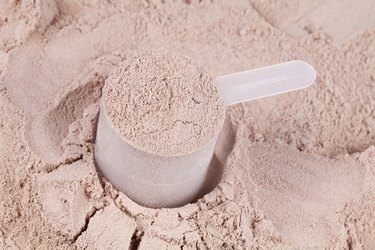
Soy protein and whey protein are both dietary supplements that can help increase your total protein intake. While each form of protein has its own health benefits, for exercise, muscle building and weight loss purposes, research has shown that whey protein is superior. This is likely related to the amino acid profile and the fast absorption rate of whey protein.
The Many Benefits of Soy Protein
Video of the Day
Soy protein, a form of plant protein made from the soybean, contains substances known as isoflavones. According to a 2003 article published in "The Journal of Perinatal Education," genistein, one of the phytochemicals in soy, can help reduce the risk of cancer. Soy protein can also help control high blood sugar, promote a healthy body weight and help lower bad cholesterol and triglycerides, according to the authors. Soybeans are a good source of fiber, calcium, iron, zinc and B vitamins.
Video of the Day
Protect Your Cells With Whey Protein
Whey protein, a protein source derived from cow's milk, may have antioxidant and other health-promoting effects, according to a study published in 2003 in "Toxicology In Vitro." The authors note that whey is effective in stimulating glutathione -- the chief antioxidant for protecting human cells. The study found that whey protein could protect human prostate cells from oxidant-induced cell death. A paper published in 2000 in "Anticancer Research" also noted that whey proteins have shown anticancer activity in animal studies.
Whey Beats Soy for Muscle Building
When comparing whey and soy protein for muscle-building purposes, whey protein has the upper hand in more than one way. A study published in 2013 in the "Journal of the American College of Nutrition" found that whey protein was absorbed more quickly, had higher concentrations of amino acids important for muscle building and therefore resulted in greater muscle protein synthesis than soy protein. Additionally, whey protein has beneficial effects on hormones that can help build muscle, whereas soy protein does not, according to another 2013 study published in the "Journal of the American College of Nutrition." The authors concluded that whey protein reduces cortisol -- a hormone that can break down muscle -- following exercise, whereas soy protein can lower levels of the male hormone testosterone, which is important for muscle growth.
Whey Protein Vs. Soy Protein for Weight Loss
In a study published in 2011 in "The Journal of Nutrition," both whey and soy protein were tested for their efficacy in altering body composition in people living with obesity. The study found that waist circumference was smaller in individuals who consumed whey protein. The authors concluded that, although the mechanisms are unknown, different sources of dietary protein have different effects on weight loss and body composition. They also noted: "Dietary recommendations, especially those that emphasize the role of dietary protein in facilitating weight change, should also address the demonstrated clinical potential of supplemental [whey protein]."
- Journal of the American College of Nutrition: Whey Protein Supplementation During Resistance Training Augments Lean Body Mass
- The Journal of Perinatal Education: Soy Protein
- Toxicology In Vitro: Effect of Whey Protein Isolate on Intracellular Glutathione and Oxidant-Induced Cell Death in Human Prostate Epithelial Cells
- Anticancer Research: Whey Protein Concentrate (WPC) and Glutathione Modulation in Cancer Treatment
- Journal of the American College of Nutrition: The Effects of Soy and Whey Protein Supplementation on Acute Hormonal Reponses to Resistance Exercise in Men
- The Journal of Nutrition: Whey Protein But not Soy Protein Supplementation Alters Body Weight and Composition in Free-Living Overweight and Obese Adults